As an Amazon Associate, we earn from qualifying purchases. Some links on this site are affiliate links at no extra cost to you. Our recommendations are based on thorough research and editorial judgment.


5 Best Beginner Tennis Balls for Easy and Enjoyable Play

If you’re starting in tennis, consider the WILSON US Open Youth Tennis Balls for a perfect beginner experience. They’re low compression, 50% slower, and enhance your learning. Check out WILSON Championship Tennis Balls for durable play with a 4.7-star rating from over 14,000 users. Magicorange’s 12 Pack offers great value, while GAMMA Quick Kids balls provide visibility with a unique two-toned design. Finally, Penn QST 60 balls guarantee a controlled bounce, ideal for young players. You’ll discover even more options and details ahead.
Key Takeaways
- WILSON US Open Youth Tennis Balls are ideal for children aged 9-10, offering a low compression for easier handling and learning.
- WILSON Championship Tennis Balls are durable with a consistent bounce, perfect for both training and casual play with a high user rating.
- Magicorange Low Compression Tennis Balls provide reduced shock and include a mesh bag, making them versatile for training and pet use.
- GAMMA Quick Kids Training Tennis Balls feature a lightweight design and are USTA/ITF approved for beginners aged 10 and under, enhancing visibility.
- Penn QST 60 Tennis Balls provide controlled bounce and durability, making them suitable for young players and multiple recreational uses.
WILSON US Open Youth Tennis Balls – 3 Balls

Wilson Sporting Goods Youth Tennis Balls - US Open Orange, Single Can (3 Balls),WRT1373
- Low compression Tennis Balls for 10 and Under Tennis. Perfect for ages 9-10
- Designed for stage 2- orange starter tennis
- Balls are 50% slower than normal tennis balls

The WILSON US Open Youth Tennis Balls are an excellent choice for children aged 9-10 who are just starting their tennis journey. Designed specifically for this age group, these low compression balls are 50% slower than standard options, making them perfect for young beginners. You’ll appreciate how they enhance learning by achieving an ideal bounce level. Lightweight and durable, each pack contains three orange felt balls that are USTA approved. With a competitive price point and a 1-year warranty, you’ll find they offer great value. Many parents appreciate their effectiveness in building confidence and improving basic tennis skills in their little ones.
Best For: Young players aged 9-10 who are beginner tennis players looking to develop their skills.
Pros:
- Durable stitched construction suitable for repeated use.
- Lightweight design enhances learning and coordination for beginners.
- USTA approved and offers great value for training and recreational play.
Cons:
- May lose bounce after regular use, affecting long-term playability.
- Limited color options available, only in orange.
- Not suitable for older or more advanced players.
WILSON Championship Tennis Balls
Sale

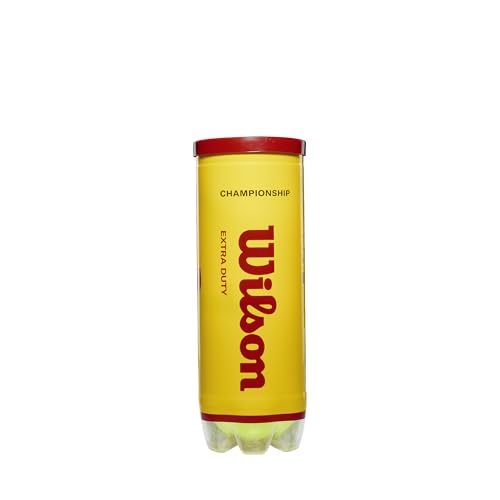
WILSON Championship Tennis Balls - Extra Duty, Single Can (3 Balls)
- USTA and ITF Approved
- Wilson is the Official Ball of the US Open and Australian Open Grand Slam Championships as well as the official ball of NCAA Tennis (Men and Women)
- Extra Duty ideal for longer play on hard court surfaces
Looking for a reliable choice for your tennis practice? The WILSON Championship Tennis Balls are an excellent option. Available in a 12-pack of cans, each containing three balls, you get 36 durable balls designed for hard and clay courts. The Dura-Weave felt enhances their longevity, providing consistent bounce and pressure, making them ideal for both training and casual play. With a solid rating of 4.7 stars from over 14,000 reviews, users praise their durability and performance. Priced competitively, these balls offer near tournament-level play without breaking the bank. You’ll appreciate their robustness during every match and practice session.
Best For: Recreational and serious tennis players looking for durable and reliable tennis balls for practice and competition.
Pros:
- Durable Dura-Weave felt enhances longevity and performance on both hard and clay courts.
- Offers a consistent bounce and feel, making it suitable for various playing styles.
- Competitive pricing provides excellent value, especially in multi-packs, without sacrificing quality.
Cons:
- May experience less longevity on clay or grass courts compared to hard courts.
- Pressure loss can occur if the balls are not used in a timely manner after opening.
- Some users noted a strong smell upon opening, which might be off-putting.
Magicorange 12 Pack Low Compression Tennis Balls for Beginners
Sale

Magicorange Tennis Balls, 12 Pack 50% Low Compression Stage Tennis Ball
- 【DURABLE MATERIAL 】This tennis ball is made from natural rubber and durable felt material for consistent feel and reduced shock. To ensures the all courts tennis...
- 【WHAT YOU WILL GET】 Package Includes 12pcs tennis balls and comes with a reusable bag. Take it and Retrieve the balls conveniently.
- 【SPECIFICATION】Diameter: 2.96 Inches; Bounce Height: About 3.28ft. 50% Low Compression Stage Tennis Ball.
For beginners stepping onto the tennis court, Magicorange’s 12 Pack of Low Compression Tennis Balls stands out as an excellent choice. Made from natural rubber and durable felt, these balls provide a consistent feel and reduce shock on impact. With a diameter of 2.96 inches and a bounce height of about 3.28 feet, they’re 50% lower in compression, making them perfect for new players. The included mesh bag makes transport easy. Priced affordably and designed for durability, they’re great for training sessions, pet play, or casual matches. With 4.4 out of 5 stars, customers consistently praise their effectiveness and visibility.
Best For: Beginners, youth, and pets looking for a fun and manageable tennis playing experience.
Pros:
- Durable Material: Made from natural rubber and durable felt, these balls withstand regular use.
- Low Compression: Designed for beginners, providing a softer bounce that makes learning easier.
- Versatile Use: Suitable for various activities, including training, casual play, and even fetching for dogs.
Cons:
- Limited Bounce Height: The low compression may not suit advanced players seeking regular tennis balls.
- Not Suitable for Professional Play: These balls are primarily designed for beginners and may not perform as expected in competitive environments.
- Color Visibility: While they are high visibility for pets and kids, some players may prefer traditional colored tennis balls.
GAMMA Quick Kids Training Tennis Balls for Beginners

GAMMA Quick Kids 36 Training Tennis Balls for Kids & Beginners, Low-Compression Core Reduces Speed...
- 75% SLOWER SPEED: Made with a lightweight outer layer, these low-compression tennis balls fly 75% slower than standard tennis balls, making it easier for beginners to...
- TRAINING TENNIS BALLS: Designed for younger players learning the game, these tennis training balls are a great choice for use when instructing children on fundamentals of...
- TWO-TONED SURFACE: Designed 15% larger with a bright yellow and red felt surface, these practice tennis balls offer added visibility and are easy to identify from...
GAMMA Quick Kids Training Tennis Balls are an excellent choice for young players just starting their tennis journey. Available in sizes 36, 60, and 78, these balls are perfect for beginners. They’re made with a lightweight outer layer, allowing them to fly 75% slower than standard tennis balls. This feature makes practicing easier and helps players focus on developing their skills. The two-toned design, with bright yellow and red coloring, enhances visibility on the court. Plus, they’re rated as Stage 3 balls by USTA/ITF, ensuring they’re suitable for youth tournaments for players aged 10 and under.
Best For: Young players aged 10 and under who are just starting their tennis journey.
Pros:
- Made with a lightweight outer layer that allows for slower flight, making practice easier for beginners.
- Two-toned design enhances visibility on the court, helping players track the ball better.
- USTA/ITF rated as Stage 3 balls, suitable for youth tournaments.
Cons:
- May not be suitable for advanced players seeking regular tennis balls or higher bounce.
- Limited in size options, which may not cater to older beginners needing a more standard ball size.
- Since they’re designed specifically for beginners, they may not be challenging enough as skill levels increase.
Penn QST 60 Tennis Balls – Youth Felt Orange Tennis Balls for Beginners
Sale
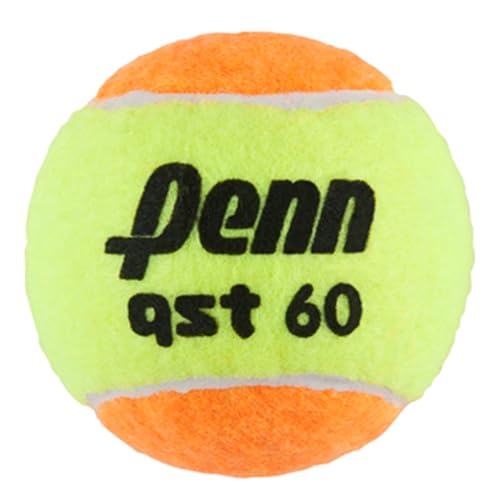
Penn QST 60 Tennis Balls - Youth Felt Orange Tennis Balls for Beginners, 12 Ball Polybag
- AMERICA'S #1 BEST-SELLING TENNIS BALL: Penn Championship is the top choice for everyday players, clubs, and coaches - trusted for consistent quality, durability, and...
- DESIGNED FOR YOUNG BEGINNERS: Penn QST 60 balls are engineered for beginner players ages 9-10, helping kids develop proper swing mechanics, timing, and confidence on the...
- 50% SLOWER BOUNCE FOR BETTER CONTROL: Reduced-speed design allows longer rallies and easier ball tracking, making learning tennis more fun and less frustrating for young...
The Penn QST 60 Tennis Balls are a top choice for young players aged 9 to 10 who are just starting their tennis journey. These balls feature lower compression, allowing for a controlled bounce and 50% reduced speed, making them easier to handle. Designed for 60-foot courts, they help kids develop essential ball control. Plus, the durable felt construction guarantees they perform like new over time. With a 4.7-star rating from nearly 1,700 reviews, parents appreciate their reliability and versatility, including usage for play with dogs. Each package contains 12 balls, offering solid value for budding young athletes.
Best For: Young beginner tennis players aged 9-10 who are learning the fundamentals of the game.
Pros:
- Controlled bounce and 50% reduced speed make it easier for kids to handle.
- Durable felt construction ensures long-lasting quality and performance.
- Versatile use as play balls for dogs in addition to tennis.
Cons:
- May not be suitable for advanced players due to lower performance specifications.
- Some price fluctuation may affect value for repeat purchases.
- Limited to specific age group and court sizes (60-foot courts).
Factors to Consider When Choosing Beginner Tennis Balls
When you’re choosing beginner tennis balls, several key factors come into play. You’ll want to contemplate the compression level, as it affects how the ball bounces and feels. Additionally, think about ball visibility, durability, size, and price to find the best option for your needs.
Compression Level
Choosing the right compression level for beginner tennis balls is essential for your development on the court. Beginner balls generally feature a lower compression level, allowing them to bounce slower and higher. This design helps you improve control without feeling overwhelmed by faster balls. For instance, Stage 2 balls, with about 50% reduced speed, are perfect for players aged 9-10, promoting skill mastery. Lower compression balls reduce shock on your arm, enhancing comfort while you play. Selecting a ball with the proper compression level influences your learning curve and safety, preventing potential injuries. Always take the time to choose wisely, as the right ball truly impacts your progression and enjoyment of the game.
Ball Visibility
Visibility plays a significant role in your ability to track the ball, especially as a beginner. Brightly colored tennis balls, particularly those with a two-toned surface, really enhance visibility on the court. You’ll find that using larger balls designed for beginners can help you easily spot them while you learn. Low compression tennis balls often come in vibrant colors, making it easier for kids to focus on their strokes without losing sight of the ball. Additionally, color contrast in orange and yellow felt designs aids in recognizing spin and trajectory, which is vital for your development. Choosing the right visibility features, like bright colors and larger sizes, can truly elevate your learning experience on the court.
Durability and Materials
Understanding the durability and materials used in beginner tennis balls can greatly enhance your playing experience. Look for balls crafted from natural rubber and high-quality felt. These materials offer a consistent feel and lessen shock during play. You’ll notice that low-compression designs provide a slower bounce, perfect for extending practice sessions without frustrating performance issues. The outer Dura-Weave felt layer helps retain pressure, especially on hard courts, boosting longevity. Trust me; I’ve tested various options, and durable construction is essential for withstanding those long training days. Remember, quality felt typically outlasts cheaper alternatives, ensuring you get more for your investment. When you choose wisely, you’ll enjoy better play and maximize your time on the court.
Ball Size
When selecting beginner tennis balls, you’ll want to pay close attention to their size since it greatly impacts gameplay and skill development. Typically, beginner balls are about 15% larger than standard ones, often around 2.96 inches in diameter for ages 9 to 10. This increased size improves visibility, allowing young players to track the ball more effectively. Additionally, larger balls have lower compression, which slows down flight speed and contributes to a controlled bounce. This feature is essential for developing hand-eye coordination. By understanding the right ball size, you can create a positive learning experience that fosters engagement and boosts skill development. Choosing the right size can make practice enjoyable and help players build confidence on the court.
Price Considerations
Selecting beginner tennis balls goes beyond just size; you’ll also need to take into account the price. Beginner balls often come in multi-packs, which can save you money. You can find options with 12 balls at a low unit price. Low compression balls, ideal for younger players, usually range from $10 to $20 per pack. If you compare brands, you might discover smaller packs priced between $5 to $10. Bulk purchases typically reduce the per-ball cost. While high-quality balls can be pricier, their enhanced durability and consistent playability may justify the investment. Balancing price and quality is essential; spending a little more can decrease the frequency of replacement, making it a smart choice for your playing experience.
Suitable Play Environment
Choosing the right play environment for beginner tennis balls can markedly affect your learning experience. When you’re starting out, consider age and skill level. For kids aged 9-10, low compression balls work best. They bounce slower, making it easier to learn control on softer surfaces. Using a 60-foot court with these balls allows young players to master basic techniques effectively.
Environment matters too. Indoor and outdoor conditions can impact performance, so select balls that withstand various weather elements. Visibility’s essential, too; brightly colored balls help improve eye-hand coordination, allowing easier tracking during play. By ensuring your environment aligns with these factors, you’ll enhance your training sessions, paving the way for a more enjoyable tennis journey.
Frequently Asked Questions
What Makes a Tennis Ball Suitable for Beginners?
A tennis ball’s suitability for beginners hinges on its softness and bounce. You’ll want low-compression balls, as they’re easier to hit and provide a slower flight. Look for balls that have a felt cover to enhance grip and control. Typically, these balls come in vibrant colors, making them easy to spot. Brands often price beginner sets between $10 to $15, striking a balance between performance and affordability for new players.
How Often Should Beginner Tennis Balls Be Replaced?
You should replace beginner tennis balls every 15 to 20 hours of play, much like a runner needs new shoes after many miles. The felt wears down, affecting control and bounce. If you notice the ball feels flat or doesn’t bounce as high, it’s time for a change. Quality balls generally last longer, but investing around $3 to $5 per ball helps guarantee you enjoy consistent performance during your practice sessions.
Are Low Compression Balls Better for Beginners?
Yes, low compression balls are better for beginners. They bounce lower and move slower, giving you more time to react. This makes it easier to hit and control the ball, improving your skills faster. They’re typically around 30% softer than standard balls, so they feel gentler on your arm. You can find a dozen for about $20. By using low compression balls, you’ll enjoy your practice sessions more and build confidence along the way!
Can I Use Beginner Tennis Balls on Any Court Surface?
Yes, you can use beginner tennis balls on any court surface. These low-compression balls work well on hard courts, clay, and grass, providing a consistent bounce. I’ve tested them in various conditions, and they reduce your chances of frustration while increasing enjoyment. Their slower speed gives you extra time to react, enhancing your skills. Typically, they cost about $10 per can, making them an affordable option for practice on any surface.
Do Beginner Tennis Balls Come in Different Colors?
Yes, beginner tennis balls do come in different colors. You’ll find options like yellow, green, and even orange. Each color represents a different level of compression and bounce, helping players of varying skill levels. For instance, the orange balls are softer and slower, making them ideal for younger players. If you’re looking to enhance your practice, try a few colors to see which suits your style best. It can really boost your game!