As an Amazon Associate, we earn from qualifying purchases. Some links on this site are affiliate links at no extra cost to you. Our recommendations are based on thorough research and editorial judgment.

Preventing Tennis Elbow Through Proper Conditioning

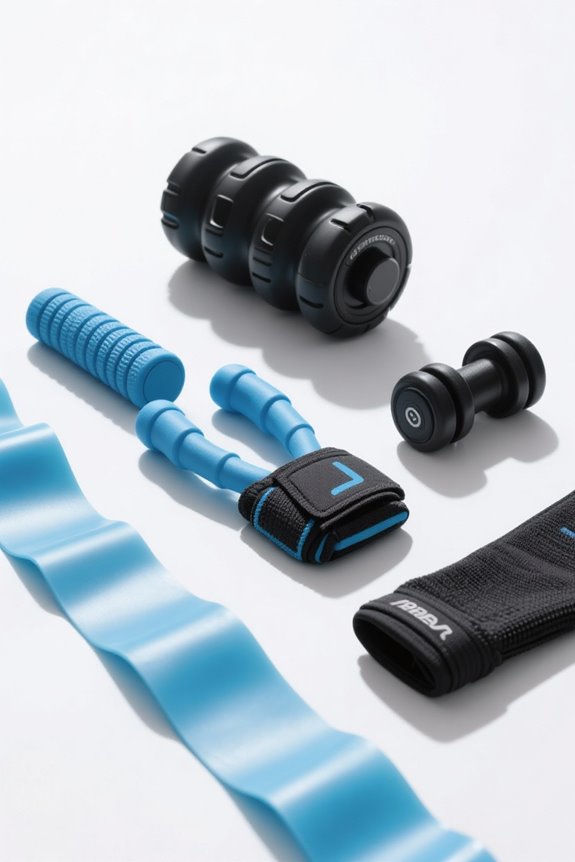
Studio-lit composition showcasing essential tennis elbow prevention equipment on pristine white backdrop. Featured are premium resistance bands in gradient blues, ergonomic forearm strengthening roller in matte black, professional wrist weight wrap system, and medical-grade compression sleeve. Arranged in balanced symmetry with soft drop shadows, each piece demonstrates superior craftsmanship through razor-sharp 8k detail. Vibrant accent colors pop against the minimalist setting, highlighting textured grips and flexible materials. Commercial-quality image emphasizes proper conditioning tools for athletes seeking injury prevention through systematic strengthening protocols.
# Preventing Tennis Elbow Through Proper Conditioning
Preventing tennis elbow requires a focus on proper conditioning. Strong forearm muscles protect tendons from overload, so incorporate forearm strengthening exercises like controlled rotations and towel twists. Enhance grip strength with simple tools like resistance bands. Regular stretching for forearm flexibility is essential, holding each stretch for 20 to 30 seconds. Simple ergonomic adjustments in sports can reduce strain. By employing these strategies consistently, you’ll set a solid foundation for elbow health. There’s much more to explore for ideal prevention.
Key Takeaways
- Engage in regular forearm strengthening exercises to enhance muscle resilience and stability, reducing the risk of tendon overload.
- Incorporate grip enhancement techniques, such as fist clenching and resistance band exercises, to improve grip strength and prevent injury.
- Perform dynamic warm-ups, including arm circles and wrist rotations, to prepare muscles and reduce strain on the forearm before activities.
- Implement daily stretching routines for wrist flexors and extensors to improve flexibility and promote tendon health.
- Monitor and modify activities to prevent repetitive strain, and take breaks during prolonged tasks to facilitate recovery and minimize injury risk.
Understanding Tennis Elbow
Understanding tennis elbow is essential for anyone engaging in repetitive arm movements, as this condition can affect daily activities and overall quality of life. Lateral epicondylitis, commonly known as tennis elbow, is primarily caused by repetitive stress on the tendons connecting forearm muscles to the elbow. Various activities, such as playing sports or using tools, can exacerbate pain. Risk factors include age, profession, and even genetic predisposition, making some individuals more susceptible. Effective symptom management often involves rest, ice application, and simple painkillers. Most cases resolve with non-invasive treatments, allowing individuals to return to their normal routines. Just as proper support equipment can enhance stability and reduce injury risk during play, using adjustable support braces during recovery can provide targeted compression to improve blood flow and manage pain effectively. Awareness and prompt action can considerably ease discomfort while enhancing your overall well-being.
Importance of Forearm Strength
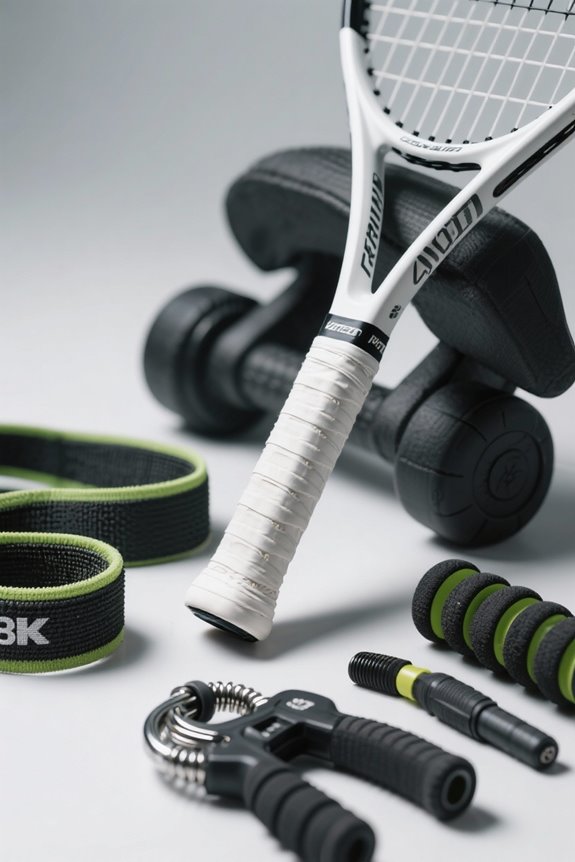
Forearm strength plays an indispensable role in preventing tennis elbow by acting as a protective barrier against tendon overload. Strong forearm muscles provide forearm stability, effectively dissipating forces generated during wrist and hand activities. This absorption reduces direct strain on tendons, lowering the risk of injury. When forearm muscles are weak, the excessive load shifts to tendon attachments, increasing the likelihood of microtrauma. Ideal muscle activation enhances grip control and wrist extension, minimizing abrupt movements that stress the tendon. Moreover, balanced forearm flexors and extensors are essential for optimal mechanics, preventing overuse injuries. Strengthening these muscles is important for reducing pain and improving functional outcomes in individuals at risk of developing tennis elbow. Regular training can make a substantial difference. When additional support is needed, adjustable compression supports can complement conditioning efforts by promoting blood circulation and providing personalized pain alleviation during activities.
Forearm Strengthening Exercises
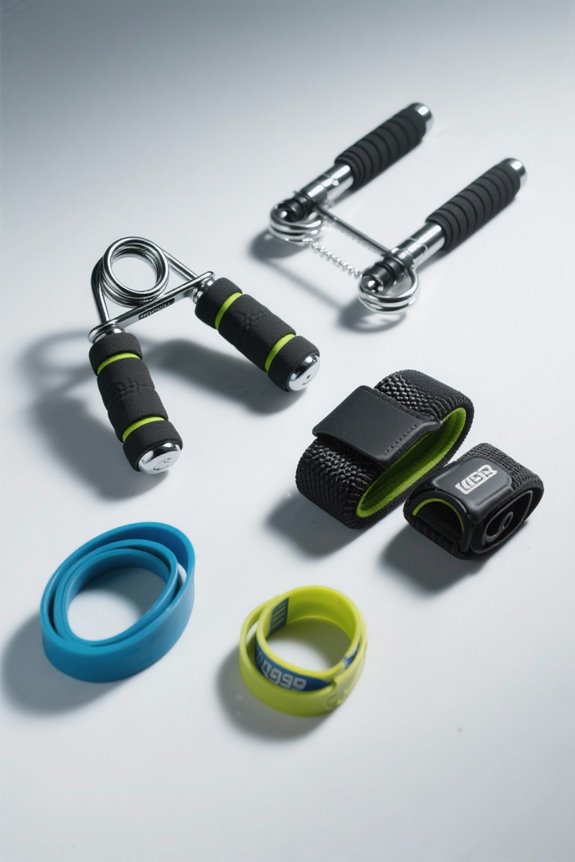
Strengthening the forearm is essential for anyone looking to prevent tennis elbow or improve recovery times. Effective exercises include isometric holds, which target muscles without excessive movement, promoting tendon resilience. Simple supinator and wrist extensor holds can be performed for 30 seconds, multiple times daily. Incorporating controlled forearm rotations using light dumbbells can enhance grip endurance, while also providing eccentric strengthening for the forearm muscles. Additionally, towel twists and hammer rotations contribute to both eccentric and concentric strengthening, reducing strain on the lateral epicondyle. Practicing these exercises on a regular basis helps improve overall forearm stability, allowing for better performance in activities that involve repetitive wrist use. For additional support during recovery, consider using adjustable compression braces that provide customizable stability without restricting your range of motion. Consistency is key for lasting benefits and injury prevention.
Recommended Products

✅ FIND YOUR PERFECT FIT – BICEP SIZE GUIDE Measure forearm circumference to select the correct size: S: 9–10.5" (23–27 cm), M: 10.5–12" (27–30 cm), L: 12–13.5" (30–34 cm), XL: 13.5–15" (34–38 cm), XXL: 15–16.5" (38–42 cm). Ensures secure fit for targeted elbow support during activity or recovery.

✅ Custom Fit: Sizing based on forearm length (olecranon to knuckles) with available sizes SM (11.5-13"), MD (13.5-14.5"), LG (15-16"), and XL (16.5-17.5") for optimal comfort and support.

Comfortable, adjustable support for elbow tendon discomfort
Grip Strength Enhancement Techniques
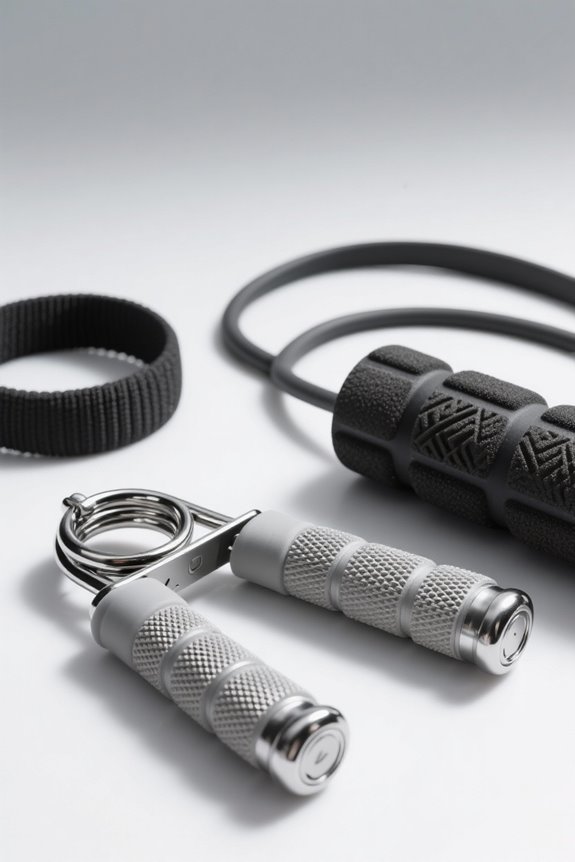
A well-developed grip is essential for enhancing overall athletic performance and daily functionality. To improve grip strength, individuals should explore various grip variations using targeted equipment. Fist clench exercises, which involve squeezing a towel or small ball for 10 seconds, can notably strengthen grip. Additionally, incorporating light dumbbells or resistance bands during exercises enhances forearm resilience. Devices like grip strengtheners offer focused training, making it easier to build strength progressively. Regular practice guarantees consistent results, and since these exercises are straightforward and require minimal investment, implementing them into your conditioning routine is feasible. Always aim for gradual resistance increases, but be careful to avoid overexertion, which can unintentionally lead to injuries like tennis elbow. Beyond grip training, players should also consider how their equipment choices, such as selecting strings with proper tension dynamics, can reduce arm strain and complement their conditioning efforts.
Recommended Products
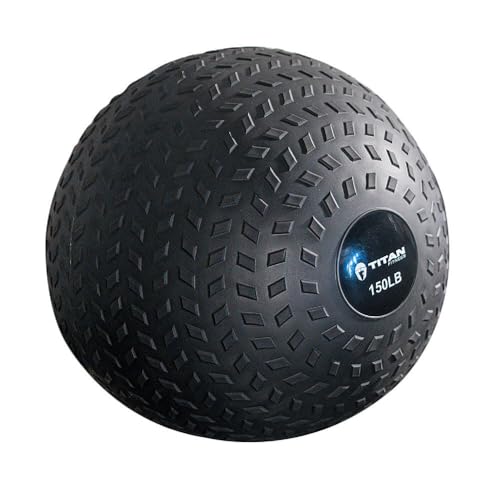
TREAD PATTERN GRIP: As your hands sweat throughout a workout, the Slam Ball's high-quality tread-patterned rubber shell ensures a steady slip-resistant grip. The outer shell also includes the Titan logo and weight indication molded into the ball printed in white.

Seriously Legit Wrist Roller for Baseball, Softball, Basketball, Golf, Tennis, Hockey, Boxing, Wrestling, MMA etc. Fact is there's not a sport practiced that can't benefit from a stronger, longer lasting grip.

Seriously Legit Wrist Roller for Baseball, Softball, Basketball, Golf, Tennis, Hockey, Boxing, Wrestling, MMA etc. Fact is there's not a sport practiced that can't benefit from a stronger, longer lasting grip.
Stretching Exercises for Tendon Flexibility
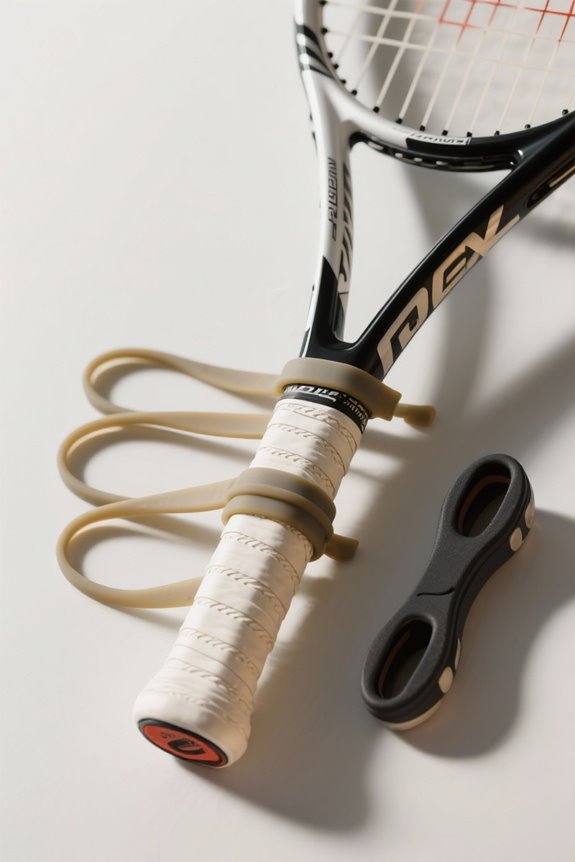
Proper flexibility of the tendons is a key factor in preventing injuries like tennis elbow. Incorporating dynamic stretches, such as wrist flexor and extensor stretches, helps improve tendon health. These exercises should be performed daily, holding each stretch for 20 to 30 seconds. This routine grants considerable flexibility benefits and prepares your tendons for the stresses of activity. Additionally, using elastic bands for finger and wrist stretches allows controlled tension that promotes mobility. Regular gentle stretching not only reduces tightness but also contributes to overall injury prevention. By integrating these specific techniques into your routine, you guarantee your tendons are resilient and better equipped to handle repetitive motions, markedly lowering the risk of developing painful conditions like tennis elbow. For athletes experiencing persistent wrist discomfort during play, compression wrist supports can provide additional stability while allowing full range of motion during conditioning exercises.
Recommended Products

NEOPRENE CORE TECHNOLOGY - The STRYKR Series features Neoprene Core Technology, which provides windproof, waterproof and insulating qualities by combining a membrane of soft, thin, durable and highly elastic neoprene with durable outer fabric

Sale is for a complete agility band pack

The Web Slide Difference. The Web Slide Exercise Rail organizes your space and streamlines training sessions. Any resistance bands/tubing, pulley devices, or other exercise equipment that utilizes a Web Anchor Strap for door attachment can be set up and ready to go in seconds with a Web Slide Exercise Rail—no door required!
Managing Exercise Progression
Managing exercise progression effectively is vital for preventing and recovering from tennis elbow. This process involves gradually increasing weight, repetitions, and exercise intensity based on individual pain assessment. Initially, one should start with no weight for wrist extension and flexion exercises, advancing to 1 lb, then 2 lbs, and eventually to 3 lbs as pain allows. It’s essential to perform these exercises three times a week while incorporating daily stretching and grip work. Progression should only occur if pain does not worsen, emphasizing a cautious approach. Regular assessments of your pain levels will help guarantee that the adjustments made are both safe and effective, protecting your tendons during recovery and minimizing the risk of reinjury. Additionally, using equipment with shock absorption technology can help reduce strain on the arm during activities that might aggravate the condition.
Load Management Strategies
Load management strategies play an essential role in safeguarding the elbow from the strain that can lead to tennis elbow. Understanding load tolerance is crucial; it determines how much stress the elbow tendons can handle. Employing progressive loading, such as gradually increasing resistance during exercises, can greatly enhance tendon resilience. Incorporating isometric and eccentric workouts strengthens muscles without excessive joint movement. Furthermore, adequate rest is critical to allow tendons time for recovery, while monitoring activity levels helps prevent overuse injuries. Tools like braces and resistance bands can further assist. By structuring training into phases, you optimize body adaptation to increased loads, thereby minimizing injury risk. Just as proper arch support in footwear can alleviate strain on the plantar fascia, appropriate conditioning reduces stress on elbow tendons. A thoughtful load management approach lays the groundwork for a healthier playing experience.
Recommended Products

Durable Aluminum Frame: Crafted with powder-coated aluminum (60-70μm protective layer) to resist rust and sun fading. Engineered to endure rain and sun—perfect for year-round outdoor dining.

Built with premium GORE‑TEX 3‑Layer Pro shell, this jacket delivers unmatched waterproofing, breathability, and long‑term durability. Reinforced with custom variable‑density Superfabric and Vectran Fiber for superior abrasion, cut resistance, and long‑lasting performance on any adventure.

【All-Weather Durability】Crafted with UV-resistant resin wicker and rustproof steel framing, this modular sofa set thrives in sun, rain, or snow. The weatherproof construction resists fading, cracking, and corrosion, ensuring long-lasting performance in any season. Cushion and pillow fabrics can shake off splashes or drizzle easily, but use the included waterproof cover during heavy rain or extended outdoor storage to maximize protection.
Proper Technique and Biomechanics
Tennis elbow can often be linked to how players execute their strokes and grip their racquets. To enhance muscle coordination and guarantee biomechanical efficiency, it is crucial to focus on grip technique. A moderate grip size reduces excessive strain on the forearm muscles, protecting against injury. Additionally, quick grip release after ball impact lessens shock transmission to the elbow. Proper stroke mechanics are critical; experienced players absorb impact better, due to effective follow-through. Moreover, strengthening the shoulder and core can help mitigate excessive loading on the elbow. By refining technique and addressing weaknesses in the kinetic chain, players can distribute forces more evenly, markedly reducing the risk of tennis elbow. Similar to racquet sports, pickleball players should ensure their grip size fits snugly, as a loose fit may lead to wrist injuries and compromise control during play.
Recommended Products

Diablo tensioner and linear pull for the most delicate strings. Glide to Activate string gripper allows tensioning with one hand. Super fast.

The 700 ES Features Patented Time Saving Down-Press Clamps and Gravity Assisted Release

True Constant Pull Tensioning with extremely sensitive electronic tensioner with advanced microprocessor technology
Recovery Practices After Activity
Effective recovery practices after activity are essential for individuals recovering from tennis elbow. Incorporating rest approaches is important, as short breaks from aggravating tasks can greatly promote healing. Modifying activities to lessen repetitive wrist and elbow movements is advised, reducing strain on the affected area. Cold therapy is also beneficial; applying ice for 15 minutes several times daily helps alleviate inflammation and pain. Nonsteroidal anti-inflammatory drugs, like ibuprofen, can further assist in managing symptoms. Pain monitoring is critical, guiding a safe progression during rehabilitation. This careful approach guarantees that any reintroduction to physical activities aligns with symptom relief, allowing tendons to adapt without risking further injury. For those returning to racquet sports, selecting equipment made from durable polyethylene can help reduce vibration and stress on the elbow joint. Consequently, consistent recovery practices are key to long-term success in managing tennis elbow.
Maintenance of Forearm Health
Maintaining forearm health is essential for athletes and anyone engaged in repetitive wrist activities. Regular forearm maintenance through strengthening and stretching notably enhances tendon resilience. Strengthening exercises, like the Tyler Twist, should be incorporated into daily routines, using light dumbbells for about 30 repetitions. This builds both strength and muscle endurance. Additionally, stretching forearm muscles through wrist flexion and towel twists promotes flexibility, aiding recovery and reducing stiffness. Effective grip strength exercises, such as fist squeezes, support racket control and stability. Proper arch support in tennis shoes helps stabilize the foot and redistributes pressure for better alignment, reducing strain on the kinetic chain that extends through the legs and into the forearm during play. Lifelong commitment to these practices not only protects the elbow but also guarantees ongoing muscle and tendon health. By consistently prioritizing forearm conditioning, individuals can considerably lower their risk of injury and enhance overall performance.
Injury Prevention Best Practices
A proactive approach to injury prevention can considerably lower the risk of tennis elbow for athletes and recreational players alike. Implementing activity variation is critical; cross-training helps balance muscle use and reduces repetitive strain. Gradually building strength through forearm exercises every other day is essential for resilience. Recognizing early signs of pain is crucial; ceasing activities that trigger discomfort can prevent further injury. Incorporating rest breaks during intensive sessions can meaningfully decrease overuse stress. Additionally, optimizing your stroke technique and using appropriate equipment, like ergonomic grips, further safeguards against strain. By prioritizing these best practices, players can enhance their performance while minimizing the likelihood of tennis elbow development. Proper conditioning is the foundation of a successful, pain-free sporting experience.
Ergonomic Considerations in Sports
When evaluating equipment for sports, one key consideration is how well it fits the athlete’s unique body dimensions. Properly designed gear, featuring ergonomic design, not only enhances performance but also minimizes injury risk. Customization through adaptive equipment, like adjustable racket handles, guarantees a comfortable fit that reflects individual anatomical needs. Ill-fitting gear can lead to injuries, such as tennis elbow, by forcing improper movements. Regular assessments of your equipment are crucial as your body changes. Biomechanical analysis and user feedback play critical roles in developing effective gear that supports your movements while reducing fatigue. Prioritizing ergonomics allows you to concentrate on your game, rather than on discomfort or instability. Investing in well-designed equipment pays off in long-term health and performance.
Role of Warm-Up and Cool-Down
Proper warm-up and cool-down routines are essential components of a thorough approach to injury prevention in sports. Engaging in a dynamic warm-up markedly enhances blood flow to the elbow and forearm muscles, which reduces the risk of injury. This includes exercises like arm circles and wrist rotations that prepare the joints for repetitive motions common in racquet sports. The benefits of warming up extend to improving flexibility and muscle elasticity. After activity, cool-down techniques play an important role in recovery. Gentle stretching and gradual activity reduction can lower muscle stiffness and promote healing. Together, these routines greatly decrease the likelihood of overuse injuries, making them critical for every athlete aiming to prevent conditions like tennis elbow.
Long-Term Conditioning Strategies
Long-term conditioning strategies play an essential role in preventing tennis elbow by focusing on the strength and stability of the forearm and shoulder regions. Implementing a conditioning schedule that includes progressive forearm muscle strengthening is crucial. This involves daily eccentric and concentric wrist extension exercises with light dumbbells, gradually increasing weight as you achieve 10 repetitions comfortably. Additionally, scapular strengthening exercises support kinetic chain efficiency, reducing the load on elbow tendons. Incorporating cross-training and gradual load management reduces the risk of overuse injuries. Monitoring tendon health through consistent training, flexibility exercises, and proper technique modifications can maintain tendon resilience. By committing to these strategies, individuals can greatly decrease the likelihood of developing tennis elbow over time.
Frequently Asked Questions
Can Nutrition Play a Role in Preventing Tennis Elbow?
Nutrition strategies indeed play a pivotal role in preventing tennis elbow. Dietary supplements like collagen-derived peptides, vitamins, and anti-inflammatory nutrients support tendon health, aiding in recovery and potentially reducing the risk of tendinopathy in active individuals.
How Long Should I Rest Before Returning to Activities?
The recommended rest duration before returning to activities typically spans several days to weeks. Resuming activities should occur only when pain subsides, with gradual reintroduction and careful monitoring for any recurrence of symptoms.
What Are Common Signs of Impending Tennis Elbow?
Common signs of impending tennis elbow include pain sensitivity near the elbow, decreased grip strength affecting daily tasks, tenderness to touch, and forearm fatigue during activities involving repetitive wrist or arm movements, signaling potential inflammation.
Are There Specific Sports or Activities More Prone to Tennis Elbow?
The crack of a golf club meets the air, while weights clank in rhythm, both echoing the strain on overworked muscles. These sports, intensely repetitive, often lead individuals towards the painful grip of tennis elbow.
How Can I Modify My Training Schedule to Prevent Injury?
To prevent injury, one should incorporate cross-training benefits and recovery techniques into their training schedule. Gradually increasing intensity, respecting rest days, and diversifying activities can enhance tendon resilience and overall fitness while minimizing injury risk.


