As an Amazon Associate, we earn from qualifying purchases. Some links on this site are affiliate links at no extra cost to you. Our recommendations are based on thorough research and editorial judgment.

Pickleball-Specific Stretching Routines

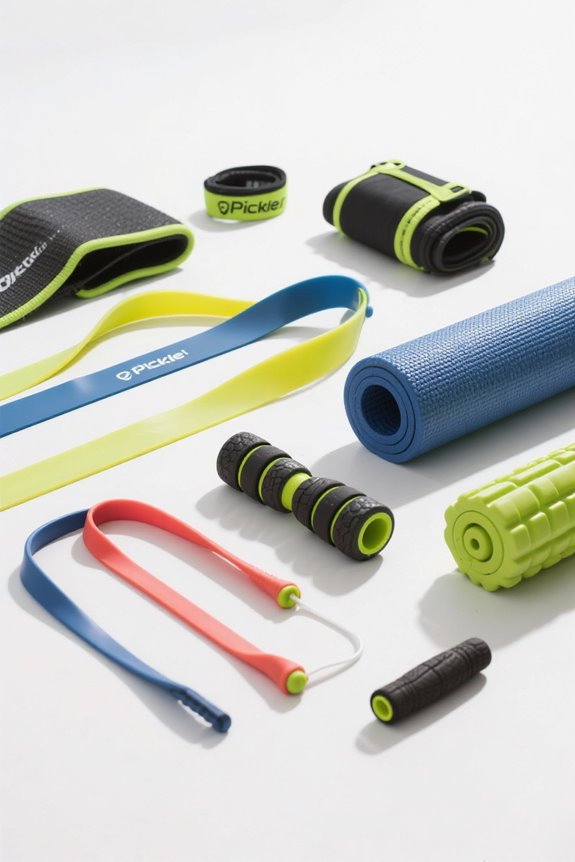
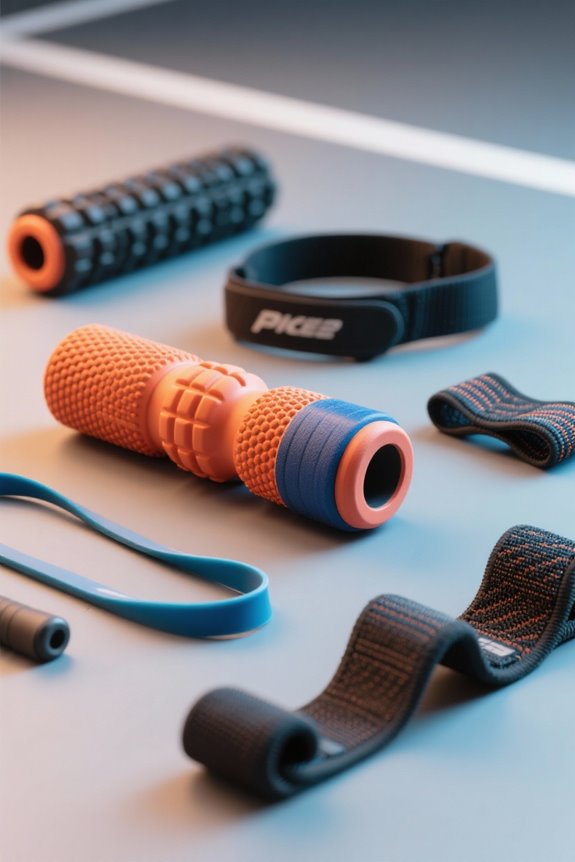
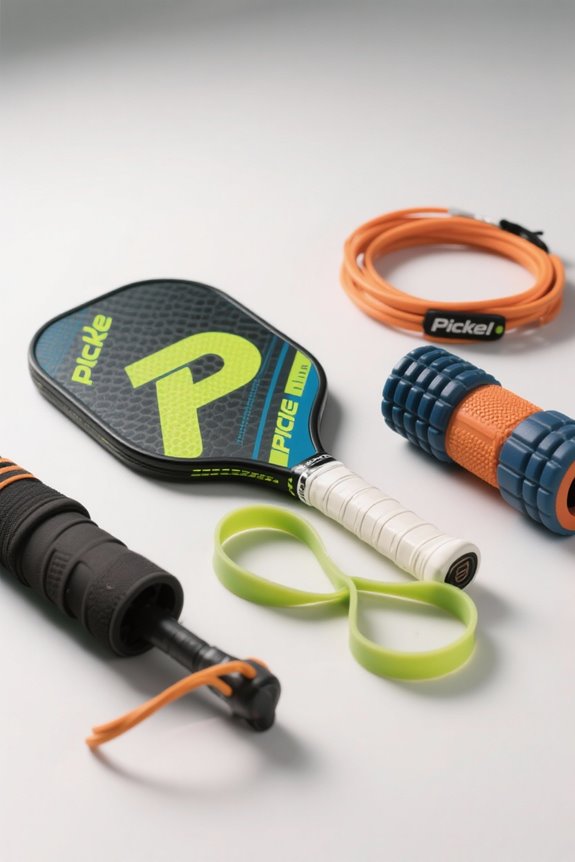
Premium stretching equipment and accessories designed for pickleball players, photographed in pristine studio conditions. The collection features resistance bands, foam rollers, yoga mats, and mobility tools arranged on a pure white backdrop. Professional lighting creates soft shadows that accentuate each item’s texture and quality. Vibrant colors pop against the minimalist setting, showcasing flexibility aids and recovery tools essential for preventing injuries. Commercial-grade 8k resolution captures every detail of these specialized sports products, from grip textures to material finishes, perfect for high-end athletic catalogs and e-commerce platforms.
# Pickleball-Specific Stretching Routines
Pickleball-specific stretching routines are vital for enhancing performance and preventing injuries. Focus on dynamic warm-ups like shoulder rotations and lateral lunges for mobility. Incorporate static stretches targeting quads, hamstrings, and shoulders post-game to improve flexibility. Engaging in core exercises such as planks helps stabilize during rapid movements. Commit to at least 10-15 minutes of stretching before and after games. This attention to flexibility can greatly affect your playing experience. Discover tailored routines and essential details to optimize your game.
Key Takeaways
- Start with a 5-10 minute dynamic warm-up, including light jogging and exercises like jumping jacks to activate muscles before playing pickleball.
- Focus on shoulder and arm mobility with stretches like the cross-body shoulder stretch and shoulder rotations to enhance flexibility and strength.
- Incorporate lower body stretches such as lateral lunges and hamstring stretches to improve hip flexibility and ankle stability for quick movements.
- Engage in core strengthening exercises like planks and rotational movements to enhance stability and spinal flexibility crucial for pickleball gameplay.
- Dedicate 10-15 minutes post-game for static stretching sessions targeting major muscle groups, maintaining holds for 15-30 seconds to aid recovery.
Importance of Pre-Play Stretching
When players prioritize pre-play stretching, they considerably enhance their performance on the court. Stretching increases flexibility benefits that are essential for agility and range of motion, particularly in fast-paced games like pickleball. By increasing blood flow, players improve injury preparedness, reducing the risks of sprains and strains. Dynamic stretches, mimicking game movements, are particularly effective in activating critical muscle groups. Engaging core, hip, and leg muscles helps promote better coordination and quicker reaction times. Without proper stretching, players risk muscle stiffness and soreness that can hinder performance the next day. Just as moisture-absorbing grips help prevent slippage in tennis, proper stretching prevents muscle stiffness that can compromise your hold and control during play. Consequently, investing a mere 5 to 10 minutes in a structured warm-up routine can considerably improve your game and enjoyment of pickleball.
Shoulder and Arm Mobility Focus
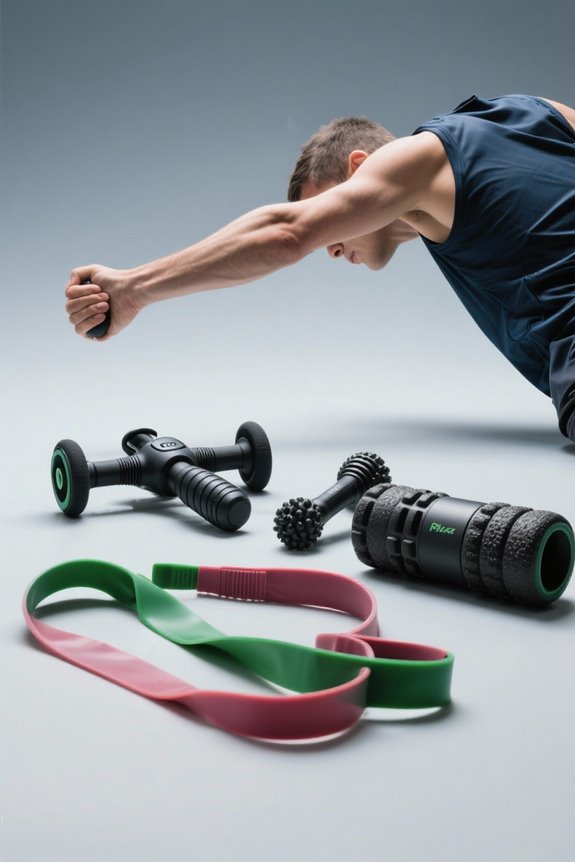
Enhancing shoulder and arm mobility is crucial for pickleball players aiming for peak performance. Effective arm stretches, such as the cross-body shoulder stretch, enhance flexibility for better swings. Incorporating shoulder rotations with resistance bands can strengthen the rotator cuff muscles, essential for injury prevention. The posterior capsule stretch increases range of motion, facilitating better overhead shots. Additionally, pectoral stretches help open the front shoulder area, allowing for ideal reach during games. Remember to include scalene stretches to release tension in the upper shoulder region. By consistently implementing these targeted routines, players can greatly boost their mobility, enhance performance, and reduce the risk of injuries, ultimately contributing to a more enjoyable pickleball experience on the court. Just as proper footwear with adequate arch support helps distribute body weight evenly during play, maintaining shoulder mobility ensures balanced mechanics throughout your swing motion.
Recommended Products

Graduated Resistance Bands for Shoulder Rehab & Strength: Includes 6 cloth covered bands (2x 5lb, 2x 10lb, 2x 25lb) that support every phase of recovery - from early post injury rehab and rotator cuff repair to mobility enhancement and full strength athletic training. Designed for men and women of all fitness levels.
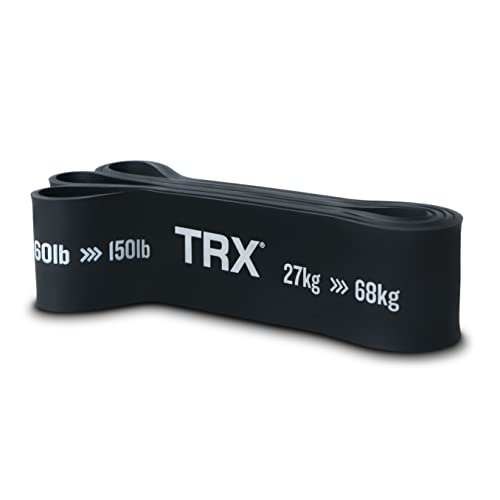
WHAT’S IN THE BOX: Add an extra challenge to your resistance training with a TRX long resistance band in a full-body size. This band has a 60-150 lb resistance amount. We offer multiple weights to choose from, so you can perfect your ideal resistant band workout routine.

Train real tennis strokes with resistance! Racket-style handle allows you to practice forehands, backhands, serves, and volleys with true on-court mechanics. Tennis Training Aid for Enhanced Performance: Increases racket head speed, power, and spin through targeted resistance training
Lower Body Mobility and Stretch Routines
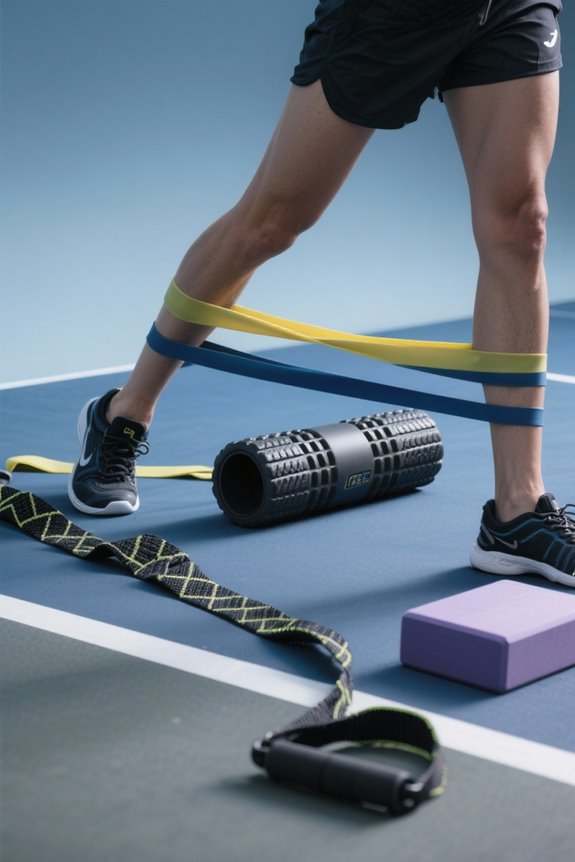
Lower body mobility serves as the foundation for ideal pickleball performance. Essential stretch techniques improve hip flexibility, stabilize the ankles, and enhance leg strength. Players should incorporate quad and hamstring stretches for better movement while reducing stiffness. Lateral lunges strengthen glutes, facilitating quick pivots during play. Dynamic stretching, like jumping jacks and high knees, warms up the lower body effectively. Furthermore, calve stretches maintain calf strength, vital for abrupt stops. Advanced techniques, such as the pigeon pose and figure four stretch, target hip mobility. Incorporating these routines into regular practice not only boosts performance but also minimizes injury risks, allowing players to excel on the court. Proper footwear with enhanced cushioning further supports lower body movements by reducing fatigue during extended play sessions. Prioritizing lower body mobility is key for every pickleball athlete.
Recommended Products

Suitable For Non-Cleated Shoes: Compatible with all non-cleated athletic footwear, VKTRY shock absorption insoles are designed to promote energy return, responsive cushioning, and stability during dynamic movements like running, jumping, basketball, court sports, and landing. Easily slips into athletic footware like running shoes and basketball shoes. Also available in a cleated-shoe version with added underside grip for secure placement.

Hands-Free Slip-On Entry for Easy Court Access. Skip the laces and step right in. The Advantage features a patented hands-free design that secures your foot instantly, so you can get on the court faster and focus on your game.

PROFESSIONAL-GRADE COMFORT: Podiatrist-certified arch support system developed with 20 years of data and 120,000 foot scans ensures optimal comfort for running shoes for women
Core and Spinal Health Maintenance
Strong core and spinal health greatly influence a player’s performance on the pickleball court. Core engagement is crucial for providing stability during quick, multi-directional movements. For example, holding a plank for 30-60 seconds builds static core endurance, aiding postural control. Incorporating exercises like dead bugs enhances pelvic and rib cage alignment, essential for leg movements. This focus on spinal alignment reduces stress during torso twists, which are common in swings. Rotational movements, such as Russian twists with a medicine ball, improve spinal flexibility while activating deep core muscles. Prioritizing proper form, such as a flat back during exercises, guarantees a neutral spine, thereby promoting overall health. Regular stretching routines also contribute remarkably to improved spinal range of motion and injury prevention. Proper footwear with cushioning technology can further reduce fatigue and support core stability during extended play sessions.
Dynamic Warm-Up Drills Specific to Pickleball
Preparing for pickleball begins with effective dynamic warm-up drills tailored specifically for the sport. These dynamic warm-ups are essential for injury prevention, helping to elevate body temperature and enhance blood flow. A gentle jog or side shuffles can simulate the lateral movements seen in games. For increased agility, incorporate karaoke drills to activate the hips and ankles. Include lower body drills like high steps and butt kicks to engage quads and hamstrings. Upper body activation is key as well; arm circles and trunk extensions prepare players for overhead shots. Finish with multi-planar lunges to prep for unpredictable movements, ensuring muscles are primed and ready. Just as proper shoe fit is essential for preventing foot issues during play, a well-structured warm-up can enhance performance while minimizing injury risk.
Recommended Products
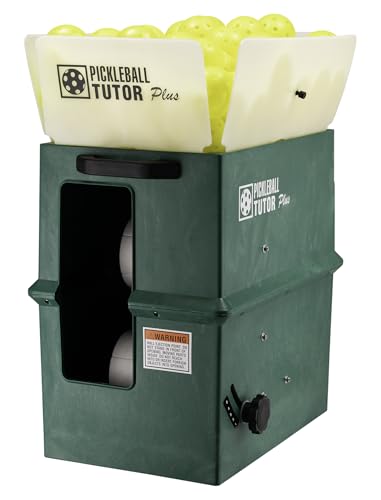
EASY-TO-USE KNOB CONTROLS - No programming or phone app required.

EASY-TO-USE KNOB CONTROLS - No programming or phone app required.

OFFICIAL PADDLE SPONSOR OF WORLD PICKLEBALL PLAYER BEN JOHNS. An innovator & global leader in table tennis for 70+ years, JOOLA teams up with Ben Johns to create a new line of pickleball equipment that will forever change the game.
Post-Play Recovery and Stretching
Post-play recovery is essential for every pickleball player aiming to maintain peak performance and minimize injury risks. Implementing effective recovery techniques can drastically improve your game. Lower body stretching, including calf, quadriceps, and hamstring stretches, helps release tightness after intense matches. Upper body routines, such as the posterior shoulder and rotator cuff stretches, are vital for maintaining shoulder health. Additionally, targeting the core with spinal twists and cobra stretches can relieve tension built up during play. Each stretch should be held for 20-30 seconds to maximize stretching benefits. Just as proper footwear with cushioning and support features minimizes foot fatigue during play, appropriate recovery techniques reduce overall muscle strain and promote faster healing. By consistently focusing on these post-play recovery routines, players not only enhance their flexibility and endurance but also create a healthier approach to their pickleball experience.
Benefits of Stretching for Injury Prevention
While many players may overlook stretching, its benefits for injury prevention are substantial in pickleball. Enhanced flexibility decreases the risk of muscle strains and sprains, allowing players to move more efficiently. Improved range of motion leads to smoother movements on the court, fostering better performance under pressure. Stretching also reduces muscle soreness, easing recovery after play. In addition, it directly combats common injuries like tendonitis and rotator cuff issues, which are prevalent in repetitive sports. By incorporating stretching into your routine, you enhance mental focus and gain valuable injury awareness. This proactive approach equips players to understand and mitigate risks, ensuring prolonged enjoyment of the game while reducing the likelihood of setbacks. Just as proper grip comfort and control are essential for optimal racquet performance in tennis, maintaining flexibility through stretching ensures your body performs at its best during intense pickleball rallies.
Stretching Techniques for Optimal Performance
Stretching techniques play an essential role in optimizing performance on the pickleball court. Incorporating dynamic stretches, such as lunges and torso twists, enhances your movement patterns, preparing your body for the game. These stretches improve flexibility benefits, increasing your range of motion for rapid directional changes and powerful strokes. Focus on specific muscle groups; dynamic arm circles boost shoulder mobility, while hip swings promote agility. Core exercises, including twists and side stretches, activate vital trunk muscles for stability. Lower body stretches for hip flexors and hamstrings enhance your stride length, significant for quick movements. Just as proper grip size is crucial for paddle control to prevent wrist injuries, appropriate stretching helps maintain joint stability and reduces strain during play. Regular practice not only improves performance but also minimizes strain, ensuring you play your best game while enjoying all the benefits of pickleball.
Timing and Duration of Stretching
To achieve peak performance on the pickleball court, understanding the timing and duration of stretching is essential. A prime warm-up should begin with a light jog or fast walk for 2-3 minutes, increasing muscle temperature and elasticity. Following this, dynamic stretches mimic game movements, leading into brief static stretches for major muscle groups like quadriceps and hamstrings. After gameplay, an effective cooldown starts immediately to reduce muscle tension. Dedicate at least 5-10 minutes to static stretches targeting the lower body, upper body, and core to promote recovery. For players over 50, modifying the duration and intensity of these routines according to comfort is vital. Consistency aids flexibility and decreases injury risk, enhancing overall play. Just as professional tennis players use heat-protective bags to maintain their equipment’s performance, protecting your body through proper stretching timing preserves muscle function and extends your playing career.
Stretching for Different Skill Levels
Developing an appropriate stretching routine is essential for players at every skill level in pickleball. Beginners should focus on gentle dynamic movements like walking lunges and arm circles to prepare for lateral movements. Basic static stretches, such as quadriceps and hamstring stretches, aid flexibility and reduce injury risk. Intermediate players should incorporate more complex stretches like lateral lunges, trunk twists, and extend hold times to target frequently tight muscles. Advanced techniques, including dynamic sumo squats and one-leg skier movements, develop explosive power and stability. Senior players benefit from controlled stretches that maintain joint health and flexibility. Each skill level must address unique flexibility challenges while fostering a consistent stretching habit to enhance performance and prevent injuries effectively. Wearing breathable athletic shoes during stretching sessions helps maintain comfort and proper foot positioning throughout the routine.
Incorporating Flexibility Training Into Routine
Incorporating flexibility training into a pickleball routine can greatly elevate overall performance and prevent injuries. Players should begin with flexibility assessments to identify specific needs in their training. Following established training guidelines, it’s essential to dedicate 10-15 minutes before and after each game. Dynamic stretching can activate muscles during warm-ups, while static stretching post-play enhances long-term flexibility. Players should aim for flexibility sessions 2-3 times a week on non-playing days to develop substantial gains. Additionally, integrating modalities like yoga or foam rolling further supports flexibility and aids in recovery. By carefully balancing these practices, pickleball enthusiasts can improve their game, reduce injury risks, and increase their enjoyment of this dynamic sport.
Sample Pre-Game Stretching Routine
A well-structured pre-game stretching routine can considerably enhance a pickleball player’s performance while reducing the likelihood of injuries. Dynamic warm-up movements like forward lunges with torso rotation and lateral lunges activate key muscle groups. Light jogging or high-stepping drills further boost heart rate and neuromuscular coordination.
Players should focus on calf and quadriceps stretches to guarantee joint health, while hip flexor stretches improve movement efficiency. Avoid common stretching misconceptions; static stretching can temporarily reduce muscle strength. Instead, emphasize dynamic stretches for ideal readiness. Aim for 10-20 repetitions per movement, maintaining fluid motion. By incorporating these effective recovery strategies, players can prepare their bodies for the demands of fast-paced pickleball, improving both performance and safety on the court.
Recommended Products

All-Day Comfort in Breathable Athletic Fabric: This women's athletic dress set is crafted from premium moisture-wicking fabric that keeps you cool during intense matches. Perfect as a tennis outfit or golf dress, the quick-drying material offers four-way stretch for complete freedom of movement. Whether you're wearing it as a pickleball outfit or casual athletic dress, you'll stay comfortable from warm-ups to cool-downs

HOCKEY THEMED POLO - A light blue short sleeve hockey shirt covered in hockey player silhouettes gives this hockey polo a clean and dynamic look built for the player, coach, or fan who lives for the moment the puck hits the back of the net, a sharp piece of hockey apparel that brings real rink energy into every room without saying a single word
Sample Post-Game Stretching Routine
While the excitement of a pickleball match might linger after the final point, a well-structured post-game stretching routine is essential for peak recovery. Focusing on post-game flexibility enhances muscle recovery and minimizes soreness. A thorough approach would include a calf stretch, quadriceps stretch, and hamstring stretch to target lower body muscles. For the upper body, incorporate stretches like the posterior shoulder stretch and rotator cuff stretch to prevent injuries. Dedicate 7 to 10 minutes for this routine, as consistency is key. Each stretch should be held for 15 to 30 seconds, ensuring muscles return to their optimal state. This proactive habit pays dividends, allowing players to perform better in subsequent games while maintaining long-term health.
Recommended Products

HEAVY-DUTY CONSTRUCTION WITH GALVANIZED HARDWARE: Built to withstand year-round outdoor conditions, this center strap uses corrosion-resistant galvanized components to ensure long-lasting performance on any court.

Regulation tennis court net center strap.

Made of durable polyester to hold up to outdoor weather conditions
Frequently Asked Questions
How Can I Tell if I’M Stretching Correctly?
To determine correct stretching, one should guarantee proper form, avoiding common mistakes like bouncing or misalignment. Feel mild tension without pain, and maintain steady holds for effective results and improved flexibility over time.
What Should I Do if I Feel Pain While Stretching?
Upon feeling pain during stretching, it’s essential to pause immediately. Implement stretch modifications by easing out of the position. Employ pain management techniques to prevent further injury and promote recovery through proper adjustments and professional guidance.
Can I Stretch Immediately After an Injury?
Stretching immediately after an injury is not advised, as it may hinder recovery. Focus on rehabilitation stretches and injury prevention techniques once healing begins to guarantee safe progression and minimize the risk of reinjury.
How Often Should I Incorporate Stretching Into My Weekly Routine?
Incorporating stretching into a weekly schedule at least 2-3 times enhances flexibility benefits considerably. This consistency helps reduce injury risks and supports overall muscle performance, contributing to better physical fitness and long-term health.
Are There Any Specific Stretches for Older Players?
For older players, age considerations in stretching include hip and shoulder stretches, along with balance exercises, to enhance stability. Incorporating these elements promotes flexibility, reduces injury risk, and improves overall performance during physical activity.


