As an Amazon Associate, we earn from qualifying purchases. Some links on this site are affiliate links at no extra cost to you. Our recommendations are based on thorough research and editorial judgment.


Managing Blisters During Tennis Matches

Professional studio photograph showcasing essential blister management equipment for tennis players. Centered composition features medical athletic tape, blister prevention patches, specialized sports bandages, and moleskin padding arranged on pristine white background. Premium quality items including friction-reducing balm stick and emergency blister care kit displayed with precise spacing. Studio lighting creates soft shadows while highlighting product textures and vibrant packaging colors. Sharp 8k resolution captures every detail of these performance-essential accessories. Minimalist styling emphasizes the practical, high-end nature of proper blister prevention and treatment solutions for competitive tennis players.
# Managing Blisters During Tennis Matches
Managing blisters during tennis matches involves key strategies. First, guarantee proper footwear that fits snugly, leaving a thumb’s width from the longest toe to the shoe front. This minimizes friction and prevents blister formation. Second, moisture-wicking socks can keep feet dry, reducing skin softening and blister risk. Regularly check grip sizes and use friction-reducing balms to protect your hands. Learning more about the causes and specific mitigation techniques can further enhance your performance and comfort on the court.
Key Takeaways
- Ensure proper footwear fits snugly, allowing a thumb’s width from the longest toe, to minimize friction and reduce blister risk.
- Use moisture-wicking socks to manage sweat and maintain dryness, reducing the likelihood of blisters forming during play.
- Apply friction-reducing balms on high-friction areas before matches to minimize skin irritation and enhance comfort.
- Utilize hydrocolloid or island dressings on existing blisters to protect them and promote healing while playing.
- Gradually adapt to new equipment and practice proper grip techniques to reduce localized friction and prevent hand blisters.
Causes of Blisters in Tennis
In tennis, blisters can be a frustrating setback that disrupts performance. Various factors contribute to blister formation, with foot care being vital. Poorly fitted footwear can cause excessive friction, leading to blisters on the feet. Professional players often experience hand blisters due to inappropriate grip size. When the grip is too small or too large, it encourages excessive pressure and movement that can irritate the skin. Additionally, rapid movements and changing directions on the court increase the risk of blisters. Prolonged play without proper footwear can aggravate this issue, leading to painful blisters. Shoes with breathable mesh materials help regulate temperature and moisture, reducing the risk of blisters during extended matches. Consequently, understanding the causes is essential for effective prevention and maintaining peak performance in the game.
Understanding Friction and Movement
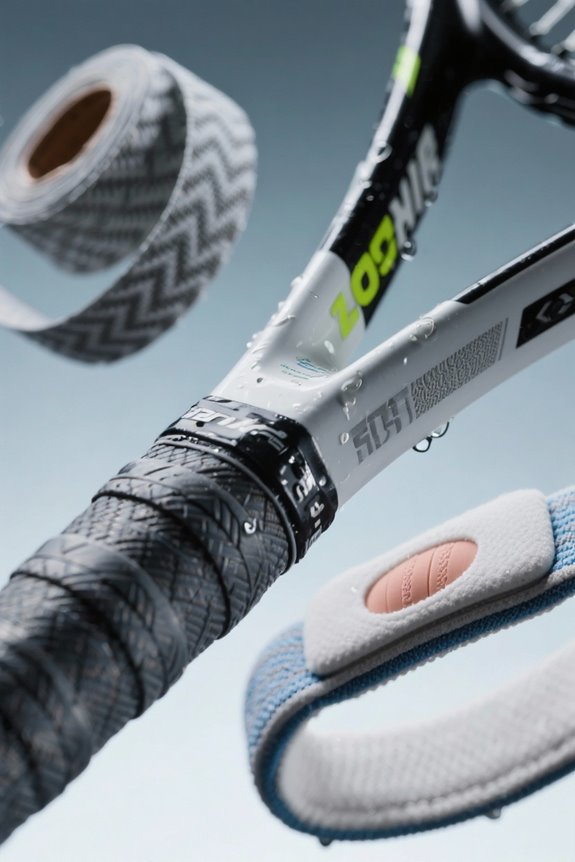
While competing in tennis, understanding the dynamics of friction and movement is essential for optimizing performance and minimizing discomfort. Friction is pivotal, influencing changes in direction and speed, especially on high-friction surfaces like hard courts. Rapid deceleration during movements, such as the split-step, greatly impacts blister risk. Remarkably, lateral movements occur more often than forward ones, emphasizing the need for movement optimization. Players must adapt their strategies based on court surfaces to lower friction-related issues. Training should focus on enhancing acceleration and deceleration techniques to improve efficiency while reducing stress on the feet. Proper footwear with shock-absorbing technology can significantly reduce the impact on feet during quick lateral movements and help prevent friction-related injuries. Ultimately, mastering friction dynamics leads to better performance and a more enjoyable experience on the court.
The Importance of Proper Footwear
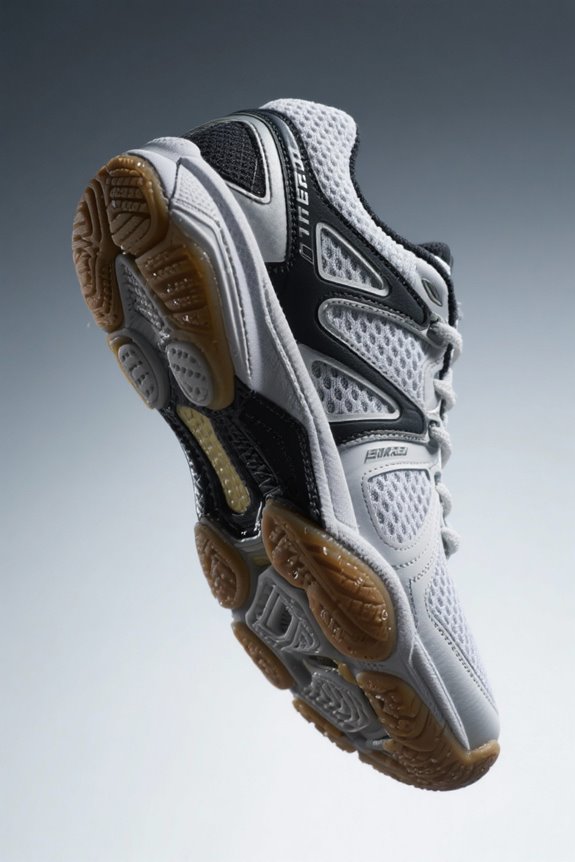
Selecting appropriate footwear is integral to preventing blisters during tennis matches. Proper shoe selection guarantees better comfort and reduces friction. Shoes that are too small increase shear forces, while those that are too large allow excessive movement, raising the risk of blisters. Aim for a fit that includes a thumb’s width from the longest toe to the shoe front. Ensure the width fits snugly to prevent foot sides from bulging, reducing hotspots during play. Make fit adjustments, such as using adjustable lacing, to lock your foot securely in place and limit internal sliding. Choosing shoes with low friction materials can further decrease friction forces, helping to guard against shearing blisters on the court, which is essential for any player. A snug heel fit prevents slipping and blisters while maintaining proper foot positioning throughout intense rallies.
Recommended Products

Crafted From: Premium Full-Grain Leather
Crafted From: Premium Full-Grain Leather

ADVANCED COMFORT TECHNOLOGY Hyper Burst Ice cushioning and carbon infused H plate provide exceptional stability and energy return for running shoes for men
Moisture Accumulation and Its Effects
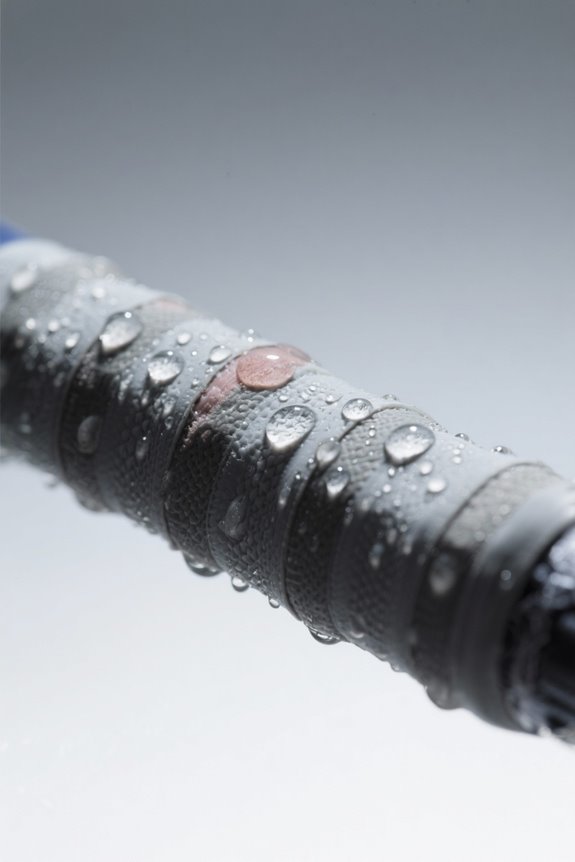
Moisture accumulation, a common issue in tennis, leads to considerable consequences for both skin health and performance on the court. Excessive sweating causes moisture absorption that softens the outer skin layer, making it more vulnerable to shear forces and tearing. This condition considerably increases the risk of blister formation. When shoes become humid, friction levels rise due to sticky interactions between skin and sock materials. Prolonged exposure to moisture can result in skin maceration, weakening skin cell cohesion and escalating damage during movement. Additionally, the damp environment inside shoes diminishes the effectiveness of moisture-wicking socks, which further intensifies friction. Using grips with moisture-absorbing technology on your racquet can help keep hands dry and reduce the overall sweat accumulation that contributes to blister formation. All these factors combine, raising the likelihood of painful blisters that disrupt gameplay and affect overall performance.
Preventive Measures to Avoid Blisters
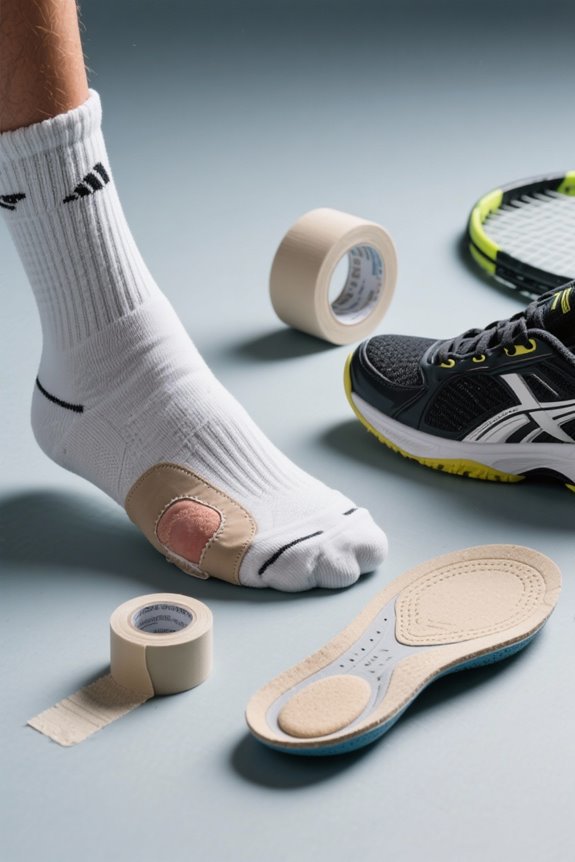
Preventive measures to avoid blisters are essential for any tennis player aiming for peak performance. Proper shoe technologies are vital; a snug fit allows for half an inch of space from toes to the shoe front, minimizing friction. Shoes made specifically for tennis offer lateral support, enhancing stability. Innovations in sock design, such as moisture-wicking materials, reduce sweat and friction. Choose socks with flat seams or double-layer designs, which provide extra cushioning and comfort. Regularly replacing worn-out shoes and testing new socks before matches can uncover potential irritation zones. Additionally, monitoring foot movement during play helps maintain the right fit, ultimately leading to improved performance and a blister-free experience on the court. Consider investing in shoes with cushioned insoles and supportive midsoles to optimize comfort during extended play and reduce pressure points that can lead to blister formation.
Recommended Products

Abrasion resistant mesh with coated microfiber reinforcement band

Timeless Design: Inspired by the classic Air Jordan 11, this shoe combines retro style with modern comfort

Classic Style: Experience the timeless design of the Air Jordan 11 with its iconic 'Retro' style, featuring a solid, sleek pattern in a classic White and Black colorway
Taping and Padding Techniques
Foot care becomes increasingly important once a player is on the court, especially when blister formation is a constant threat. Effective tape application begins with covering blister-prone zones, such as the ball of the foot and heel. Using cloth-based flexible tape allows for movement while protecting sensitive areas. Padding placement involves adhering blister pads or moleskin to friction hotspots, providing essential cushioning. This duo reduces pressure from shoe contact and racket grip, preventing blisters during matches. Regularly replacing worn pads assures they remain effective. Additionally, the careful removal of tape post-match preserves skin integrity. Selecting tennis shoes with proper arch support can further reduce friction points that contribute to blister formation during extended play. By integrating these techniques, players can enhance their performance and enjoy greater comfort on the court throughout lengthy matches.
Recommended Products


Sports Sock: These Feetures socks are engineered with Targeted Compression and anatomical design that conform to the shape of the left and right foot, providing a custom-like fit and reduced risk of blisters

__Upper:__ Textile upper
Moisture Management for Healthy Feet
While playing tennis can be exhilarating, managing sweat and moisture is crucial for maintaining healthy feet during matches. One effective strategy includes using advanced sock technology, specifically moisture-wicking socks made from synthetic fibers like polyester and nylon. These materials draw sweat away from the skin, keeping feet dry and greatly reducing blister risks. Additionally, performance socks often feature zonal padding in high-impact areas, further minimizing friction. Carrying extra pairs of dry socks guarantees foot hydration management during lengthy matches. Proper footwear fit is equally important; tennis shoes should be snug, preventing excess movement. Tennis shoes with breathable materials also enhance comfort by promoting airflow and preventing moisture buildup that can lead to blisters. Ultimately, prioritizing foot hygiene and regularly inspecting for early signs of blisters can help players maintain ideal foot health on the court.
Immediate Care for Blisters During Matches
Blisters can turn a thrilling tennis match into an uncomfortable experience, especially without proper care. When blister formation occurs, an immediate response is essential. First, protect the blister by applying gauze and tape to shield it from further irritation. Cushioning and taping, often used by professional players, can considerably mitigate pain. Consider using island or hydrocolloid dressings; these hold moisture and protect the area effectively. Always apply an antiseptic to prevent infection if the blister bursts during play. To alleviate discomfort, reduce pressure on the area as much as possible. Wearing shoes with adjustable ankle support can help prevent the friction that leads to blisters by ensuring a customized fit that reduces unwanted movement. These immediate care techniques help players manage blisters, allowing them to focus on the game while minimizing irritation and discomfort.
Recommended Products

✶LONG-LASTING BLISTER RELIEF & PROTECTION – The same formula you know and love at a fraction of the cost! 2Toms Skin-on-Skin Squares cushion, soothe, and protect against rubbing and blisters.

✶BLISTER PREVENTION & PROTECTION – 2Toms BlisterShield creates an almost frictionless surface to reduce heat buildup and protect against blister formation.
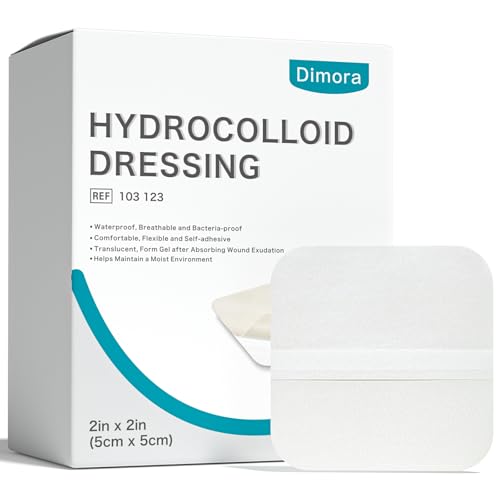
PROMOTE WOUND HEALING - When hydrocolloid dressing in touch with wound exudate, it forms a cohesive gel that can provide a moist healing environment for wound recovering. Fit closely with waterproof layer can protect wound against external dirt.
The Risks of Popping Blisters
Many players underestimate the risks associated with popping blisters, often believing that relief is just a burst away. However, this common misconception can lead to serious blister complications. When a blister is ruptured, the protective layer is lost, exposing raw skin to potential infection. This can greatly increase the risk of developing conditions like cellulitis. Furthermore, healing time extends without the blister roof, causing pain and increasing sensitivity that disrupts performance. It’s essential to prioritize infection prevention by keeping blisters intact whenever possible. Understanding the consequences of popping blisters can help players maintain their game and avoid unnecessary downtime from the court. Proper management is vital to sustaining peak performance and ensuring long-term foot health during matches. Choosing tennis shoes with wider toe boxes can help prevent blisters from forming in the first place by reducing friction and increasing circulation during play.
Hand Blisters: Causes and Solutions
In tennis, hand blisters can disrupt a player’s performance and enjoyment of the game. Causes often include repetitive friction from gripping the racquet, excessive sweat softening the skin, and improper grip sizes. To guarantee blister prevention, players should regularly check their grip size and maintain overgrips for peak control. A snug grip reduces racquet movement and minimizes friction points. Additionally, adjusting your grip technique can further reduce localized friction and avoid blisters. Wearing wrist sweatbands and using grips with moisture-absorbing properties can help manage sweat and maintain a safer hold. Gradually introducing new equipment allows the skin to toughen, giving it time to adapt to any changes and avoid sudden blister formation during matches. Consider using moisture-wicking materials in your overgrips, as they enhance grip control during play while effectively managing perspiration that contributes to blister formation.
Recommended Products

INLCUDED: Inlcuded in your purchase is 1, 2, 3, 4, 5, or 6 packages of Yonex Super Grap 30-Wrap Overgrip Reel in your choice of color.

TOP-PERFORMANCE RACQUET GRIP TAPE: GAMMA Supreme Overgrip will help you rule the court; These soft grip-tape wraps are made to be long-lasting and feature absorbent material combined with extreme durability to keep up with your game.

High performance over grip with tech finish. Improved dry feel with extreme moisture absorption for the toughest of players and conditions!
Professional Management Strategies
When players face the discomfort of blisters during tennis matches, swift and effective management strategies are important for maintaining performance and enjoyment. The use of quality blister supplies, such as hydrocolloid or island dressings, is essential. These specialized dressings create a moist environment that promotes healing while reducing pain. Proper cleaning with antiseptic soap and applying antibiotic ointment on open blisters can prevent infections. Additionally, players should use friction-reducing balms to minimize skin irritation. Regularly renewing dressings is important, as is seeking professional medical advice if blisters worsen. Knowledge of these strategies not only aids in blister prevention but enhances the overall match experience, allowing players to focus on their game rather than discomfort.
Research Insights on Blister Prevention
Research on blister prevention reveals critical insights that can greatly enhance players’ experiences on the court. Effective blister prevention requires attention to factors such as footwear and sock selection. Utilizing moisture-wicking socks and properly fitted shoes can notably reduce friction. Studies indicate that paper tape offers a 40% reduction in blister incidence when applied correctly. Furthermore, well-conditioned skin is less prone to blisters; consequently, pre-match hydration and lubrication are beneficial. Players should gradually adapt their feet to increasing fitness levels to harden skin over time. Additionally, factors like wind resistance can impact sweat and moisture accumulation, further influencing blister development. Addressing these elements collectively can lead to effective blister management during intense matches.
Future Directions in Injury Management
Managing athlete injuries evolves continuously as new insights and strategies emerge. Future directions in injury management emphasize thorough care, integrating medical professionals, nutritionists, and mental health providers. This holistic approach addresses injury trends through education and hands-on therapies. Preventative technology plays a vital role, with advancements in wearable devices that monitor performance and assess stress. AI models predict injury risks, while virtual reality training helps simulate different scenarios for improved preparedness. Specific training regimens tailored to surfaces enhance adaptability, reducing overuse injuries. Rehabilitation focuses on gradual recovery, incorporating physical therapy and nutritional support to guarantee long-term athlete health. This multifaceted strategy aims to optimize performance while minimizing the risk of injuries like blisters and strains during tennis matches.
Frequently Asked Questions
Can Blisters Affect My Performance During Tennis Matches?
Blisters can considerably affect performance, as their causes, primarily repetitive friction, lead to pain and discomfort. This discomfort may alter movements, reduce focus, and impair effectiveness, ultimately impacting overall match performance and outcomes.
How Long Does It Take for Tennis Blisters to Heal?
On average, tennis blisters heal within 7 to 14 days. Effective recovery tips include maintaining cleanliness, avoiding rupture, and minimizing friction to promote blister healing, ensuring quicker recovery for athletes seeking peak performance.
Are Some Players More Prone to Blisters Than Others?
Some players are indeed more prone to blisters due to factors like inadequate footwear choices and varying adherence to blister prevention techniques. Individual anatomy and play style also greatly influence blister susceptibility during matches.
What Materials Are Best for Blister Prevention in Socks?
Moisture-wicking sock materials like polyester, nylon, and merino wool excel in moisture management, effectively keeping feet dry and reducing friction, thereby minimizing blister formation. Double-layer designs and cushioned soles enhance comfort and prevent hot spots.
When Should I Seek Medical Attention for My Blister?
When blister symptoms worsen—like a storm swelling in the distance—seeking blister treatment becomes essential. Redness, pain, or pus indicate infection, while severe swelling or fever necessitates immediate medical attention to prevent complications.


