As an Amazon Associate, we earn from qualifying purchases. Some links on this site are affiliate links at no extra cost to you. Our recommendations are based on thorough research and editorial judgment.


Recognizing Heat Exhaustion on the Tennis Court

Recognizing heat exhaustion on the tennis court is vital for your safety. Look for early signs such as excessive sweating, dizziness, and muscle cramps. As symptoms advance, confusion and nausea may emerge, requiring immediate attention. High temperatures and humidity worsen these risks. Staying hydrated is essential, aiming for fluid intake that exceeds your thirst. Use cooling techniques like ice packs and shaded breaks during play. If these symptoms persist, seek help. More strategies for prevention and recovery are explored further.
Key Takeaways
- Monitor for early signs like excessive sweating, fatigue, and muscle cramps during hot conditions on the tennis court.
- Recognize advanced symptoms including confusion, slurred speech, and persistent nausea that indicate severe heat exhaustion.
- Keep an eye on hydration by checking if players show noticeable thirst and goosebumps, signaling dehydration risks.
- Assess vital signs, such as pulse and temperature; a core temperature exceeding 104°F necessitates immediate medical attention.
- Encourage regular breaks in shaded areas and proper fluid intake to help manage temperature and prevent heat exhaustion.
Understanding Heat Exhaustion
Understanding heat exhaustion is essential, especially for those who engage in outdoor activities during hot weather. Early recognition of symptoms is critical to prevent serious complications. Individuals may experience heavy sweating, fatigue, and muscle cramps. Neurological symptoms like dizziness or severe headaches could also occur. It’s important to monitor body temperature, which typically remains below 104°F. Manage symptoms effectively by hydrating and taking breaks in shaded areas. Observing cool, clammy skin can help identify heat exhaustion. Rapid pulse rates and excessive thirst signal significant fluid loss, requiring immediate action. If symptoms persist after one hour, professional medical attention is necessary. Being informed empowers individuals to act, ensuring safety during physical activities amidst soaring temperatures. Wearing moisture-wicking materials in socks and athletic wear can help prevent excessive moisture buildup that contributes to heat-related issues.
Common Causes of Heat Exhaustion on the Court
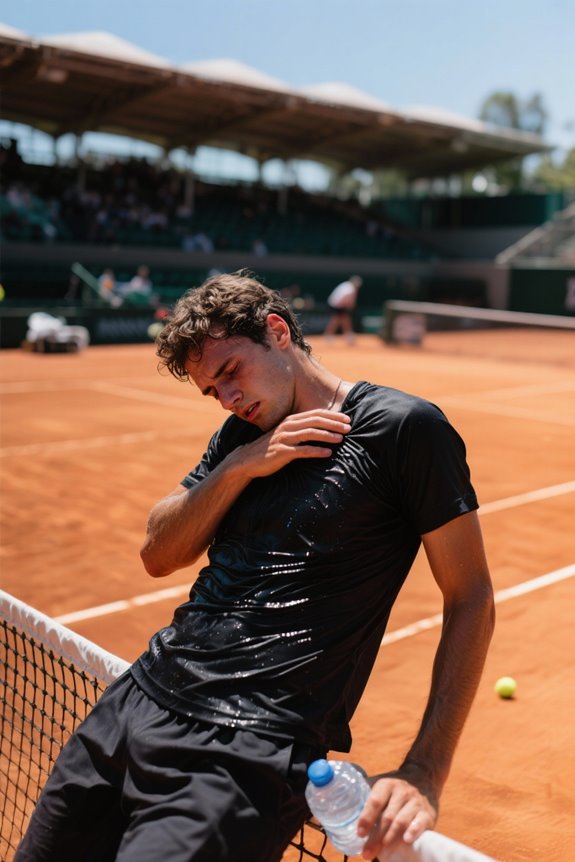
Heat exhaustion on the court arises from several common causes that players must recognize to stay safe. Dehydration is a primary concern, with players losing up to 2.5 liters of sweat per hour during intense matches. This fluid loss can lead to a 2% drop in body mass, impacting performance. Additionally, electrolyte imbalances and sodium loss can cause muscle cramps, increasing the risk of heat exhaustion. Environmental factors, like high temperatures and humidity, add to heat stress and make effective heat dissipation challenging. Moreover, poor physical conditioning and lack of acclimatization elevate the risk of heat-related illness. Wearing appropriate footwear with breathable mesh uppers can help with temperature control and comfort during extended matches in hot conditions. Understanding these causes empowers players to implement preventive strategies and safeguard their health on the court.
Early Signs to Watch For

How can players recognize heat exhaustion before it becomes a serious issue? Early symptoms to watch for include excessive sweating, pale skin, and fatigue earlier than expected. Players may experience muscle cramps or spasms, dizziness, and headaches that hinder performance. Noticeable thirst and goosebumps, even in warm conditions, may signal dehydration. Additionally, uncharacteristic irritability and difficulty concentrating can occur. To implement effective recovery strategies, players should prioritize hydration, take frequent breaks, and seek cooler environments. Addressing these signs promptly can prevent a more severe heat-related illness. Understanding these early indicators not only protects physical health but also enhances performance, allowing players to maintain their competitive edge while enjoying the game. Players experiencing wrist pain or weakness during heat exhaustion should consider using adjustable wrist supports that provide compression and stability without restricting movement.
Advanced Symptoms That Require Attention

Recognizing advanced symptoms of heat exhaustion is essential to guaranteeing safety and maintaining performance on the field. Players should be vigilant about symptom awareness, particularly signs like confusion, slurred speech, and persistent nausea. These indicate a serious need for immediate medical attention. A rapid, weak pulse and cold skin can suggest cardiovascular strain, while muscle cramps and weakness may signal deeper complications. Players must not overlook excessive fatigue and loss of consciousness, which are critical indicators of severe distress. As conditions worsen, elevated core temperatures exceeding 40°C (104°F) and decreased responsiveness demand urgent action. Keeping player safety as the priority guarantees that all participants can enjoy the game without risking their health amid challenging conditions. Wearing appropriate sun protection gear with UV protection can help prevent heat-related issues by blocking harmful rays that contribute to overheating during outdoor play.
The Impact of Humidity and Temperature
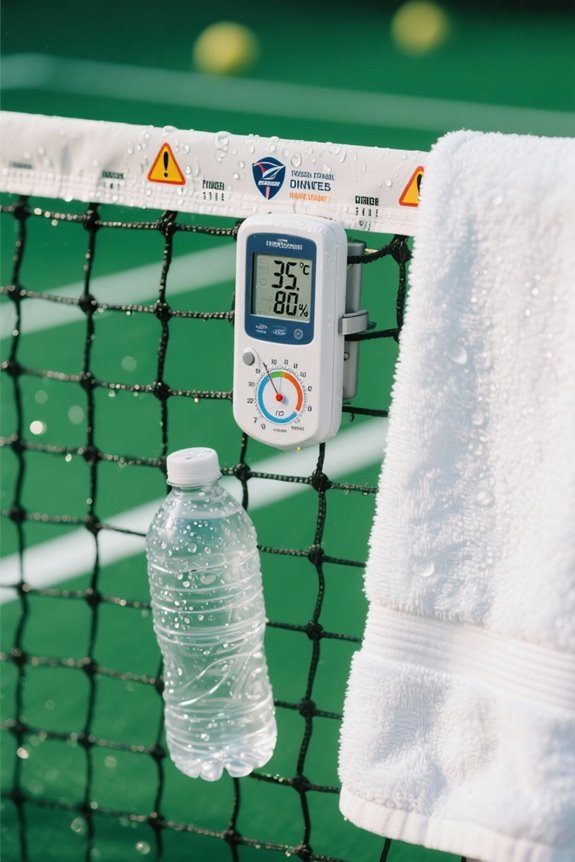
What factors influence performance in high-stakes tennis matches? Temperature variations and humidity effects play essential roles. High environmental temperature can lead to heat-related illnesses such as heat cramps and even heat stroke. As temperatures rise, sweat rates increase considerably, increasing the risk of dehydration. On the other hand, humidity hinders sweat evaporation, reducing players’ cooling efficiency. High-humidity days can exacerbate thermal strain, leading to discomfort and potential performance decline. Players may find themselves fatigued more quickly, struggling to maintain their performance metrics, including aces and double faults. Together, these environmental factors heighten the risk of heat-related illnesses, impacting overall game effectiveness. Staying aware of these conditions is imperative for athletes on the court. Wearing breathable mesh uppers in tennis shoes can help keep feet cool and dry during intense matches in hot conditions.
The Role of Hydration in Prevention
Maintaining proper hydration plays a significant role in preventing heat-related illnesses for tennis players. Sweat rates can exceed 1 L/h and sometimes reach 2.5 L/h for older adolescents in intense conditions. This fluid loss necessitates effective hydration strategies to minimize dehydration risks. Unfortunately, many junior players do not replace body water deficits adequately, often starting matches in a hypohydrated state. It’s essential to drink before feeling thirsty, as thirst perception can lag behind actual fluid loss. The maximum gastric emptying rate limits fluid absorption to around 1.2 L/h, emphasizing the need for regular fluid intake during play. Regularly weighing players can help identify dehydration, allowing for timely rehydration interventions and improved performance on the court. Carrying a well-organized tennis bag with ventilated compartments helps keep water bottles accessible and prevents gear odors during long matches in hot conditions.
Electrolyte Replenishment Strategies
When it comes to athletic performance, ensuring proper electrolyte replenishment is essential, especially for tennis players engaged in intense matches. Players can lose 1.5–3 liters of fluid per hour, leading to significant losses in sodium and potassium. To address this, incorporating natural electrolyte sources like bananas, dairy, and salty snacks into a balanced diet provides a solid foundation. Hydration strategies during matches should involve consuming 250ml of electrolyte-rich fluid every 15 minutes. Additionally, commercial options like Gatorade or Nuun can effectively address electrolyte imbalances. Post-match, athletes should prioritize a 1L electrolyte solution to aid recovery, particularly if they have another match within eight hours. Monitoring urine color and body weight also helps assess hydration status effectively.
Recommended Products


Zero 6 Flavor - Qwik Stik - Sugar-Free Electrolyte Powdered Beverage Mix (600 Pack)
Acclimatization Techniques for Players
Acclimatization is essential for athletes looking to perform at their best in extreme heat. Implementing effective acclimatization strategies, such as gradually increasing exposure to high temperatures over 7 to 14 days, is critical. Players can improve their physiological adaptation by balancing training protocols with session durations of 60-90 minutes and moderate-intensity drills. Daily exposure maximizes these adaptations, while intermittent sessions slow progress. Athletes should wear light, breathable clothing to enhance sweat evaporation and improve thermoregulation. Scheduling practices during cooler parts of the day initially, followed by hotter times, builds heat tolerance effectively. Continuous monitoring of heart rate and core temperature is crucial to guarantee safe progression and prevent heat illness during these adaptation periods. Wearing performance hats with moisture-wicking technology can further prevent sweat from dripping into the eyes while providing essential UV protection during outdoor training sessions.
Effective Cooling Techniques During Play
Effective cooling techniques during play are essential for staying competitive in high temperatures. Players should implement practical cooling strategies, such as using ice towels and cooling vests during changeovers. These on-court practices significantly help in reducing core temperature and delay heat-related fatigue. Applying ice packs to the neck and forehead can cool blood in major vessels, offering rapid relief. Hydrating with cool fluids complements these methods to maintain internal temperatures. Additionally, seeking shade and utilizing cooling fans with misting can enhance comfort during breaks. Monitoring court conditions and wearing lightweight, moisture-wicking clothing can further combat heat buildup. Modern racquet technologies like vibration dampening features can also reduce physical strain and fatigue during extended matches in hot conditions. By adopting these strategies, players enhance their performance and endurance under the sun’s demanding heat.
Recommended Products

INNOVATIVE TECHNOLOGY This cooling vest jacket with a built-in water circulation unit brings the highest quality breathing technology into a compact vest for better wearability and easy operation.

IMMEDIATE & LONG-LASTING COOLING RELIEF Ice packs maintain constant 64°F (18°C) for up to 4 hours

PREPARE TO BE COOL: Our vest maintains a dry, comfortable 59°F for up to 2.5 hours in 100°F heat
Treatment Options When Symptoms Arise
Recognizing heat exhaustion is essential for athletes and recreational players alike, especially after implementing cooling techniques during play. When symptoms arise, immediate treatment options include moving the affected individual to a shaded area and ensuring they stop all physical activity. Loosening tight clothing promotes heat dissipation. Treatment methods involve applying cool, wet cloths or ice packs to key areas while providing cool fluids for rehydration. It is crucial to monitor symptoms closely; look for signs like confusion or rapid heartbeat. If symptoms worsen or persist for 30 minutes, seek medical attention. Regular symptom monitoring is critical to prevent progression to heatstroke. Adequate hydration and electrolyte replacement will support recovery following the incident. Consider storing cold beverages in your tennis bag’s insulated drink pockets to ensure quick access to cooling fluids during emergencies.
Long-Term Recovery and Prevention Tips
A thorough approach to long-term recovery and prevention from heat exhaustion is essential for athletes and recreational players alike. Effective recovery strategies include continuous hydration and electrolyte management, ensuring a sodium intake of approximately 1,500 mg per liter. This aids muscle recovery and helps prevent cramps. In addition, utilizing cooling methods, like ice slurry ingestion and keeping a shaded rest area, can greatly lower core temperatures. Additionally, wearing lightweight clothing and applying sunscreen with SPF 30 can safeguard against heat stress. Nutrition should be balanced, and achieving at least seven hours of sleep in a cool space will enhance recovery. When heading to practice or matches, investing in a tennis bag with waterproof compartments helps keep gear organized and protects essential items from moisture, ensuring you’re always prepared for outdoor conditions. By integrating these prevention measures, players can sustain performance and mitigate the risk of heat-related illnesses.
Frequently Asked Questions
How Long Does It Take to Recover From Heat Exhaustion?
Recovery time from heat exhaustion typically ranges from 24 to 48 hours. Hydration importance cannot be overstated, as proper fluid intake greatly influences this duration, allowing the body to restore balance and energy efficiently.
Can Heat Exhaustion Occur in Mild Temperatures?
Yes, heat exhaustion can occur in mild temperatures. High heat index values combined with inadequate hydration levels during strenuous activity may lead to symptoms, emphasizing the need for caution even in seemingly favorable conditions.
Are Certain Players More Susceptible to Heat Exhaustion?
Like a delicate flower wilting in the sun, certain players are indeed more susceptible to heat exhaustion. Individual differences, including risk factors like fitness level and age, can drastically influence vulnerability to heat-related issues.
What Should Be Included in a Cooling Kit for Players?
A thorough cooling kit should include cooling towels for immediate heat relief, electrolyte drinks to maintain hydration and replenish lost minerals, portable fans for airflow, ice packs, and water bottles for effective thermoregulation throughout play.
How Does Heat Exhaustion Affect Performance in Future Games?
Ironically, while players endeavor for excellence, heat exhaustion leads to performance decline in future games. Inadequate recovery strategies exacerbate this issue, creating a cascade of lingering fatigue and diminished effectiveness on the court, undermining their aspirations.


