As an Amazon Associate, we earn from qualifying purchases. Some links on this site are affiliate links at no extra cost to you. Our recommendations are based on thorough research and editorial judgment.


How Weather Affects Tennis Ball Performance

Weather conditions significantly impact tennis ball performance. High humidity increases ball weight, slowing down play and creating heavier shots. Cold temperatures reduce internal pressure, making balls feel flat and bounce lower. Heat expands the air inside, causing higher bounces and faster play. Wind affects trajectory and control, challenging players’ accuracy. Altitude matters too – higher elevations produce livelier bounces due to lower air density. Professional players adjust their game strategy based on weather conditions, often requesting new balls more frequently in humid or cold environments to maintain consistent performance throughout matches.
# How Weather Affects Tennis Ball Performance
Weather markedly impacts tennis ball performance mainly through temperature, humidity, and wind. In warm conditions, higher temperatures enhance ball elasticity, resulting in greater bounce. Humidity can dampen shot speed due to increased ball weight, while wind alters trajectory, forcing players to adjust their swings. Additionally, lower air density at high altitudes increases bounce height. Understanding these dynamics is essential for players seeking peak performance in varying conditions. For more insights into strategic adaptations, keep exploring the subject.
Key Takeaways
- Temperature affects the internal pressure of tennis balls, influencing their bounce height; warmer conditions lead to higher bounces due to increased elasticity.
- Humidity causes the ball to absorb moisture, increasing its weight and slowing its movement, which impacts shot power and consistency.
- Wind alters ball trajectory, requiring players to adjust their swings and often leading to longer rallies due to disrupted shots.
- Altitude decreases air density, resulting in faster ball travel and higher bounces, though it can make control more challenging due to stiffer balls.
- Rain creates slippery surfaces that affect grip, leading to match cancellations and requiring players to adapt their strategies to wet conditions.
Impact of Temperature on Bounce Dynamics
How does temperature influence the bounce dynamics of a tennis ball? As temperature rises, gas molecules within the ball expand, increasing internal pressure. This higher pressure correlates with a notable increase in bounce height. For example, a ball heated to 120°C can achieve an average bounce of 142.5 cm. Conversely, at -15°C, the same ball only reaches about 53.5 cm due to reduced internal pressure and diminished rubber elasticity. According to the ideal gas law, temperature and pressure are directly proportional, solidifying this relationship. The rubber core also becomes less elastic in colder conditions, contributing to lower bounce energy. These dynamics explain why players experience significant variations in ball behavior depending on temperature. Professional players must account for these temperature effects, which is why high altitude balls are specifically designed with adjusted pressure to maintain consistent performance in mountainous regions where atmospheric conditions differ significantly from sea level.
Recommended Products

Value 3-Pack Bundle for Large Areas:Need to light up an entire zone uniformly? This 3-Pack set provides consistent brightness and color temperature across your whole property. Save time on multiple orders and ensure seamless coverage for large parking lots, full-size courts, or expansive farmyards with one purchase.

USTA and ITF approved for tournament and league play.

Full grain waterproof Nubuck leather with 1680 Denier Ballistic Nylon
Effects of Humidity on Ball Behavior
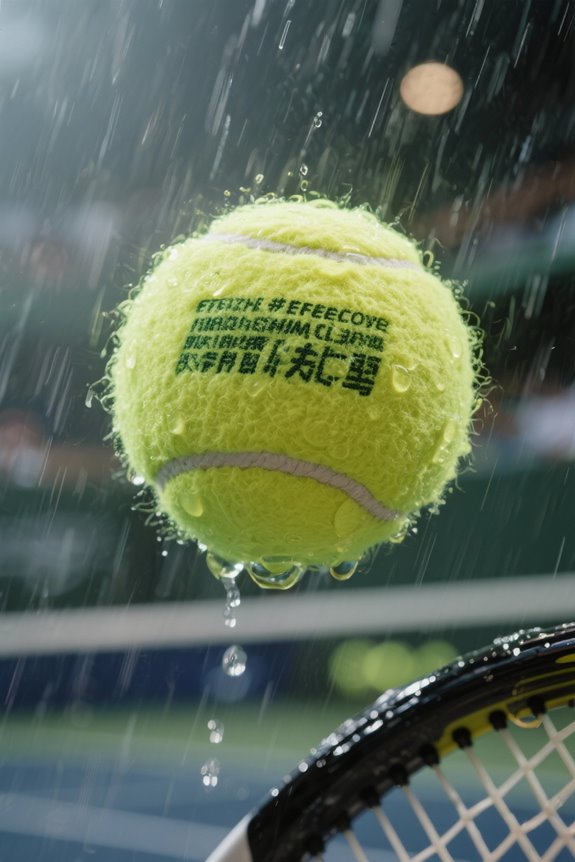
Humidity substantially impacts the behavior of tennis balls during play. Increased humidity results in moisture absorption, which raises ball weight and alters performance. Heavier balls tend to move slower, causing shots to lose their speed and power. The felt on the ball suffers too, degrading with excess moisture and leading to fuzzing. Additionally, damp conditions affect drag and bounce, creating inconsistencies upon impact. In humid environments, generating spin and maintaining shot control becomes more challenging, making strategic adjustments essential. Players often report feeling the effects of humidity as “heaviness,” prompting them to focus on placement over raw power. Weather conditions can also impact the performance of your tennis strings, particularly affecting tension maintenance and overall playability during matches. Consequently, understanding humidity effects is crucial for optimizing performance and adjusting match tactics effectively.
Recommended Products

【SPECIFICATION】Diameter: 2.58 Inches; Bounce Height: About 135cm.

Convenient Case Pack: Includes 24 cans (72 balls total) for extended use in training and tournaments.

This listing is for 24 can (72-Balls)
Influence of Wind on Match Play

What happens when the wind becomes a factor in a tennis match? Wind resistance substantially alters ball trajectories, creating unpredictability during play. Players must employ shot adaptation, adjusting their swings and foot positioning to counteract lateral drifts and misjudgments in ball flight. Experienced players maintain consistent toss heights, yet variations in circulatory motion can emerge due to crosswinds. High-lofted shots are often abandoned in favor of low, flat strikes to minimize wind interference. Rallies may lengthen as the wind disrupts attacking strategies, forcing players into a more defensive posture. Ultimately, mental focus becomes vital, as maintaining shot control against ever-changing wind conditions can make or break a match. Adaptability and strategy therefore become key components of windy tennis encounters. Using a lightweight tennis racket can further enhance maneuverability and control when battling challenging wind conditions on the court.
Recommended Products

Wilson RF 01 Pro Strung Performance Tennis Racket - Grip Size 3-4 3/8", Strung with Sensation 16 Natural at Mid Range Tension

Wilson RF 01 Strung Performance Tennis Racket - Grip Size 3-4 3/8", Strung with Sensation 16 Natural at Mid Range Tension

Unique tennis rebounder design which supports multiple racket sports including pickleball, padel, squash, racquetball, and table tennis. Perfect for athletes of all levels.
High Altitude and Air Density Considerations

Windy conditions can substantially impact a tennis match, but high altitude introduces another set of challenges that players must navigate. At elevations like 3,440 feet, the reduction in air density changes ball physics dramatically. Lower drag allows the ball to travel faster and bounce higher, with bounce heights potentially rising from 48 inches at sea level to around 58 inches. This can impact how players time their shots and adjust their strokes. Additionally, standard tennis balls become stiffer due to thinner air, affecting control. As you play in these conditions, understanding altitude effects helps you anticipate ball behavior. Players often adapt by altering strategies, emphasizing the need for precision and effective timing in high-altitude matches. Selecting balls with appropriate court surface compatibility becomes especially important in high-altitude environments, as different constructions perform variably under reduced air density conditions.
Recommended Products

✅ 【Precision Craftsmanship for Unmatched Performance 】 Our GCA Pro ball is a testament to precision craftsmanship and dedication to quality. Each ball is meticulously engineered to deliver unparalleled performance in bounce consistency, flight accuracy, and durability. Elevate your game with equipment that exceeds expectations and stands up to intense matches.

Pack of 24 tubes of 3 balls
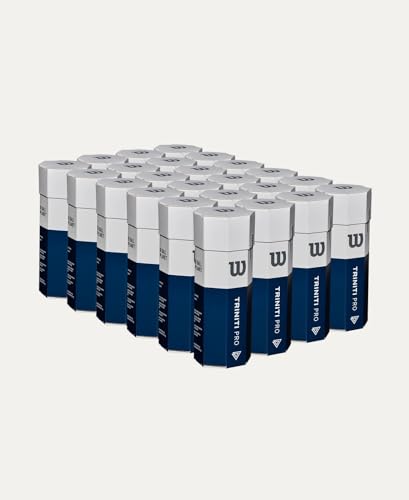
Wilson Triniti Pro Tennis Balls - 72 Balls, Yellow
Temperature and Player Performance Metrics
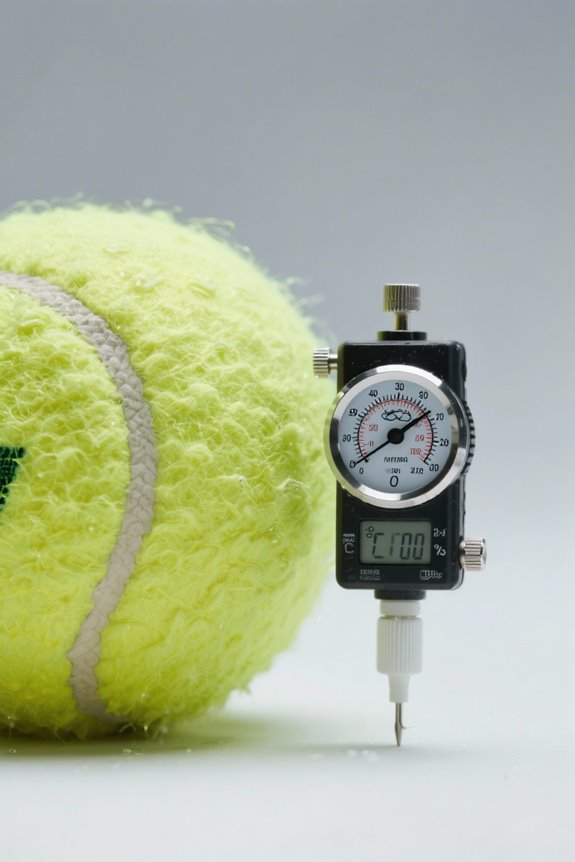
While players often focus on strategies and techniques, temperature plays an essential role in shaping performance metrics during tennis matches. Research shows a significant positive temperature relationship with the percentage of aces, resulting in more aces at higher temperatures. Importantly, first-serve percentages increase in warmth, indicating improved performance statistics. However, each 1°C rise reduces the first serve made rate by about 0.1 percentage points and boosts double fault rates. Additionally, the second serve pass rate also declines under heat stress. It’s vital to recognize these metrics, as they highlight how environmental conditions directly impact player effectiveness and game outcomes. Understanding these dynamics can aid players in adapting their strategies for varying temperatures during competitions. To maintain optimal court positioning and reaction time despite temperature changes, players can benefit from regular agility training that improves footwork and lateral movements for quick responses.
Physiological Responses to Weather Conditions
How does the weather influence a player’s physiological state during a match? Elevated temperatures induce thermoregulatory strain, causing core body temperatures to rise above 38.5°C. Players can sweat over 2.5 liters per hour, increasing the risk of dehydration. This hypohydration impairs not only physical performance but also decision-making on the court. In contrast, cold conditions lead to vasoconstriction, reducing blood flow to extremities and impacting grip strength. Players may experience muscle stiffness and a heightened risk of injury, as maintaining core temperature takes energy. To combat these effects, tailored hydration strategies are essential, ensuring players can sustain peak performance amidst weather fluctuations. Just as environmental conditions affect physiological responses, proper footwear with arch support becomes crucial for players dealing with foot strain and potential plantar fasciitis from extended court time. Understanding these physiological responses is critical for tennis athletes facing diverse environmental conditions.
Strategies for Adapting to Weather Variations
Adapting to shifting weather conditions is essential for maximizing tennis performance. Players can enhance their game through effective court preparation and strategic match scheduling. For example, choosing cooler times for practice, such as early mornings or late evenings, helps avoid peak heat effects. In hot weather, adjusting shot selection by increasing spin and opting for shorter rallies can mitigate fatigue. Windy conditions call for low, controlled shots and consistent footwork to counteract unpredictable ball flight. During humid days, players should dry their balls promptly to maintain speed and bounce. Furthermore, modifying equipment, such as string tension, can optimize performance, especially in cold or damp environments. Proper footwear with adequate cushioning and arch support also helps prevent heel pain during extended matches in challenging weather conditions. By understanding weather impacts, players can adapt their strategies for consistent success.
Recommended Products


Frequently Asked Questions
How Does Temperature Affect the Lifespan of a Tennis Ball?
Temperature effects dictate a tennis ball’s durability; heat softens and deforms, reducing its shape, while cold hardens and cracks the rubber. Fluctuating temperatures accelerate material breakdown, dramatically shortening the ball’s overall lifespan and performance quality.
Can Weather Impact Specific Brands or Types of Tennis Balls?
Weather markedly impacts specific brands and types of tennis balls, affecting brand durability and ball performance. Variations in felt density and materials influence how effectively each brand endures different weather conditions during play.
What Adjustments Do Players Make to Equipment in Different Weather?
Players drastically adjust equipment in varying weather, often exaggerating string tension to counteract ball compression changes. Extreme humidity or frigid temperatures compel them to fine-tune gear for peak performance, showcasing their adaptability on the court.
How Do Varying Weather Conditions Influence Tennis Ball Manufacturing?
Varying weather conditions influence tennis ball manufacturing by necessitating adjustments in ball compression and material durability, ensuring that balls maintain peak performance. Manufacturers specifically engineer materials to withstand temperature fluctuations and humidity effects during play.
Are There Specific Weather Patterns That Favor Certain Playing Styles?
Like a painter choosing colors, specific weather patterns mold playing styles. Baseline conditions may favor aggressive players, while humidity effects and wind variations can benefit tacticians. Altitude effects further refine preferences, enhancing strategic adaptability on the court.