As an Amazon Associate, we earn from qualifying purchases. Some links on this site are affiliate links at no extra cost to you. Our recommendations are based on thorough research and editorial judgment.

Indoor Vs Outdoor Tennis Court Differences

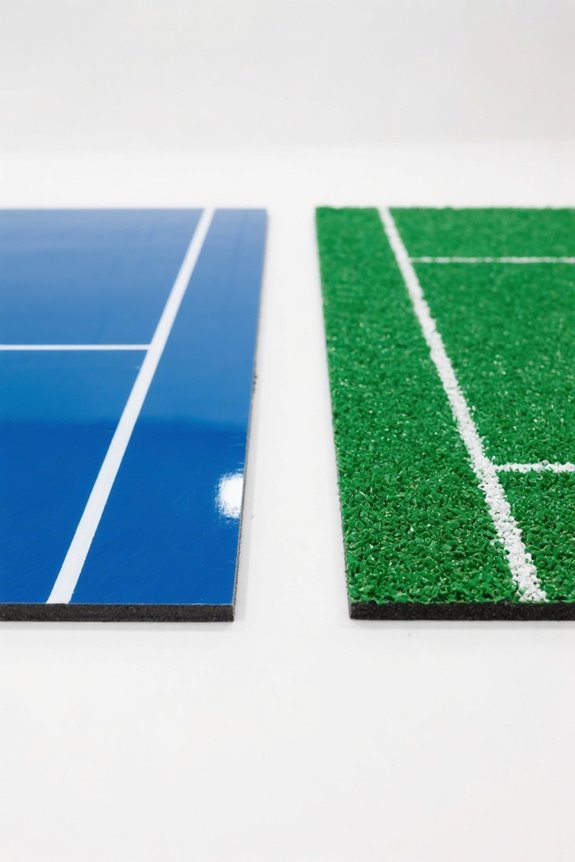
Studio photograph showcasing pristine tennis court surface samples side by side on white background. Left section displays smooth indoor hardcourt material with consistent blue finish and perfect reflective quality. Right section features textured outdoor acrylic surface in vibrant green with weatherproof coating and granular texture. Both samples exhibit precise line markings in crisp white. Professional lighting emphasizes material differences, texture variations, and color intensity between surfaces. Clean, minimalist composition highlights durability contrasts and playing surface characteristics essential for competitive tennis environments.
# Indoor Vs Outdoor Tennis Court Differences
Indoor and outdoor tennis courts vary in structure, materials, and conditions. Indoor courts feature steel frames and controlled climates, promoting consistent play. In contrast, outdoor courts use acrylic on concrete, influenced by weather factors like wind and humidity. Maintenance differs; outdoor surfaces need more frequent checks due to exposure. Cost-wise, outdoor courts are cheaper ($25,000-$120,000) than indoor facilities ($85,000-$300,000). These differences inform tactical play and player strategies. Discover more insights about each environment’s unique characteristics.
Key Takeaways
- Indoor courts provide stable temperature and lighting for consistent play, while outdoor courts are affected by weather conditions like wind and temperature.
- Outdoor courts are generally more cost-effective to build, ranging from $25,000 to $120,000, compared to indoor courts costing $85,000 to $300,000.
- Maintenance requirements differ, with indoor courts needing regular cleaning and inspections, while outdoor courts require seasonal upkeep due to environmental exposure.
- Surface characteristics impact gameplay; indoor courts offer consistent bounce, while outdoor surfaces like clay and grass influence ball speed and technique.
- Access to indoor courts is often limited due to higher demand and membership costs, while outdoor courts are more widely available.
Physical Structure and Surface Materials
When comparing indoor and outdoor tennis courts, the physical structure and surface materials play an essential role in determining the overall playing experience. Indoor courts are typically constructed with steel frames, utilizing roofing made from membranes or polycarbonate to shield players from external elements. In contrast, outdoor courts lack such shelter, exposing surface types to variable weather. The surfaces of outdoor courts usually feature acrylic coatings on concrete, ensuring they are quick-drying and low-maintenance. Indoor courts may include synthetic surfaces like rubber or artificial grass, allowing for consistent ball behavior and cushioning. The designs of these structures also include climate control and lighting for indoor settings, enhancing both comfort and performance during play. Similarly, indoor pickleball facilities benefit from durable polyester materials that withstand intensive play sessions while maintaining consistent performance standards.
Recommended Products

LONG-LASTING MATERIAL: Made of aircraft structural aluminum, eliminating rust and corrosion.

USER FRIENDLY – The Rain Shuttle Squeegee is remarkably lightweight making it easy for anyone to navigate around a tennis court. The wheels combined with the wiper blade ensure the court surface is brushed on a consistent basis, whilst the handle ensures maximum user comfort.
Traditional Fit: Provides ultimate blend of support, stability, durability, and cushion with every step
Environmental Factors and Playing Conditions
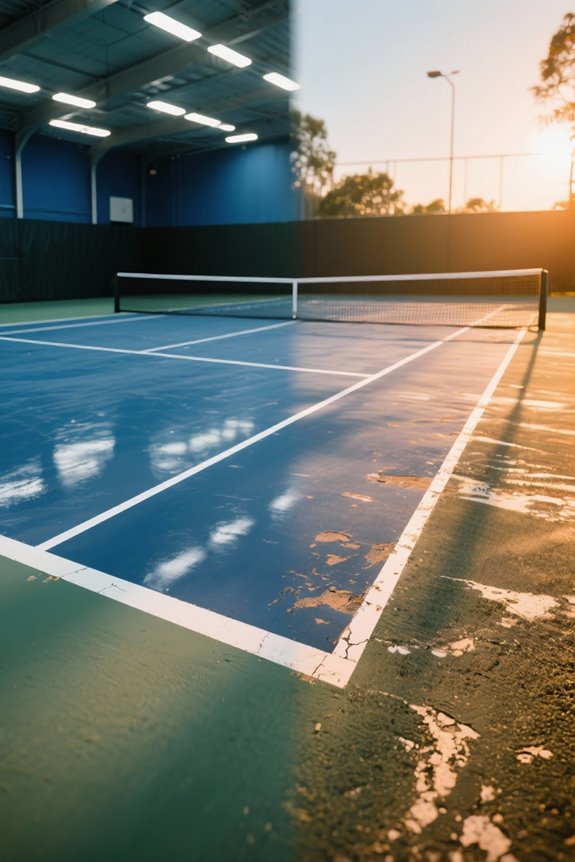
Five key environmental factors greatly influence playing conditions on tennis courts, impacting both outdoor and indoor experiences. Outdoor courts face challenges from weather elements like wind and temperature variations, affecting ball behavior. Wind can disrupt trajectories, forcing players to adapt their strategies. In contrast, indoor courts provide controlled lighting and stable temperatures, offering consistent ball bounce and speed. The reliance on artificial lighting enhances visibility, while HVAC systems guarantee ideal air quality for endurance. Players can focus on technique when conditions remain steady indoors. Outdoor forces, such as humidity and UV exposure, can degrade equipment over time, while indoor conditions preserve ball integrity, facilitating effective player adaptation and consistent performance. Similar environmental considerations apply to pickleball, where indoor and outdoor paddles are specifically designed with different weights and surface characteristics to optimize performance in their respective playing conditions.
Maintenance and Durability
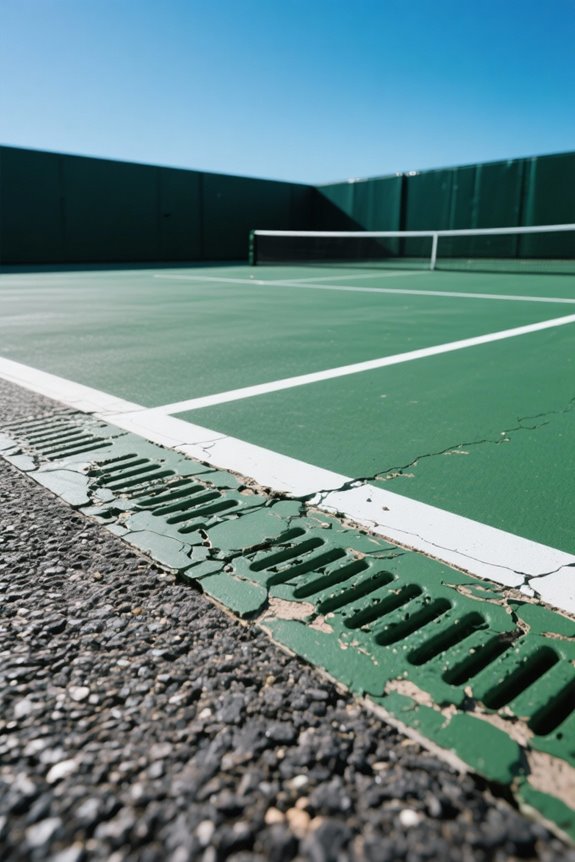
Proper maintenance is essential for ensuring the longevity and durability of both indoor and outdoor tennis courts. Indoor courts generally face fewer maintenance challenges due to stable environmental conditions, requiring regular cleaning and annual inspections. In contrast, outdoor courts endure harsher elements, demanding more frequent checks and seasonal tasks like deep cleaning after winter. Various surfaces, like acrylic, clay, and grass, present different upkeep needs, impacting their surface longevity. For example, acrylic hard courts may need recoating every 4 to 8 years, while clay courts necessitate routine watering and brushing. Ultimately, both court types require dedicated care to sustain playability and minimize long-term repair costs, reflecting the broader impacts of environmental factors and differing surface requirements. Just as courts require regular maintenance, players should also consider restringing their rackets every 4 to 6 weeks to maintain optimal performance and prevent tension loss that can affect their game.
Recommended Products

The Tourna 350-CS is an extremely comfortable stringing machine that is built for reliability and durability.


The Har-Tru Steel Bristle Drag Brush is expertly redesigned for durability and effectiveness, now allowing for easy replacement of bristle blocks.
Cost and Accessibility
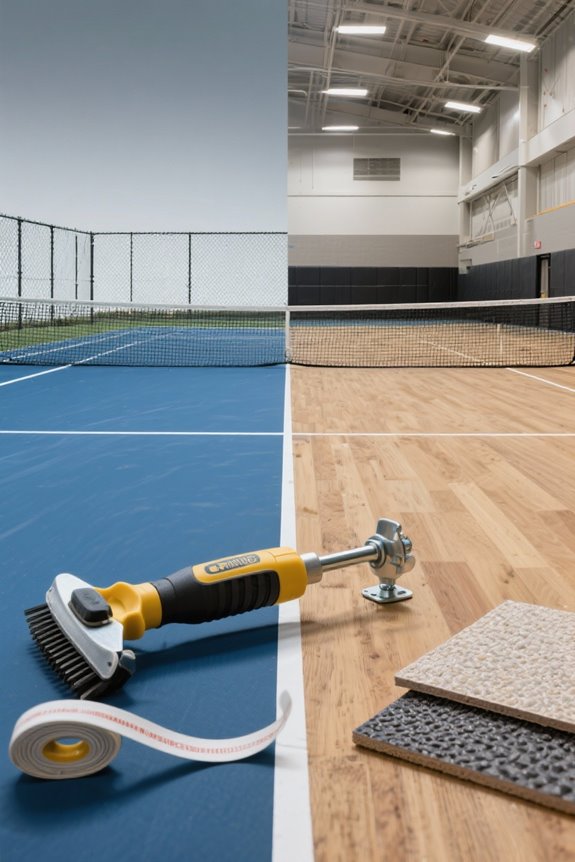
Evaluating the costs and accessibility of indoor versus outdoor tennis courts reveals considerable differences that can affect your decision-making. Outdoor courts typically cost between $25,000 and $120,000, presenting clear cost benefits for budget-conscious players. In contrast, indoor courts range from $85,000 to $300,000, considerably raising initial investments. While outdoor courts are weather-dependent and may face accessibility barriers for some users, indoor facilities provide year-round playability with climate control, ensuring comfort. However, ongoing expenses for utilities and maintenance must also be considered. Tennis bubbles, a flexible and lower-cost indoor option, range from $45,000 to $100,000. Beyond court construction, players should factor in equipment costs, as quality tennis apparel with moisture-wicking technology typically ranges from $40 to $100 per item. Ultimately, your choice should depend on your budget, accessibility needs, and desired usage frequency.
Recommended Products

HERITAGE REEBOK - The Court Advance takes casual shoes for men and elevates them with an old school retro vibe. A vintage tennis inspired design is a mashup of the Club C 85 and the Club C Revenge, bringing men footwear that never goes out of style.

Features. Oversized diameter for easy tracking. Designed for indoor or outdoor 36-foot tennis courts.

✅INNOVATIVE POWER BASE DESIGN - Eliminate the hassle of filling the base with water or sand each training session. Our anti-slip base is weighted down and ready for instant use. The center of each base includes a wrap around spot for the rope and ball strap to secure tennis balls not in use. Our heavy duty base utilizes a convenient handle to maximize portability.
Gameplay Impact and Tactics
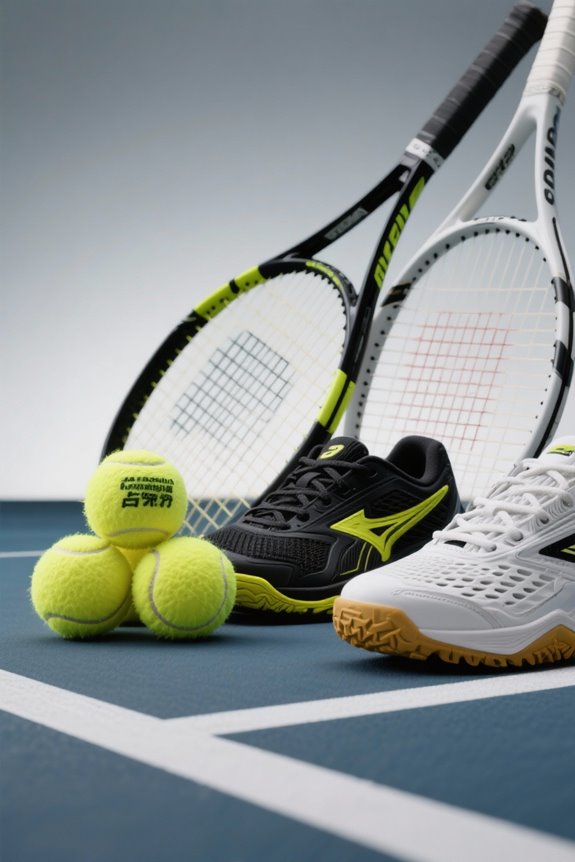
When considering gameplay impact and tactics, understanding the differences between indoor and outdoor tennis courts is vital. Outdoor play demands adaptability, requiring players to adjust their game strategy to account for weather factors like wind and sunlight. This affects shot selection and court positioning, as players need to anticipate unpredictable conditions. Conversely, indoor courts present a more controlled environment, offering consistent lighting and faster ball behavior that guarantees quicker gameplay. This allows players to focus on technique and power play, especially during serving and volleying. Consequently, adaptability techniques become essential in outdoor matches, while mastering shot precision is key indoors, creating distinct tactical approaches for successful gameplay on each court type. On clay courts specifically, players must master rapid stops and pivots, making footwear with superior traction essential for executing aggressive baseline tactics effectively.
Player Experience and Comfort
Consistently, players experience a variety of factors that influence their comfort and enjoyment on the court. Indoor courts provide a stable indoor atmosphere, allowing players to concentrate on their technique without distractions from changing weather conditions. In contrast, outdoor courts introduce an outdoor ambiance that requires adaptability, as elements like wind and sunlight can impact visibility and ball trajectory. Players tend to feel more comfortable on the type of court they know best, affecting their performance. Indoor climate control minimizes fatigue compared to outdoor heat, enhancing overall endurance. Additionally, the predictable conditions of indoor settings eliminate the need for constant adjustment, enabling players to play for extended periods, free from the interruptions of nature. Having the right equipment, such as tennis bags with waterproof compartments, helps players stay organized and ready regardless of whether they’re transitioning between indoor and outdoor venues.
Court Construction and Design
Court construction and design greatly influence the quality of play and player experience. Outdoor courts typically feature robust materials like concrete, asphalt, or clay, benefiting from natural drainage systems. The medium to low initial costs make these courts an attractive option for communities. Indoor courts, in contrast, require a significant investment due to steel structures, insulation, and climate control systems. This higher cost reflects in membership fees. Indoor designs utilize space effectively, maintaining a consistent environment for year-round play. Maintenance varies; outdoor courts face erosion from the elements while indoor courts need routine cleaning and HVAC upkeep. Both settings offer unique advantages, but your choice will depend on budget, space utilization, and desired playing conditions. For players looking to supplement court time with solo practice, portable tennis ball machines offer convenient training solutions that work effectively on both indoor and outdoor surfaces.
Recommended Products

ADJUSTABLE BALL SPEED & SPIN CONTROL: Fine-tune your practice sessions with adjustable ball speeds ranging from 35 to 80 MPH. Simulate gentle volleys to high-speed ground strokes while adding heavy topspin or backspin for competitive game situations.

SIX PRE-LOADED DRILLS: The elite grand four includes 6 pre-loaded drills that simulate the main styles of tennis played in the modern era. This digital, robot-like tennis ball machine makes you feel like you are playing against a pro.

❗️【PRE-PURCHASE REMINDER TO AVOID WRONG ORDER】This tennis machine is solid black. It shares identical shell & hopper lid with our pickleball model, distinguished only by body print: TENNIS vs PICKLE. Check logo before checkout to avoid wrong orders.
Surface Types and Performance Differences
Tennis surfaces play an essential role in shaping the game’s dynamics and player experience. When choosing a court, surface selection factors greatly influence performance variations. For instance, grass courts offer the fastest ball speed, ideal for aggressive players. In contrast, clay courts slow down play and encourage strong topspin tactics. Acrylic hard courts, common in both settings, provide low maintenance and consistent bounce. Indoor options like carpet courts replicate the speed of grass, while clay alternatives need less upkeep. Player strategy can shift drastically depending on the surface, impacting footwear choice and court navigation. Surface characteristics also affect moisture absorption, which is why players often adjust their grip tape selection to maintain optimal racket control in different playing environments. Understanding these factors allows players to tailor their training and strategies for each playing environment effectively.
Weather Effects on Play
Weather conditions greatly influence how players perform on the court. Temperature variations can enhance serve power but may lead to more errors, such as double faults, particularly above 17°C. Humidity effects also play a role; high humidity reduces air density, altering ball dynamics and rally speeds. Additionally, precipitation impacts outdoor play, with wet surfaces creating hazards and changing ball behavior, particularly on grass courts. Players often make vital adaptations, pacing themselves to combat humidity and heat-related fatigue. Atmospheric pressure and wind effects can further modify performance, with windy conditions challenging precision shots. Serious players who frequently transition between indoor and outdoor courts should consider investing in equipment with thermal protection technology to shield their racquets from temperature fluctuations that could affect string tension and performance. Understanding these weather-related factors is essential for players to strategize effectively in both indoor and outdoor environments.
Lighting Conditions and Visual Impact
Lighting conditions play a pivotal role in the performance of players on any court, shaping their visual experiences and overall gameplay. For outdoor courts, lighting intensity typically ranges from 200 to over 500 lux, depending on play level. This guarantees visibility even under changing daylight conditions. In contrast, indoor courts require over 750 lux for consistent illumination, employing high bay LED lights to minimize glare and dark spots. Effective glare control is essential, maintaining ratings below 50-55 to enhance player comfort. The recommended color temperature exceeds 4000K, promoting better ball visibility. Fixture types differ too; outdoor courts often use LED floodlights, while indoor settings favor high bay LEDs, ensuring peak lighting efficiency and functionality. Players recovering from ankle injuries should consider wearing adjustable ankle braces that provide customizable compression and support during matches, particularly given the quick lateral movements required in tennis.
Footwear and Equipment Considerations
When selecting the right footwear and equipment for tennis, one must consider the specific demands of both indoor and outdoor courts. Indoor shoes typically feature advanced shoe technology, utilizing organic gum rubber for enhanced grip on smooth surfaces. In contrast, outdoor shoes are crafted from high-abrasion synthetic rubber, designed for durability and traction on rough courts. Additionally, the choice of racket varies; faster-paced games indoors often benefit from lightweight rackets. Players should also consider how balls behave differently in these settings, as wind can alter play outdoors. Ultimately, understanding these distinctions in footwear and racket choice is essential for maximizing performance on the court, ensuring an enjoyable experience regardless of the environment.
Recommended Products

Color: Hemp/White Gum Yellow

360° GEL cushioning
Availability and Reservation Challenges
Many players face challenges when it comes to the availability and reservation of indoor tennis courts. With approximately 62% of U.S. courts being public, indoor options are often limited to private facilities, which can be costly or require membership. Reservation logistics become complicated by high demand; in some markets, player-to-court ratios exceed 800:1, leading to intense court competition. Hourly rentals for lessons and leagues frequently monopolize scheduling, causing bottlenecks during peak times. Additionally, public courts may prioritize local residents, further constraining access for visiting players. While outdoor courts offer more space, they lack all-weather reliability. Strategic planning is essential to navigate these challenges and secure your desired indoor playing time.
Psychological Factors in Indoor Vs Outdoor Play
Factors influencing psychological performance in tennis vary greatly between indoor and outdoor settings. Indoor courts offer consistent conditions, enhancing psychological safety and reducing performance anxiety. Here, players can focus on technique without the distractions of environmental unpredictability. On the other hand, outdoor play requires mental adaptability and greater cognitive load due to variable elements like wind and sun glare. This unpredictability can improve a player’s mental toughness and decision-making skills, but also heighten stress levels for those who prefer stable environments. Many players find joy in outdoor challenges, while others struggle with distractions. Overall, recognizing play preference is fundamental for optimizing performance in both settings and fostering psychological resilience.
Frequently Asked Questions
How Do Indoor and Outdoor Courts Influence Player Injuries?
“Every cloud has a silver lining.” Indoor and outdoor court surfaces influence player injuries considerably; proper surface selection and maintenance enhance injury prevention, impacting the frequency and type of injuries encountered during gameplay.
Can Playing Indoors Improve a Player’s Focus and Concentration?
Playing indoors considerably enhances a player’s focus and concentration through structured practice and reduced distractions. Implementing focus strategies and concentration techniques during training facilitates improved decision-making and mental resilience, ultimately benefiting performance in competitive scenarios.
What Are the Environmental Benefits of Indoor Vs Outdoor Courts?
The environmental benefits of indoor and outdoor courts vary greatly; outdoor courts enhance sustainability practices through natural resource usage, while indoor courts prioritize energy efficiency, albeit at a higher environmental cost due to ongoing energy consumption and construction impacts.
How Does Community Engagement Differ Between Indoor and Outdoor Tennis Facilities?
Community engagement diverges greatly; outdoor facilities thrive with vibrant community events and local partnerships, fostering inclusive collaboration. In contrast, indoor courts often rely on closed feedback channels, limiting broader public interaction and connection.
Are There Specific Age Groups That Prefer Indoor or Outdoor Tennis?
Youth preferences typically lean towards outdoor courts for competitive play, while senior comfort often favors indoor settings due to stable conditions. These trends reflect developmental requirements for younger players and the desire for safety among older participants.