As an Amazon Associate, we earn from qualifying purchases. Some links on this site are affiliate links at no extra cost to you. Our recommendations are based on thorough research and editorial judgment.


Evolution of Tennis Racquet Technology

Modern tennis racquets showcase remarkable technological advancement from their wooden predecessors. Contemporary designs feature lightweight composite materials like graphite and carbon fiber, offering superior power and control. Enlarged sweet spots, vibration dampening systems, and aerodynamic frames enhance player performance across all skill levels. String technology has evolved with polyester and hybrid configurations providing optimal spin potential. Variable beam widths, extended lengths, and precision weight distribution systems allow customization for different playing styles. Today’s racquets represent a perfect fusion of engineering innovation and athletic performance optimization.
# Evolution of Tennis Racquet Technology
The evolution of tennis racquet technology has reshaped the game dramatically. Early wooden racquets weighed heavily and required constant maintenance, while metal frames introduced in the late 60s improved power and sweet spots, yet posed vibration challenges. The late 70s brought graphite, enhancing strength and shock absorption. Modern designs feature oversized head shapes for increased forgiveness and maneuverability. Innovations in materials and customization now offer players tailored gear for enhanced performance. Explore how these changes continue to impact gameplay and training.
Key Takeaways
- The late 19th and early 20th centuries saw the introduction of wooden racquets, laying the foundation for modern tennis equipment.
- Metal and aluminum frames emerged in the late 1960s, increasing maneuverability and expanding players’ sweet spots.
- The advent of graphite and composite materials in the late 1970s revolutionized racquet design by enhancing power and reducing weight.
- Oversized and mid-plus head designs evolved to offer beginners and advanced players different balances of power and control.
- Modern technologies like sensor analytics and vibration dampening aim to improve performance while minimizing injury risks for players.
Early Wooden Racquets: Foundations of the Game
In the evolution of tennis, early wooden racquets served as the foundational tools that shaped how the game is played today. Developed in the late 19th and early 20th centuries, these racquets primarily used wood types such as ash and maple, prized for their durability. Crafted with techniques focused on individual artistry, each racquet boasted unique features, including short heads and long handles. The racquets weighed considerably, making them challenging to wield effectively. Yet, their craftsmanship ensured they maintained their shape over time, even with the rigors of consistent play. Regular maintenance was essential to prevent warping, while leather-wrapped handles offered grip. The combination of these wood types and craftsmanship established the basis for modern tennis equipment. Similar to how modern racquet sports equipment has evolved, today’s advanced paddles utilize aerospace-grade carbon fibers that provide exceptional strength and performance longevity, demonstrating how far materials technology has progressed since the wooden era.
Transition to Metal and Aluminum Frames

The evolution of tennis racquet technology saw a significant shift with the introduction of metal and aluminum frames. René Lacoste patented the first metal racquet in 1957, leading to Wilson’s mass-market release in 1969. Key metal racquet advantages included larger heads, which expanded the sweet spot and increased power. However, players faced issues like added weight and vibration. Aluminum frames emerged in the late 1960s, offering a lighter alternative that enhanced maneuverability but presented design challenges, specifically in achieving balance between power and control. The manufacturing simplicity of aluminum allowed for lower costs, making high-performance racquets more accessible. Modern recreational racquets continue to benefit from oversized head designs, with frames measuring 108-110 square inches providing enhanced forgiveness for casual players. This change marked an essential development, paving the way for future innovations in tennis racquet technology.
The Rise of Graphite and Composite Materials

Graphite racquets transformed the landscape of tennis, offering players a combination of lightness, strength, and an enhanced feel. The introduction of graphite in the late 1970s revolutionized the sport, as its lightweight and stiff frame elevated power, control, and maneuverability. Players quickly embraced graphite advantages, such as superior shock absorption, which reduced arm strain and improved playability. Most modern racquets utilize composite construction, blending graphite with materials like fiberglass and Kevlar, enhancing durability and performance. This tailored approach allows for variations in stiffness and weight, catering to diverse playing styles. Ultimately, the rise of graphite and composite materials not only improved shot accuracy and reduced mishits but also made high-performance racquets accessible to a wider audience. The choice of strings also plays a crucial role in performance, with solid core nylon configurations offering enhanced durability and comfort that complement modern racquet technology.
Recommended Products

Full High modulus Graphite for improved power

Wilson RF 01 Pro Strung Performance Tennis Racket - Grip Size 4-4 1/2", Strung with Sensation 16 Natural at Mid Range Tension

HEAD Performance: Born out of revolutionizing how we ski and play tennis, HEAD has constantly pushed athletic equipment into the modern era. For all levels of play, HEAD offers nothing but the best tennis equipment on the market.
Oversized and Mid-Plus Head Designs
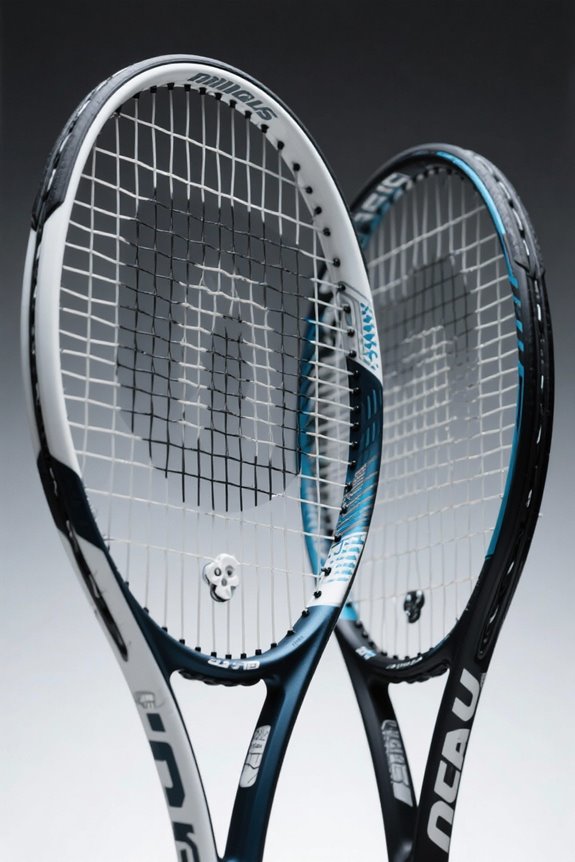
Oversized and mid-plus head designs have greatly changed how players approach the game of tennis. Oversized racquets, ranging from 105 to 135 square inches, deliver significant oversized benefits, including a larger sweet spot and increased power, making them particularly beneficial for beginners. Conversely, the mid-plus racquets, typically sized between 98 and 104 square inches, strike a unique balance of power and control, appealing to intermediate and advanced players. Significantly, the Radical Tour 630, adopted by professionals like David Wheaton, showcases mid-plus versatility. While oversized frames provide more forgiveness on off-center hits, advanced players often lean towards mid-plus designs for their improved precision. Modern racquets like the HEAD Graphene XT Speed MP feature a 100 square inch head with a 4-point head-light balance that enhances maneuverability for intermediate players. Ultimately, these developments have expanded player choices, catering to various styles and skill levels on the court.
Recommended Products

Head Size: 100 in / 645.16 cm

![Prince 7TJ173 Hard Tennis Racquet Tour O3 100 (305) (Tour Aussley 100 (305 g) G2 [Frame Only] White x Gold](https://m.media-amazon.com/images/I/21DQjtsYxfL._SL500_.jpg)
Material: High elastic carbon, Texrie x Twaron + Polymer Elastomer
Advances in Modern Materials
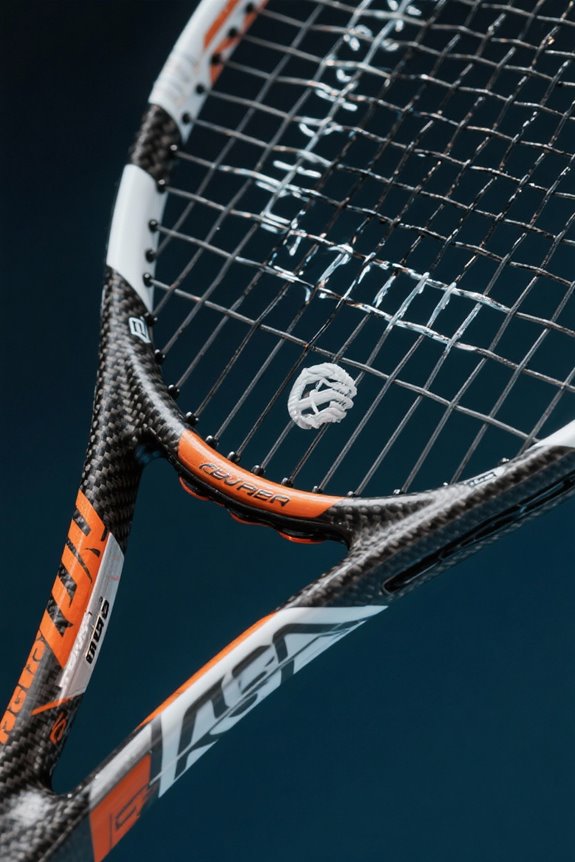
As technology evolves, advances in modern materials have greatly transformed the design and performance of tennis racquets. The use of advanced composite materials, such as carbon fiber and graphite, enhances composite durability while markedly reducing weight. This results in racquets that offer improved swing speed and shot precision. Combining these materials with Kevlar and fiberglass improves frame stiffness and impact resistance. Additionally, integrated vibration dampening technologies absorb shock, minimizing player fatigue and reducing the risk of injuries like tennis elbow. Customizable blends allow players to tune for desired material flexibility, catering to different playing styles. Similarly, innovations in string technology utilizing co-polyester construction provide players with enhanced spin generation and durability to complement modern racquet designs. Together, these innovations enable players to experience enhanced performance, ensuring comfort and control during extended matches without compromising efficiency.
Computer-Aided Design in Racquet Manufacturing
Computer-Aided Design (CAD) has revolutionized the process of tennis racquet manufacturing, transforming how engineers approach racquet development. CAD advancements allow for rapid, precise digital prototyping, enabling extensive design iteration that was impossible with traditional methods. Engineers can now experiment with various frame shapes, sizes, and weight distributions, optimizing performance for different player styles. By simulating stresses and vibrations through integrated FEA software, CAD guarantees that each design meets structural demands while reducing development costs. The shift from digital to physical prototypes is seamless, utilizing robotic systems for consistent manufacturing. This technology has resulted in lighter, more durable racquets capable of withstanding high string tensions, enhancing player experience and performance on the court. Modern racquets incorporate advanced materials like graphite and composites to achieve the optimal balance between lightweight maneuverability and power generation.
Customization and Personalization in Racquets
While many players may believe that choosing a racquet is merely about selecting a brand, customization increasingly plays an essential role in optimizing performance. Weight adjustments, such as lead tape or silicone in the handle, can fine-tune balance and stability for enhanced control or power. Additionally, string patterns and tensions impact dynamics; a denser pattern may boost control, while an open pattern enhances spin. Frame geometry benefits from advanced manufacturing technology, allowing personalized shapes that cater to unique biomechanical needs. Finally, handle ergonomics are critical for comfort and injury prevention, with customizable grip sizes and materials available. String selection also matters significantly, as thinner strings can increase the sweet spot by over 10% while thicker options provide better durability for aggressive players, allowing customization based on playing style and preferences. Innovations like 3D printing promise future-tailored racquets, aligning with individual performance metrics and personalized preferences.
Recommended Products

DURABLE & RELIABLE BUILD: Designed with a die-cast aluminum base, the Momentum machines provide an ergonomic, low-profile design with a compact footprint, ensuring long-lasting durability and stability.

Racquet Stringing Machine - with 6-point frame shooting system and K-shaped racket grippers, designed to minimize stress and protect racket when stringing.

CUSTOMIZE YOUR RACKETS: Measure the swing weight of rackets (Tennis, Squash, Badminton) then customize rackets by matching the swing weights.
The Impact of Technology on Gameplay
The impact of technology on gameplay in tennis has been transformative, offering players at all levels new ways to enhance their performance. With the integration of sensor analytics in racquets, players can access real-time data, such as swing speed and spin rate. This information enables them to refine their technique through personalized training methodologies. Coaches utilize this data to design tailored practice sessions, improving players’ strengths and addressing weaknesses. Lightweight materials, such as carbon fiber and graphene, elevate maneuverability, allowing for quicker reactions on the court. Additionally, advancements like high-speed video analysis and virtual reality training immerse players in realistic scenarios, enhancing skill acquisition. Modern stringing machines now feature electric tension adjustments and 360-degree turntables, enabling players to customize their racquet setup with unprecedented precision for optimal performance. Collectively, these innovations revolutionize the way players train and improve their overall game.
Evolution of Playing Styles and Strategies
Over the past few decades, the evolution of playing styles and strategies in tennis has marked a significant shift in how the game is approached. The forehand evolution, particularly the introduction of the windshield-wiper technique, has revolutionized player power and topspin strategy. Modern backhand techniques have also diversified, balancing slice, topspin, and situational usage. Players have adapted to various surfaces, leading to distinct competitive styles; aggressive net play dynamics flourish on grass, while baseline tactics dominate on clay. Topspin has become vital, enhancing both consistency and power. This evolution necessitates flexibility, as players must adjust strategies based on court conditions. Just as tennis equipment has advanced, related racquet sports like pickleball have seen innovations in regulation size nets that meet tournament standards for serious competitive play. Overall, adaptability remains important in traversing the modern game effectively.
Injury Prevention and Vibration Dampening Technologies
Injury prevention in tennis has become increasingly important as players seek to extend their careers and enhance performance. Modern vibration dampening technologies play a vital role in this effort. By reducing vibrations effectively, players can mitigate the risk of injuries like tennis elbow. Advanced materials, such as silicone and rubber, integrate into racquets, providing significant vibration reduction. They enhance player comfort, allowing athletes to perform longer without discomfort. Studies reveal that these technologies can decrease symptoms related to repetitive strain injuries. Additionally, personalized dampening solutions tailored to individual racquet designs offer further injury prevention benefits. Tennis players using dedicated vibration dampeners report greater enjoyment and reduced fatigue during their matches and practice sessions. As technology advances, the focus on vibration dampening in racquet design will likely continue to improve overall player health and performance.
Recommended Products

Product Type: Sporting Goods


ADVANCED VIBRATION DAMPENING GEL: Designed with exclusive Zorbicon gel technology, the GAMMA Shockbuster effectively absorbs and disperses shock waves upon ball contact, reducing the risk of tennis elbow and improving overall arm comfort.
Future Trends in Tennis Racquet Innovation
As technology continues to shape the world of sports, tennis racquet innovation is moving towards remarkable advancements in materials and design. Future racquets are expected to utilize smart materials, enhancing performance through advanced composites like carbon fiber and graphene. These innovations will yield lighter frames, improving maneuverability and reducing fatigue on the court. Alongside performance, enhanced sustainability measures are gaining traction. Manufacturers are exploring eco-friendly materials and biodegradable strings to lessen environmental impact. Additionally, customizable designs and features, such as embedded sensors for analytics, will play a significant role in tailoring gear to individual players. Collectively, these trends promise to revolutionize the way racquets are made and experienced, ensuring the sport evolves responsibly.
Recommended Products

Weight: 10.6 oz (310

Wilson RF 01 Pro Strung Performance Tennis Racket - Grip Size 3-4 3/8", Strung with Sensation 16 Natural at Mid Range Tension
Frequently Asked Questions
How Do Different Grip Sizes Affect Performance in Tennis?
Different grip sizes impact tennis performance by influencing grip comfort and grip pressure. Smaller grips enhance maneuverability and spin, while larger grips provide stability, each affecting a player’s control, power, and potential for injury.
What Should I Consider When Choosing a Racquet for Beginners?
Maneuvering the racquet landscape is like finding a compass in the forest. Beginner tips suggest considering head size, weight, and grip, with brands like Babolat and Dunlop offering excellent options tailored for novice players’ needs.
Are Heavier Racquets Better for Power Strokes?
Heavier racquets can enhance power generation due to increased momentum and energy transfer upon impact. However, they may compromise swing speed and control, making individual biomechanics crucial in determining the ideal racquet weight for performance.
How Often Should I Replace My Tennis Racquet?
How often should one replace a tennis racquet? The lifespan typically dictates replacement signs: hidden cracks, declining performance, or frequent string issues warrant attention. Regular evaluation guarantees peak play while avoiding unnecessary changes driven by mere marketing trends.
Do Racquet String Types Significantly Influence Gameplay?
String types markedly influence gameplay, impacting power, control, and spin. Durability comparison highlights that polyester offers robustness while natural gut excels in tension retention, making string tension essential for optimizing performance according to player style and preferences.