As an Amazon Associate, we earn from qualifying purchases. Some links on this site are affiliate links at no extra cost to you. Our recommendations are based on thorough research and editorial judgment.


Pickleball Double Bounce Rule Explained

Studio photograph showcasing premium pickleball equipment illustrating the double bounce rule. Clean white seamless backdrop with professional three-point lighting creates soft shadows beneath a regulation pickleball and paddle. The composition demonstrates the rule’s concept: serve must bounce once in receiving court, return must bounce once in serving court before volleys begin. Vibrant yellow-green ball positioned beside graphite paddle face displays tournament-grade gear. Sharp 8k detail captures paddle texture and ball dimpling. Minimalist centered arrangement emphasizes the fundamental rule governing first two shots of every rally.
# Pickleball Double Bounce Rule Explained
The two-bounce rule in pickleball guarantees fairness by requiring the ball to bounce once on each side after the serve before players can volley. This rule promotes longer rallies and encourages strategic thinking during play. It prevents players from rushing to the net and enhances game dynamics for both singles and doubles. Understanding this regulation is essential for avoiding faults and improving your game. Explore further to uncover key tips for mastering this important rule.
Key Takeaways
- The two-bounce rule requires the ball to bounce once on each side after the serve before players can volley.
- A double bounce fault occurs if the ball bounces twice on one side before being returned during play.
- The two-bounce rule enhances fairness and promotes longer rallies by preventing serve-and-volley advantages.
- Many players confuse the two-bounce rule with double bounce faults, leading to playing errors.
- Understanding the distinction between the two-bounce rule and NVZ regulations helps improve gameplay and avoid frustration.
History of the Two-Bounce Rule
Although many may view pickleball as a modern phenomenon, the two-bounce rule traces its origins back to 1965, when the sport was first developed. Founders Joel Pritchard, Bill Bell, and Barney McCallum introduced this critical rule to enhance fairness and adjust gameplay dynamics. By requiring each serve to bounce once on both sides before players could volley, the rule evolution shifted focus from aggressive net play to tactical rallies. This foundational aspect promoted inclusivity, enabling players of all ages to enjoy the game. The two-bounce rule not only neutralized serving advantages but also encouraged strategic play, distinguishing pickleball from similar racquet sports like tennis and badminton. As the sport evolved, players recognized that proper footwear with excellent traction and stability became essential for executing the dynamic movements required during these tactical rallies. Consequently, the rule’s implementation markedly shaped the game’s character and accessibility.
Overview of the Rule
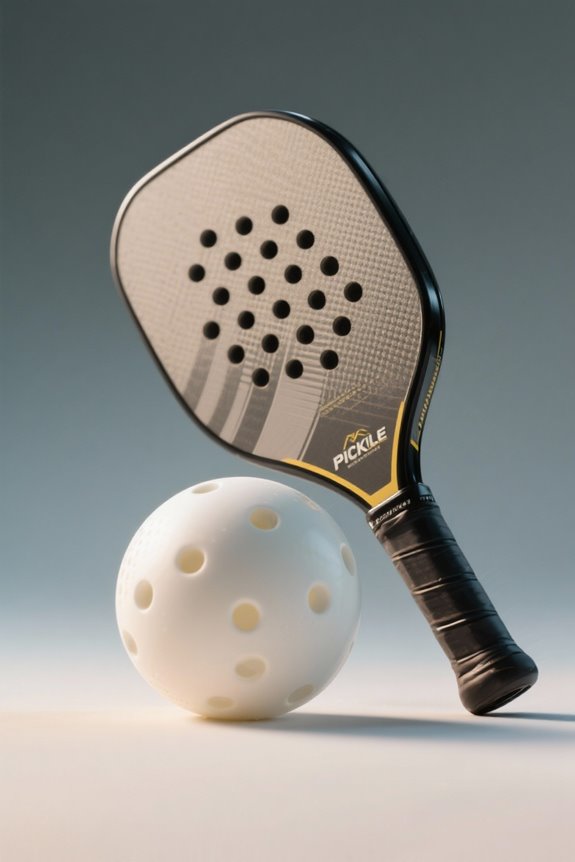
The two-bounce rule serves a foundational role in pickleball, shaping the way players engage in the game right from the start of each point. This rule requires that the ball bounces once on each side after the serve, making it vital for ensuring fairness in gameplay dynamics. By eliminating the serve-and-volley advantage, the two bounce strategy encourages longer rallies and thoughtful exchanges. Players gain important time to react, making the sport more accessible, especially for beginners. In addition, it demands strategic positioning and shot selection, enhancing the overall tactical nature of pickleball. As a unique aspect of the sport, the two-bounce rule distinguishes pickleball from tennis, contributing to its distinctive charm and appeal. Proper footwear with arch support can further enhance comfort and performance during these extended rallies, helping players maintain stability through the lateral movements required by this strategic rule.
Sequence of Play
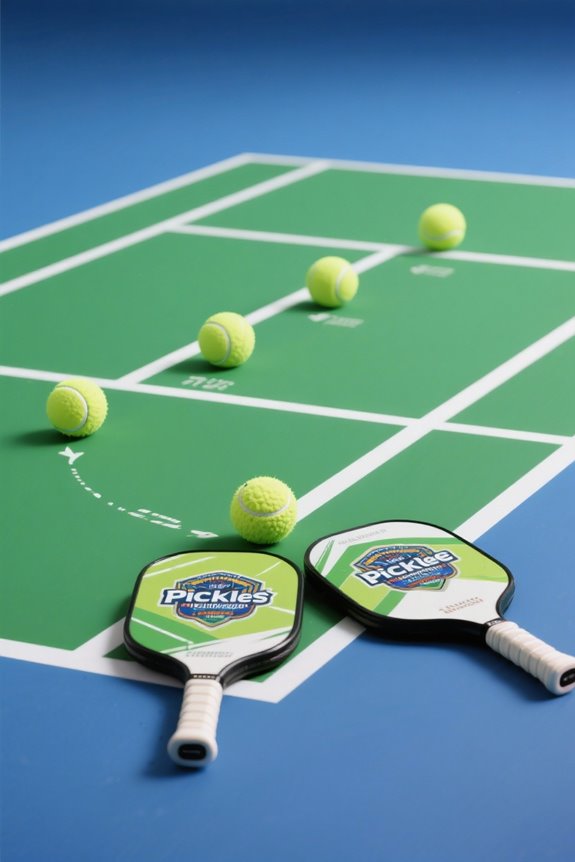
In pickleball, understanding the sequence of play is crucial for a successful game. The initial serve requires execution from behind the baseline, landing the ball in the opponent’s service court. Players must exhibit serve positioning, allowing the ball to bounce once before returning. After the first bounce, the serving team must also let it bounce. Players typically position themselves to prepare for this sequence, with effective bounce anticipation enhancing their return shots. Violating the sequence by volleying too early results in a fault, disrupting game flow. Following the initial two bounces, gameplay accelerates, allowing for aggressive net play and volley exchanges. Just as proper grip size is essential for paddle control during volleys, mastering this sequence is essential for elevating performance and achieving consistent results on the court.
Importance of the Two-Bounce Rule
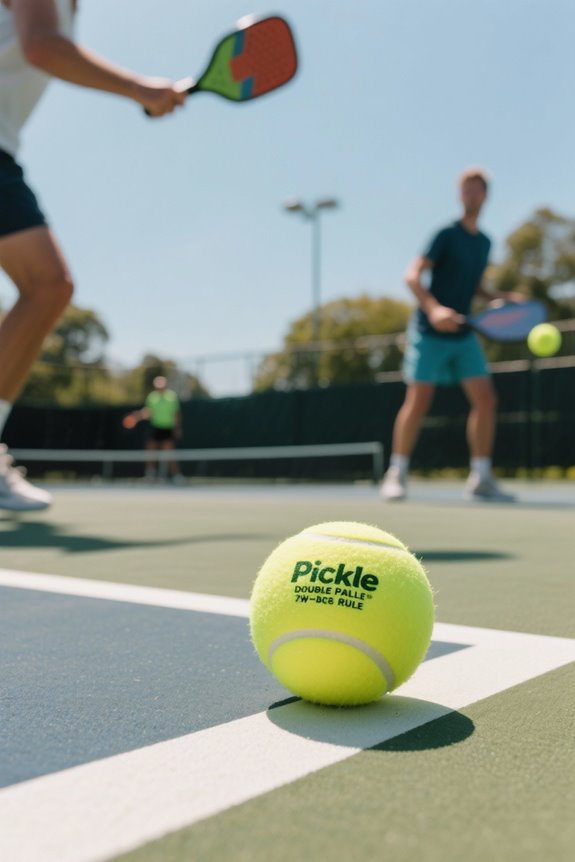
Understanding the two-bounce rule is fundamental for any player looking to improve their game. This rule promotes fairness by preventing the serving team from rushing the net, ensuring balanced competition. It enhances court control, as players must respect the initial bounce sequence before volleying. By mandating that the ball bounces once on each side, the two-bounce rule encourages longer rallies, which adds excitement and depth to matches. Players can develop their anticipation and shot-making skills over extended exchanges. Additionally, clear terminology helps reduce confusion, making the game accessible to novices. Adhering to this rule ultimately cultivates better timing and positioning, essential components for advancing your skills in pickleball. Mastering these movements requires proper footwear with quality traction and stability features to support the quick lateral movements demanded by extended rallies.
Strategic Implications
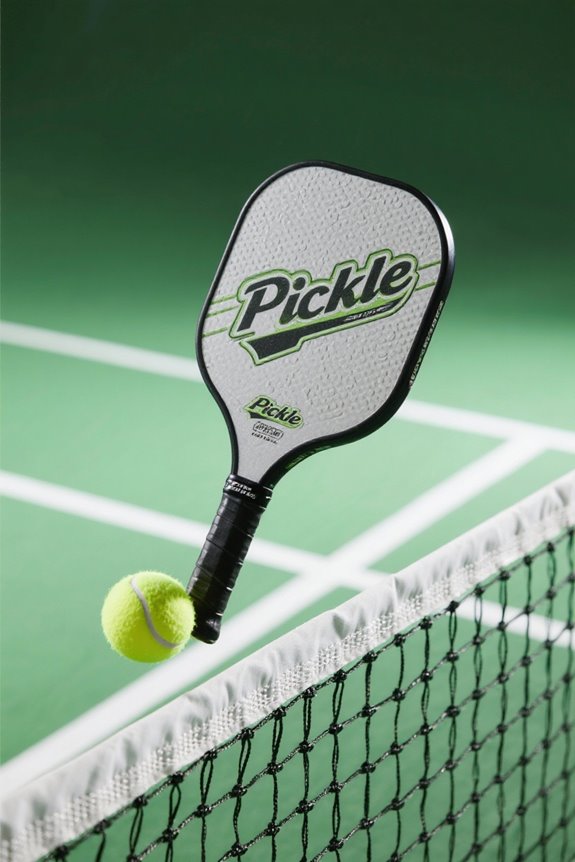
While mastering the strategic implications of the two-bounce rule is essential, players often overlook its profound impact on overall gameplay. This rule enables longer rallies, allowing for tactical adjustments that enhance both offensive and defensive strategies. Players can focus on shot placement and consistency rather than relying solely on brute force. The second bounce slows down point initiation, encouraging thoughtful positioning and anticipation. Teams can adopt diverse rally strategies, mixing lobs and soft returns to exploit opponents’ weaknesses. Effective communication among doubles partners becomes vital to navigate the court dynamically. Adapting to the two-bounce requirement fosters patience and discipline, shaping players into more strategic competitors who master the rhythm of the game. Just as tennis players rely on quality overgrips for moisture management during intense rallies, pickleball players must maintain consistent grip control throughout extended points. Understanding these implications can greatly elevate gameplay.
Recommended Products

TOP-PERFORMANCE RACQUET GRIP TAPE: GAMMA Supreme Overgrip will help you rule the court; These soft grip-tape wraps are made to be long-lasting and feature absorbent material combined with extreme durability to keep up with your game.

INNOVATIVE HYBRID ARAMID SURFACE: The SHARK 002 pickleball paddle combines Kevlar 1670 and T700 Carbon Fiber materials, providing outstanding spin for roll volleys and pinpoint control for finesse shots like dinking.

Wilson Pro Overgrip Assorted Box - 60 Pack, Assorted Colors
Common Faults
As players explore the nuances of pickleball, recognizing common faults becomes essential for improvement. Key issues include violations of the two-bounce rule, such as hitting the ball before it bounces twice or volleying inside the non-volley zone. Player awareness is significant; many faults arise from misunderstanding the required bounces or misjudging kitchen boundaries. Beginners often struggle with timing, leading to premature volleys and costly errors. Additionally, players may confuse the two-bounce rule with a double bounce fault, resulting in avoidable mistakes during rallies. Maintaining awareness of positioning while serving and hitting can prevent disruption in gameplay. By addressing these common faults, players can enhance their performance and enjoyment of the sport. Using paddles with larger sweet spots can improve forgiveness on off-center hits, helping players reduce errors during rallies.
Recommended Products

IDEAL FOR PRACTICE - Allows new lacrosse players to feel more at ease and confident. The softer outer fabric is both less intimidating and doesn’t hurt as bad if you get hit by a ball.

FAMILY-OWNED: At Selkirk, we are committed to fueling the pickleball obsession found within every player. Through uncompromising quality and a never-satisfied drive for innovation, we serve players around the world from beginners to pros.

Durable Aramid Weave Surface - This professional pickleball paddle's special Aramid weave surface offers exceptional strength and longevity, ensuring optimal performance and precision on the court.
Rule Details and Exceptions
Recognizing the specifics of the Two-Bounce Rule can greatly enhance gameplay. This rule mandates that both the serve and its return must bounce once on each side before players can volley. The two bounce strategy not only balances competition but also transforms rally dynamics, leading to more strategic groundstrokes. It’s essential for players to understand that while wheelchair pickleball allows the ball to bounce twice, there are no exceptions for able-bodied players. Every fault, including lets, does not change the necessity of these bounces. Remember, violation of the Two-Bounce Rule results in losing the rally, so adherence to this rule is vital for maintaining fairness and promoting enjoyable play. Just as competitive tennis requires USTA and ITF approved equipment to ensure fair play, pickleball rules like the Two-Bounce Rule establish standards that keep the game equitable for all skill levels. Understanding these details can elevate your pickleball experience.
The Role of the Non-Volley Zone
The non-volley zone (NVZ), often referred to as the “kitchen,” plays an important role in pickleball strategy and gameplay. Measuring 14 feet across and located 7 feet from the net on both sides, this area enforces critical non-volley tactics. Players must bounce the ball before hitting it while inside the NVZ, preventing immediate volleys. This rule encourages a strategic kitchen strategy, compelling players to use finesse and positioning to control rallies. It allows players to enter the zone for returning bounced balls, promoting dynamic exchanges. Understanding NVZ regulations is essential to mastering the game, as any missteps can lead to faults. The constant lateral movements required in the kitchen make proper footwear with stability crucial for maintaining balance and preventing injuries during quick directional changes. Knowing the ins and outs of the kitchen ultimately enhances competitive play and overall enjoyment of pickleball.
Differences From Double Bounce Fault
Understanding the distinctions between the two-bounce rule and the double bounce fault is essential for any pickleball player aiming to improve their game. The two-bounce rule mandates that the ball must bounce once on each side after the serve before any volleys happen. In contrast, a double bounce fault occurs if the ball bounces twice on one side before being returned, resulting in an immediate fault. Rule comparisons often lead to common confusions, especially for beginners. The two-bounce rule applies solely at the beginning of a rally, while the double bounce fault can happen anytime during play. Recognizing these differences not only enhances gameplay but also fosters a deeper understanding of the sport’s regulations. Using quality equipment that meets USAPA specifications ensures consistent bounce patterns, making it easier to master these fundamental rules during practice and competitive play.
Misconceptions About the Rule
While many players endeavor to master the intricacies of pickleball, misconceptions about the two-bounce rule can lead to unnecessary confusion. Many casual players incorrectly interchange terms like the “double bounce rule” and “double bounce fault,” which hampers rule clarity and player experience. The two-bounce rule allows each side to have one bounce before volleying, promoting strategic play. Misunderstanding the timing of bounces or the rule’s purpose often leads beginners to faults and frustration. Additionally, confusing it with non-volley zone regulations compounds misunderstandings. Just as understanding game rules is essential, selecting equipment like USAPA certified paddles ensures you’re playing with regulation-compliant gear that meets official standards. To enhance gameplay, it’s vital for players to grasp the fundamental concepts clearly and distinguish each aspect accurately, contributing to a more enjoyable and fair match experience for all participants.
Application in Singles and Doubles
In both singles and doubles matches, the application of the two-bounce rule remains essential for maintaining fair play and enhancing the overall strategy of the game. In singles, players focus on their individual court coverage while adhering to this rule, which fosters longer rallies. Conversely, doubles dynamics require partners to coordinate their movements and shot placements, ensuring respect for the rule. This strategy often leads to baseline exchanges before approaching the net. By forcing both teams to allow for two bounces, the rule shifts typical serve-and-volley tactics, creating an environment where tactical thinking drives gameplay. Mastering these aspects can elevate your performance, whether you’re crafting singles strategies or maneuvering through the complexities of doubles matches.
Recommended Products

Separate padded compartment accommodating two (2) tennis racquets or three (3) pickleball paddles. Complementary wristlet for a seamless ensemble. Crafted from durable Saffiano cross-grain faux leather.

☑Convenient Access: BOOMER PICKLEBALL HD PADDLE RACKS make it easy for players to access their equipment quickly. The racks are designed to hold the paddles in an upright position, making it easy for players to grab and go.
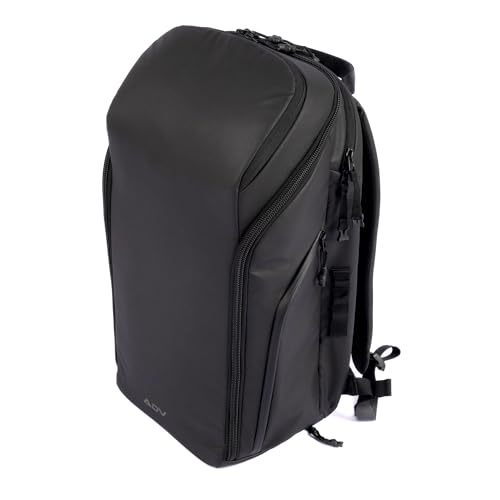
BACKPACK V2 UPGRADES: a now detachable handle cape, a mess-free toiletry pocket, a larger tennis racquet/paddle pocket for a better fit, an added side handle, a more secure hidden pocket, an improved sweat compartment, double hooks for full hanging stability, and added tennis racket/paddle sleeves.
Adaptations for Wheelchair Pickleball
Adapting pickleball for wheelchair players enhances inclusivity and enjoyment for all participants. Wheelchair pickleball features a two-bounce rule, allowing the ball to bounce twice before being returned, promoting inclusive gameplay. Courts are slightly larger, measuring 44×74 feet or 50×80 feet for stadium settings. The wheelchair is considered part of the player, which influences gameplay rules, such as allowing the front wheels to touch the non-volley zone line during volleys. Additionally, adaptive equipment, like strapping systems for stability, enhances performance for players with varying disabilities. With community events and tournaments specifically for wheelchair divisions, players gain competitive opportunities while benefiting from a supportive and engaging environment dedicated to all athletes, regardless of physical challenges.
Tips for Mastering the Rule
Mastering the two-bounce rule is essential for players aiming to enhance their pickleball game. Effective timing techniques are important; players must wait for both the serve and the return to bounce before taking their shots. Incorporating bounce drills into practice can greatly improve compliance with this rule. Players should focus on their ability to recognize bounces, ensuring they don’t hit too early. Simulation exercises can also foster an instinctive response to wait, reinforcing good habits. Developing awareness of potential faults is crucial; misjudging bounces can lead to unnecessary errors. Finally, positioning yourself properly allows for better shot selection after the bounce, ultimately strengthening overall gameplay. Regular practice of these strategies will lead to better performance on the court.
Recommended Products

Compact + Collapsible Design – effortless storage and transport. No more struggling with bulky machines. Folds down easily to fit in tight spaces. Take it anywhere. Store it anywhere.

📱【PUSUN App Drill Control】:Scan the QR code on the machine to download and use the PUSUN App, compatible with both iOS and Android devices. Use the App to adjust speed, feed interval, spin, height, landing points, and training modes. Practice dinks, volleys, drives, cross-court shots, deep returns, and random feeds with this automatic pickleball launcher.
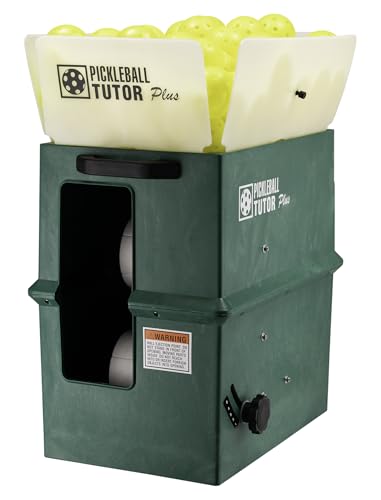
EASY-TO-USE KNOB CONTROLS - No programming or phone app required.
Frequently Asked Questions
Can the Server Choose Which Side to Serve From?
The server cannot choose the serving side freely; rather, server positioning is dictated by the game’s score. Effective serving strategies adapt to this structure, ensuring compliance with the established rules during play.
What Happens if the Ball Hits the Net During the Serve?
When the ball encounters net interference during the serve, it gracefully slips into a fault. If it lands correctly, play continues; however, a misstep outside the service box results in a shift of control.
Is the Two-Bounce Rule Enforced in Recreational Play?
The two-bounce rule is generally enforced in recreational play, though compliance varies. Casual play may experience rule variations depending on the environment, with some groups prioritizing enjoyment over strict adherence to the established regulations.
How Can I Practice the Two-Bounce Rule Effectively?
Practicing the two-bounce rule becomes an engaging dance of precision, where partners signal intentions amidst the rhythmic sound of bouncing balls. Incorporating drill variations guarantees mastery, fostering communication and sync as players adhere to bounce sequences effortlessly.
Does the Two-Bounce Rule Apply in Tournament Play?
Yes, the two-bounce rule applies in tournament play, ensuring adherence to tournament rules. This consistency in competitive play enhances strategy, preventing immediate net rushing and promoting fairness across both singles and doubles formats.