As an Amazon Associate, we earn from qualifying purchases. Some links on this site are affiliate links at no extra cost to you. Our recommendations are based on thorough research and editorial judgment.


The Dink Shot Explained: Pickleball Strategy Guide

Master the art of the dink shot with this comprehensive strategy guide designed for pickleball players of all levels. This premium resource breaks down the essential soft-touch technique that dominates net play, featuring detailed diagrams, tactical positioning tips, and progressive drills. Learn when to deploy this controlled shot, how to maintain proper paddle angle, and strategies to force opponent errors. Includes professional photography of correct form, common mistakes to avoid, and advanced variations. Perfect for players seeking to elevate their finesse game and control the kitchen line with precision.
# The Dink Shot Explained: Pickleball Strategy Guide
The dink shot in pickleball is essential for controlling game pace and neutralizing opponents’ power. By targeting the non-volley zone, you create opportunities for errors from your rivals. It’s executed with a gentle upward swing and proper grip, boosting accuracy. Effective dinks force opponents to play upward, setting up your next move. Incorporating drills helps enhance this skill. Mastering the dink can greatly increase your winning chances, and there’s more to explore about its strategic nuances.
Key Takeaways
- The dink shot is a strategic move in pickleball that targets the non-volley zone to disrupt opponents’ powerful shots.
- Proper grip and paddle positioning are vital for executing a successful dink shot that lands softly in the opponent’s kitchen.
- Dinking effectively alters the game pace, creating scoring opportunities by forcing opponents to hit upwards and generate errors.
- Practicing common drills, like the Figure 8 and Crosscourt Dinking, enhances controlling the dinks and improves overall game strategy.
- Adhering to NVZ rules and utilizing appropriate equipment, such as specific pickleballs and footwear, is essential for effective dinking.
Definition and Purpose of the Dink Shot
In the domain of pickleball, the dink shot stands out as a fundamental tactic. This soft, controlled shot targets the opponent’s non-volley zone, or “kitchen,” making it hard for opponents to launch an aggressive return. Effective shot selection involves choosing dinks when positioning allows for strategic advantage. By controlling the game pace, players can force rivals to hit upwards, setting up opportunities for an attack. Dinks not only neutralize powerful shots but also create “dink battles.” These exchanges demand precision, as a well-placed dink can lead to errors from opponents. Players using paddles with advanced spin technology can enhance their dink shot dynamics, allowing for better placement and control during these crucial exchanges. Mastery of the dink shot enhances overall strategy, allowing players to dictate flow and capitalize on openings during the game.
Technical Execution of the Dink Shot
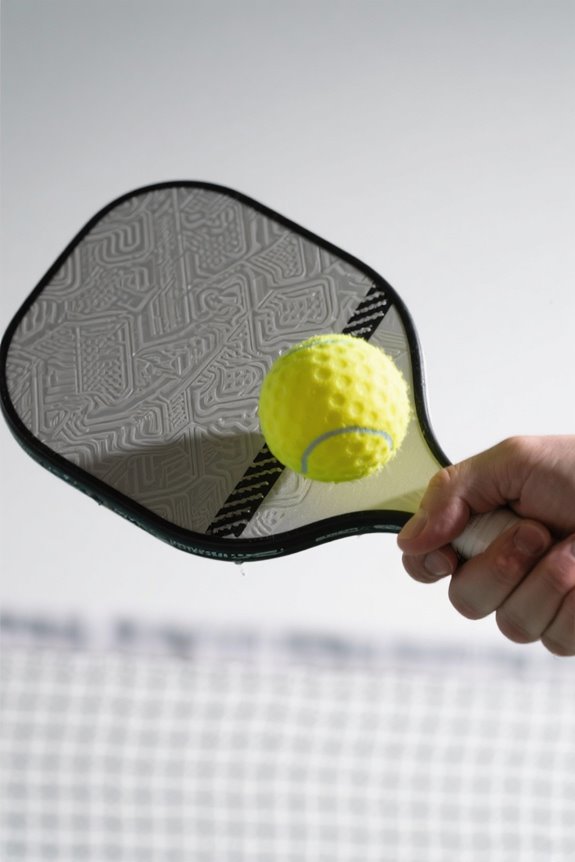
Mastering the dink shot requires a strong technical foundation. The execution begins with proper grip—keeping it loose for better control of ball trajectory. Position the paddle out in front for swift reactions and a gentle upward swing. This technique guarantees a soft landing in the opponent’s kitchen zone. Focusing on shot variations is vital; a compact backswing combined with a short follow-through enhances accuracy. Effective dink techniques also involve leg movement to lower your body and improve positioning. A mindful contact point, paired with careful ball trajectory management, aids in executing precision shots. Practicing these fundamentals helps players develop a repertoire of dinks, including volley dinks and apex variations, essential for competitive play. The lateral movements required during dinking exchanges make ankle support and stability crucial for maintaining proper positioning and preventing injuries on the court.
Recommended Products

MULTIPLE WEIGHT OPTIONS: Cuff offers 20 color-coded ankle and wrist weights ranging from 0.25 lbs. all the way up to 25 lbs., making them versatile for all strength levels. Multiple weight options allow for a customized workout.

NDure upper technology designed for superior durability
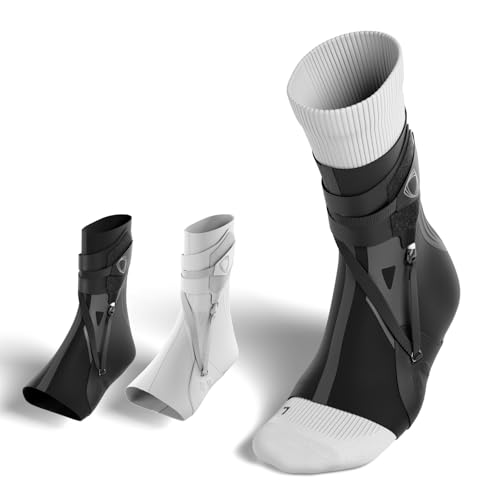
#1 Sports Ankle Brace Trusted by Pros: Worn by NFL, NBA, MLS, and NCAA athletes, The BetterGuard 3.0 is the ultimate ankle brace for injury prevention and performance. Trusted by men, women, and teens for basketball, soccer, football, volleyball, and more. Built for athletes at every level.
Strategic Importance in Pickleball Play
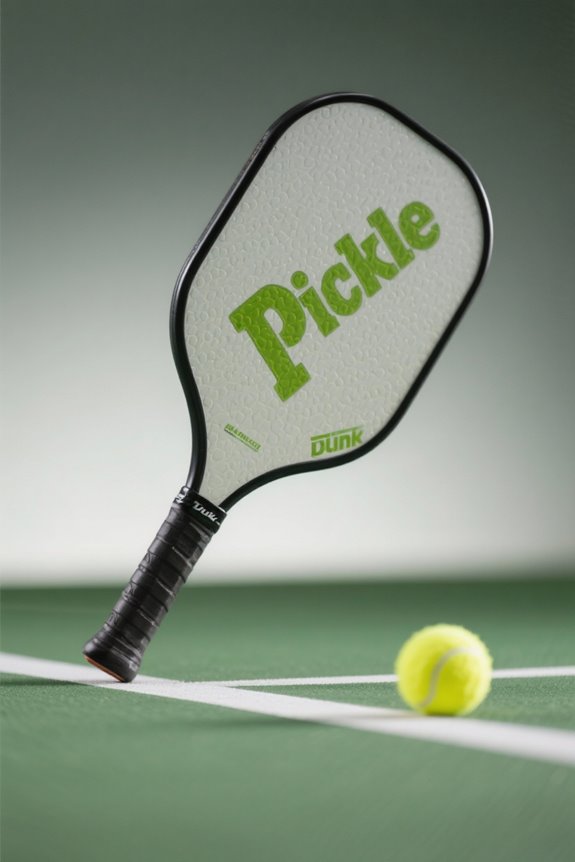
Understanding the strategic importance of the dink shot in pickleball can change a player’s approach to the game. The dink strategy allows players to gain significant game control by slowing the pace, forcing opponents into uncomfortable positions. This soft touch shot can create scoring opportunities, compelling opponents to make errors. By placing dinks near the non-volley zone (NVZ) line, players can maintain pressure, effectively pushing rivals wide and limiting their attacking options. Dinking also disrupts offensive setups, instilling defensive stability. Utilizing this technique at the right moments enhances overall performance, shifting the momentum towards control players. Emphasizing strategic dink play can ultimately increase your chances of winning, creating advantageous situations that capitalize on opponent weaknesses. Just as proper equipment selection matters in tennis, ensuring your paddle has the right grip thickness and moisture absorption capabilities can significantly enhance your dink shot control and overall touch during extended gameplay.
Common Dink Shot Drills for Skill Development
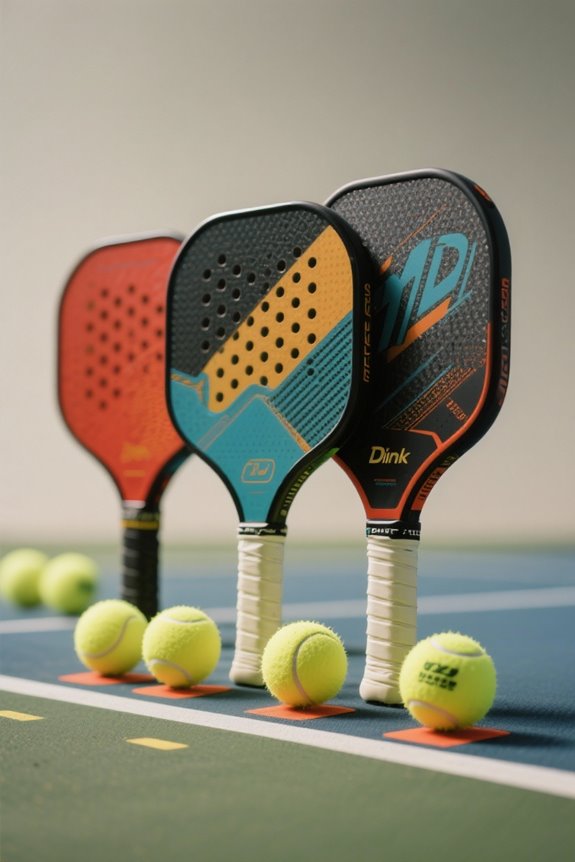
Developing effective dink shot skills is essential for any pickleball player aiming to enhance their game. Common drills such as the Figure 8 Drill improve control and maneuverability, while Games to 5 Points focus solely on dinking, promoting consistent practice. Crosscourt Dinking drills enhance recovery after each shot, emphasizing positioning. Incorporating various dink types, like short and deep dinks, leverages dink shot psychology to challenge opponents and improve decision-making. Additionally, drills that promote lateral movement and rapid exchanges enhance agility, vital for overcoming dinks effectively. Practicing within the non-volley zone sharpens strategy and control, creating a well-rounded skill set that will lead to greater success on the court. Using a paddle with an appropriate grip size between 4 ¼ and 4 ½ inches ensures better control during dink exchanges and helps prevent wrist injuries from improper form. Consistency is key to mastering dinking in any game situation.
Recommended Products

IDEAL FOR PRACTICE - Allows new lacrosse players to feel more at ease and confident. The softer outer fabric is both less intimidating and doesn’t hurt as bad if you get hit by a ball.

THE STANDARD ON COURT: USAP approved, chosen as the official ball for both the US Open Pickleball Championships and USA Pickleball, and engineered for official size and weight, these pickleball balls deliver consistent performance for both pro and amateur players

FAMILY-OWNED: At Selkirk, we are committed to fueling the pickleball obsession found within every player. Through uncompromising quality and a never-satisfied drive for innovation, we serve players around the world from beginners to pros.
Rules Related to Dinking
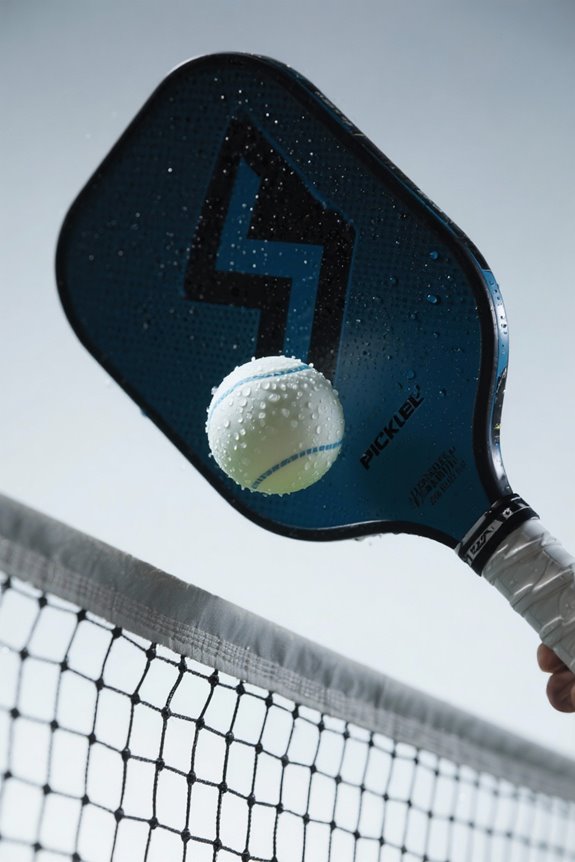
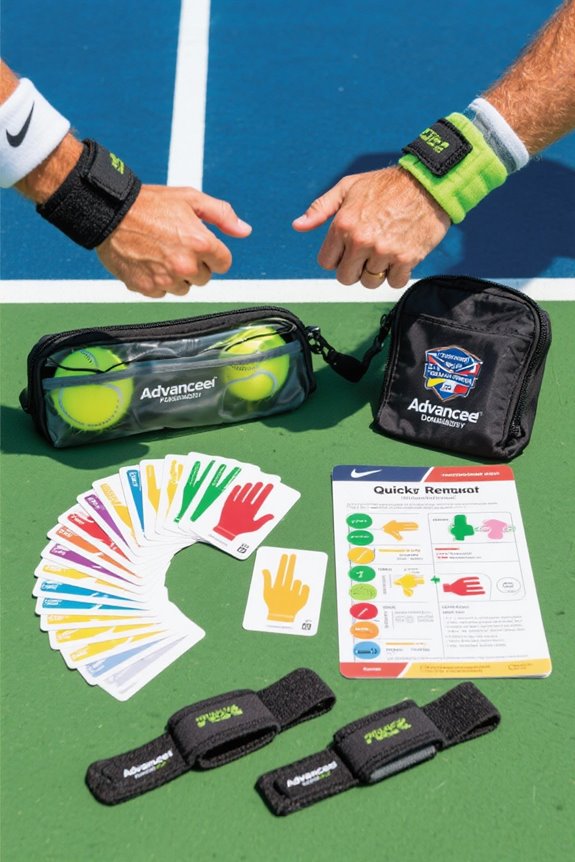
Dinking in pickleball adheres to specific rules that players must grasp to maximize their effectiveness on the court. A dink, a soft shot aimed at the non-volley zone (NVZ), requires finesse and precision. To execute a successful dink, remember the importance of dink terminology, including NVZ restrictions that prevent volleying within this 7-foot area. You can enter the NVZ after the ball bounces or for non-volley shots, ensuring you comply with dink etiquette. Dinks aim to force your opponent into low contact points, minimizing their attacking options. Keeping your paddle position and swing technique in check is essential. During extended dinking rallies, consider using a score tracking wristband to effortlessly monitor points from 0 to 11 without losing focus on your strategic positioning. Ultimately, mastering these rules will improve your performance and enhance gameplay strategy during competitive matches.
Court Positioning for Effective Dinking
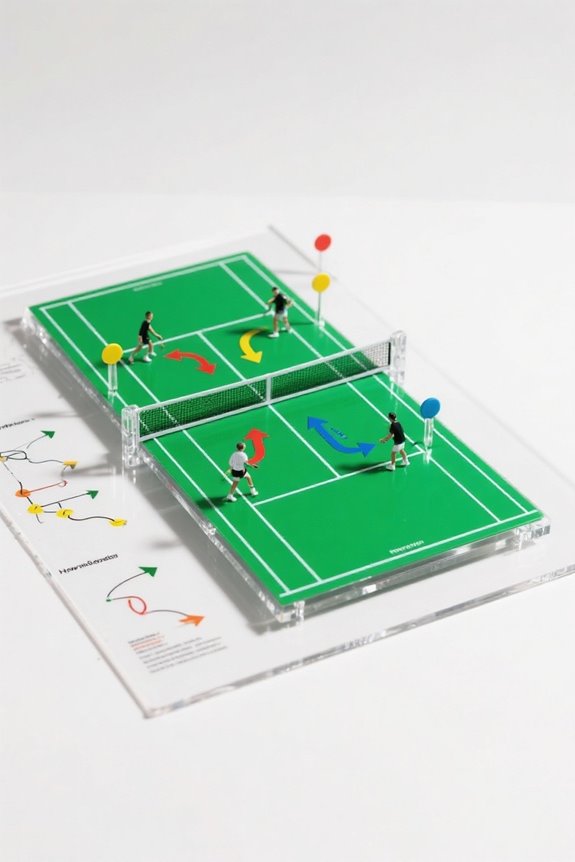
Mastering court positioning is vital for effective dinking in pickleball. Players should position themselves near the Non-Volley Zone (NVZ) line to maximize their ability to execute dinks. A balanced stance, with knees slightly bent, allows for quick movements and enhanced control. Paddle alignment is essential, as it guarantees a smooth motion when hitting dinks. Employing dinking strategies such as crosscourt dinks helps maintain a greater margin for error while creating strategic opportunities. Observing opponents’ positioning can also guide players in predicting potential shots. Placing dinks near the sidelines can effectively pull opponents wide, opening up space for future attacks. Ultimately, strategic court positioning empowers players to dictate the pace of the game, applying pressure on their opponents. Selecting a paddle with a larger sweet spot, such as those featuring widebody designs or advanced technologies, can significantly improve dink control and consistency during these critical exchanges.
Recommended Products

Triple Layer Carbon Fiber Construction - The innovative triple layer carbon fiber design ensures durability and strength for a powerful and consistent performance on the pickleball court.

Ultimate Forgiveness: Thicker 16mm Hybrid profile creates a softer feel and stability for consistent shot making.
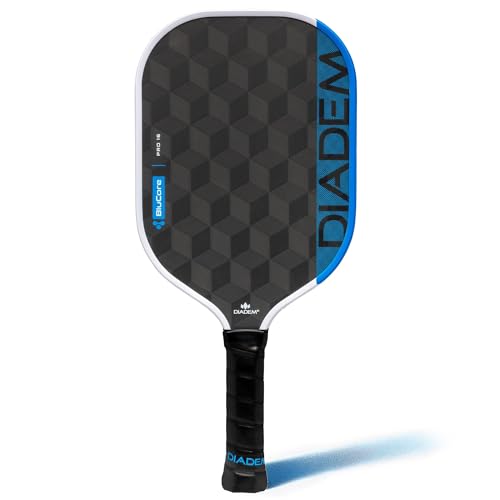
𝗗𝗼𝗺𝗶𝗻𝗮𝘁𝗲 𝘄𝗶𝘁𝗵 𝗣𝗼𝘄𝗲𝗿: 16mm pro profile packs explosive punch and plow-through for heavy drives that overwhelm opponents.
Variations and Advanced Dink Techniques
Advanced dink techniques can greatly elevate a player’s performance on the pickleball court. Utilizing topspin creates dinks that drop quickly, making aggressive attacks difficult for opponents. Slice dinks remain low, causing discomfort and limiting powerful returns. Combining these spins leads to unpredictable shots and adds a layer of deception to your dinking strategy. Deceptive dinks can surprise opponents, especially when executed with similar paddle movements as soft shots. Additionally, varying placements within the kitchen can disrupt your opponent’s positioning, leading to forced errors. By integrating these advanced dinking techniques, you’ll challenge your rivals and gain control during rallies. When you master these variations, your game will become considerably more formidable. Selecting a paddle with an enlarged sweet spot can enhance your ability to execute these precise dink shots consistently, as it increases the margin for error during delicate exchanges at the net.
Recommended Products

NEW KINETICFRAME TECHNOLOGY: Inspired by the way a hockey stick flexes to load and release energy, KineticFrame construction adapts to your swing—delivering explosive power on aggressive drives while maintaining control and forgiveness for defensive play.

UNRIVALED STRENGTH: Constructed using a double thermoforming process designed to maximize the integrity of the paddle by enhancing the structure — not once, but twice — which increases the strength of the unibody design and helps to reduce vibration

CERTIFIED AUTHORITY FOR COMPETITIVE PLAY: Join the ranks of winners with a pickleball paddle that is USAP Pickleball PBCOR.43 Approved and UPA Pro Certified. This nox equipment serves as an experienced guide, ensuring you play with the same specifications as the pros. These pickle ball paddles eliminate the noise of subpar gear, offering a proven path to peak performance. Choose a pickleball racket that delivers unparalleled consistency and helps you reach your goals.
Understanding the No-Volley Zone
Understanding the No-Volley Zone (NVZ) is essential for effective pickleball play. The NVZ, often called the “kitchen,” spans 7 feet on each side of the net, creating a 14-foot court area. The kitchen line rules dictate that players cannot volley within this zone or its boundaries, which are part of the NVZ. Violating these rules leads to faults and potential point losses. Players can enter the NVZ to execute dink shots but must avoid volleying while in this area. Additionally, serves must soar over the NVZ, landing in the opposite court without touching the lines. When practicing your dink shots, consider using Dura Fast 40 pickleballs, which are the official outdoor balls for major tournaments like the US Open and feature a patented 40-hole design for consistent flight and bounce. Mastering these non-volley zone dimensions and understanding the rules will enhance strategic gameplay and keep you competitive.
The Role of Dinking in Doubles Play
Dinking plays an essential role in doubles play, offering a strategic edge that can greatly influence match outcomes. It serves to control the pace and flow of rallies, allowing teams to leverage dinking strategies against their opponents’ weaknesses. A well-executed cross-court dink keeps opponents off balance, often leading to errors or weak returns. This not only disrupts their rhythm but also sets up scoring opportunities for coordinated attacks. Targeting specific areas, like foot placements, adds pressure, particularly on those with weaker backhands. Additionally, effective communication between partners guarantees that court positioning reinforces these tactics. Dinking creates a dynamic equilibrium; mastering it enhances both defensive and offensive gameplay, ultimately shaping the outcome in competitive settings. The constant lateral movements required during dinking exchanges make having shoes with proper lateral support crucial for maintaining stability and preventing injuries on the court.
Tips for Improving Dink Consistency
Improving dink consistency can greatly elevate a player’s performance on the court. Players should focus on technique fundamentals, such as contacting the ball slightly in front of their body, using a gentle lifting motion, and maintaining an open paddle face. Keep your knees bent to guarantee consistent contact. Engage in repetitive dink-only rallies to build muscle memory and maintain focus on ball placement. Dink psychology plays an essential role; understand your opponent’s weaknesses through careful opponent analysis. Practice diverse shot placements to adapt to various situations. Incorporating decision-making drills can enhance in-the-moment responses, ultimately promoting consistency. Proper footwear with durable rubber outsoles can provide the traction and stability needed for the quick lateral movements essential to effective dinking. By mastering these fundamentals, players will experience an increase in their ability to control the game and make strategic gains.
Analyzing Dink Shot Scenarios in Matches
While maneuvering through the complexities of pickleball, analyzing dink shot scenarios in matches becomes essential for strategic advantage. Players should focus on dink shot strategies that exploit opponent weaknesses. Directing dinks toward an opponent’s feet or weaker side increases errors. Varying depth and spin also keeps the opponent guessing, making it challenging to return effectively. When a player demonstrates inconsistency, target their nervousness with pressure tactics. A deep, downward arc on dinks forces opponents to reconsider their attack options. Additionally, mixing pace can disrupt their rhythm. Ultimately, recognizing opponents’ weaknesses and adapting can greatly shift the momentum. Incorporate these strategies during dinks to establish control and enhance your competitive edge on the court.
Frequently Asked Questions
What Are Common Mistakes Beginners Make With Dinks?
Common mistakes beginners make with dinks include poor timing errors and inaccurate shot placement, often leading to predictable returns and limited pressure on opponents. Ineffective footwork exacerbates these issues, hindering strategic play during dinking rallies.
How Can I Tell if My Dink Is Effective?
An effective dink is indicated by strategic dink placement that forces opponents into awkward positions, limiting their options. Signs include their inability to attack aggressively, awkward footwork, or hesitation between partners, leading to errors.
Should I Dinks More Frequently in Singles or Doubles?
When it comes to dinking, variety is the spice of life; players should dinks more frequently in doubles for effective coordination, while singles strategy often utilizes fewer dinks, focusing on pace and aggressive play.
How Do Weather Conditions Affect My Dinking Strategy?
Weather conditions considerably impact dinking strategy by altering ball behavior and playing conditions. Cooler temperatures require softer dinks, while wind demands precise adjustments in angle and power, affecting shot placement and overall effectiveness during matches.
Can Dinking Help Improve My Overall Pickleball Skills?
Yes, dinking can greatly enhance overall pickleball skills. Mastering dink techniques and employing strategic placement not only improves shot accuracy but also increases footwork, reaction time, and game awareness, ultimately fostering greater confidence in players.