As an Amazon Associate, we earn from qualifying purchases. Some links on this site are affiliate links at no extra cost to you. Our recommendations are based on thorough research and editorial judgment.


Pickleball Tournament Format Types

Premium pickleball tournament equipment arrangement featuring official paddles, regulation balls, and scoring materials displayed on pristine white backdrop. Studio-quality composition showcases tournament-grade gear with professional lighting highlighting textured paddle surfaces and vibrant ball colors. Clean, minimalist layout emphasizes quality craftsmanship with subtle shadows adding depth. Sharp 8k detail captures every element—from paddle grip texture to ball dimple patterns—in commercial catalog style. Central placement creates balanced, professional e-commerce aesthetic perfect for tournament organizers and serious players seeking competition-level equipment.
# Pickleball Tournament Format Types
Pickleball tournaments can be organized in several formats, catering to diverse skill levels and preferences. Common formats include double elimination, where players advance through a winner’s and a loser’s bracket, and single elimination, where one loss leads to elimination. Round robin allows players to compete against everyone in their group, while pool play divides participants into smaller groups for initial matches. Consolation rounds, ladder, Swiss system, and team formats also enhance competition. There’s much more to explore about these options.
Key Takeaways
- Elimination Formats include single and double elimination, where players face immediate elimination or a second chance after a loss.
- Round-Based Formats like round robin and pool play enable extensive match opportunities, fostering player engagement through diverse matchups.
- Consolation Rounds allow early losers in elimination formats to continue competing, enhancing the overall participant experience.
- Skill-Based Formats, such as ladder play, focus on skill progression and flexible match arrangements based on players’ ratings.
- Team Formats promote gender balance and collaboration, involving various match types including singles, doubles, and mixed doubles competition.
Double Elimination Format
When participating in a pickleball tournament, understanding the double elimination format can greatly enhance your experience. This format involves players being placed in a winner’s bracket, with the opportunity to move to a loser’s bracket after their first loss. Elimination only occurs after two losses, providing a vital second chance. Matches in the winner’s bracket are typically best of three games to 11 points, while opportunity bracket games may be a single game to 15 points, emphasizing scoring variations. Effective bracket management software is essential to guarantee a smooth tournament flow. This structure not only maximizes match participation but also fosters resilience, allowing players to adapt their strategies following a loss, and thereby enhancing both competitiveness and enjoyment throughout the tournament. To maintain peak performance throughout extended tournament play, many players rely on ankle braces that provide essential support and help reduce pain during recovery between matches.
Recommended Products

MULTIPLE WEIGHT OPTIONS: Cuff offers 20 color-coded ankle and wrist weights ranging from 0.25 lbs. all the way up to 25 lbs., making them versatile for all strength levels. Multiple weight options allow for a customized workout.

NDure upper technology designed for superior durability

WHY CUSTOMERS LOVE TAYCO BRACE: Our ankle support brace is the only rigid brace that fits over your existing shoes, allowing you to keep your shoes and not have to buy bigger sizes for internal AFOS or level-ups if you’re in a cumbersome walking boot. You can also hide it under pant legs.
Single Elimination Format
In a single elimination format, each match holds significant importance, as players face immediate consequences for any loss. This structure demands strategic planning from participants, as the stakes are high; one defeat leads to elimination. Typically, the tournament progresses through a bracket that narrows with each round, ultimately crowning one champion. While matches are often best two of three games to 11 points, adjustments can occur based on conditions. This format fosters participant engagement, elevating the tension and excitement of matches, where a single upset can shift a tournament’s dynamic. However, early eliminations limit overall playtime, making every match pivotal for players. Proper seeding is essential to guarantee a fair playing field and enhance competition. Players should ensure their equipment is well-organized and protected, with quality bags offering multiple compartments for racquets and accessories to maintain peak performance throughout the tournament.
Recommended Products

One system, every transition: the All Court Backpack replaces your racquet bag, work pack and carry-on. It moves from court to commute to weekend away without repacking a thing.

Wilson RF Tournament Tennis Racket Bag - Holds up to 15 Rackets, Black

(2) Heavy duty reinforced loops with carabiners to hang bag from a fence
Round Robin Format
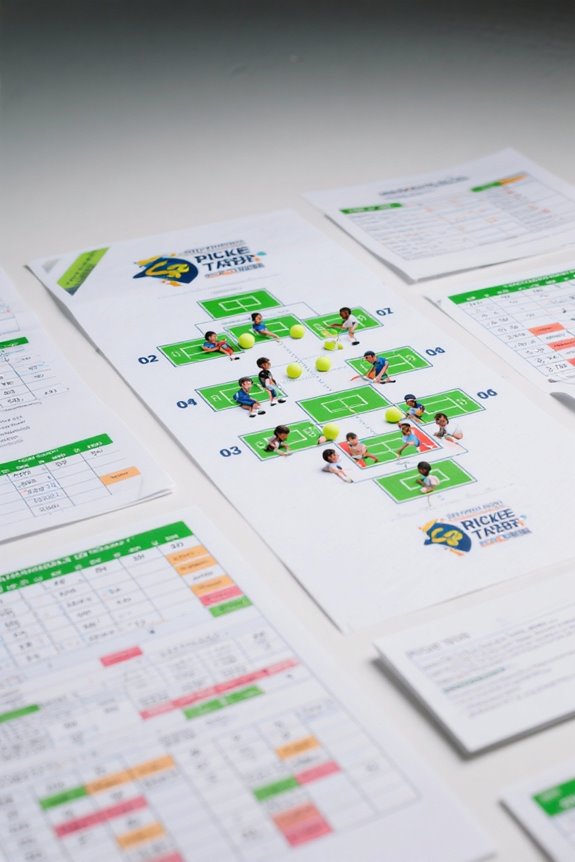
Though some players may prefer the intensity of elimination formats, the round robin format offers a distinct advantage by allowing each participant the opportunity to compete against every other member in the group at least once. In this structure, everyone plays each match regardless of wins or losses, ensuring ample playtime. Typically, groups range from 4 to 16 players, making it suitable for various tournament sizes. Match scheduling is carefully managed, with courts and opponents assigned according to a rotation schedule. This setup allows player rotation, promoting social interaction and diverse partnerships. Matches usually consist of one game to 11, with scoring mechanisms adaptable for pace. Having the right grip size for your paddle, typically between 4 ¼ and 4 ½ inches, ensures optimal control throughout these extended round robin sessions. Ultimately, round robin formats provide a low-pressure environment perfect for development and enjoyment.
Recommended Products
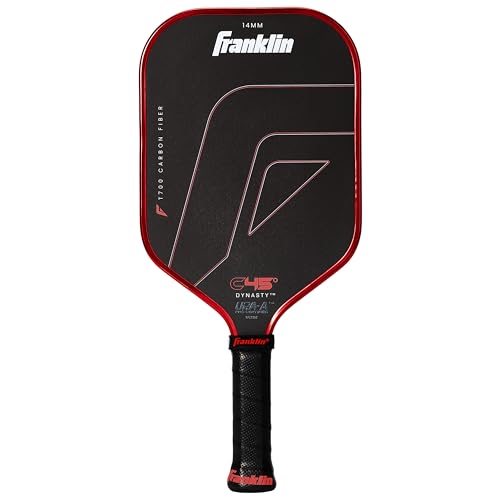
UNRIVALED STRENGTH: The C45 paddle is constructed using a double thermoforming process designed to maximize the integrity of the paddle by enhancing the structure — not once, but twice — which increases the strength of the unibody design and helps to reduce vibration

OFFICIAL PADDLE SPONSOR OF WORLD #1 PICKLEBALL PLAYER BEN JOHNS & THE PPA TOUR: An innovator & global leader in table tennis for 70+ years, JOOLA teams up with Ben Johns to create a new line of pickleball equipment that will forever change the game

OFFICIAL PADDLE SPONSOR OF WORLD #1 PICKLEBALL PLAYER BEN JOHNS & THE PPA TOUR: An innovator & global leader in table tennis for 70+ years, JOOLA teams up with Ben Johns to create a new line of pickleball equipment that will forever change the game
Pool Play Format
Pool play format in pickleball tournaments presents a structured and engaging way for participants to compete. In this format, players are divided into pools of 2 to 5 participants. Each player competes against every other player in their pool, allowing for diverse match experiences. Pool play strategies focus on accumulating wins to secure advancement to elimination rounds, emphasizing consistency and adaptability during matches. Typically, matches last around 15 to 30 minutes, played as one game to 11 points, with variations possible. This format guarantees more court time for all, heightening player engagement. The primary goal is to determine which players advance, making effective play essential for success in future brackets. Such organization promotes fairness while maximizing competition. For venues with limited space, tournaments may utilize portable pickleball nets with adjustable heights ranging from 34 to 60 inches to accommodate multiple courts efficiently.
Recommended Products

Durable Construction: Built with heavy gauge steel, this net features brass and stainless steel hardware, ensuring it withstands both indoor and outdoor use. The frame is designed for long-lasting performance with minimal maintenance. Its heavy-duty construction means it can handle rigorous play and remain stable. The welded angle post bracing provides additional strength. Rust protection is guaranteed with zinc-dipping and powder coating.

ADJUSTABLE BALL SPEED & SPIN CONTROL: Fine-tune your pickleball sessions with adjustable ball speeds up to 65 MPH. Simulate gentle volleys to high-speed ground strokes while adding heavy topspin or backspin for competitive game situations.

Premium Performance & Durability – The C&D Qualifier Pickleball Net System is built for long-lasting use with high-quality materials. Its sturdy construction ensures stability during intense gameplay. Designed to withstand outdoor conditions, it features corrosion-resistant stainless steel hardware. Ideal for clubs, community centers, and backyard courts, this system delivers professional-level performance.
Consolation Rounds
Consolation rounds in pickleball tournaments serve as an essential component for enhancing participant experience after early eliminations in the main draw. This consolation strategy allows players or teams who lose their initial matches to continue competing, adding to the overall match dynamics. Each consolation bracket features a single-elimination format, ensuring that even those eliminated early have a chance at winning bronze. Typically, matches utilize the same scoring rules as the main draw, which generally consists of the best two of three games to 11 points, win by two. Not all tournaments employ consolation rounds, but when they do, players benefit from increased gameplay and the opportunity for recognition, thereby fostering a more inclusive and engaging tournament experience overall. Players competing in these rounds should ensure their equipment meets USAPA certified standards to maintain consistency and fair play throughout the tournament.
Recommended Products

NEW KINETICFRAME TECHNOLOGY: Inspired by the way a hockey stick flexes to load and release energy, KineticFrame construction adapts to your swing—delivering explosive power on aggressive drives while maintaining control and forgiveness for defensive play.

OFFICIAL PADDLE SPONSOR OF WORLD PICKLEBALL PLAYER BEN JOHNS. An innovator & global leader in table tennis for 70+ years, JOOLA teams up with Ben Johns to create a new line of pickleball equipment that will forever change the game.

CERTIFIED AUTHORITY FOR COMPETITIVE PLAY: Join the ranks of winners with a pickleball paddle that is USAP Pickleball PBCOR.43 Approved and UPA Pro Certified. This nox equipment serves as an experienced guide, ensuring you play with the same specifications as the pros. These pickle ball paddles eliminate the noise of subpar gear, offering a proven path to peak performance. Choose a pickleball racket that delivers unparalleled consistency and helps you reach your goals.
King of the Court Format
After exploring consolation rounds, the King of the Court format introduces a dynamic and engaging way to compete in pickleball. This setup typically features four players, allowing balanced skill levels in doubles matches. Court organization is key, as partners rotate after each match, ensuring diverse teamwork. Games, played to 11 points with a two-point margin required unless timed, enhance player engagement through constant movement. Winning teams advance up the court, while losing teams shift down. With a tournament typically lasting two hours, this format fosters a vibrant atmosphere. Additionally, the King or Queen of the Court is crowned, promoting not only competition but a sense of community for all participants involved. Players should consider their equipment carefully, as paddle weight ranging from 6.5 to 8 ounces can significantly impact maneuverability and control during these fast-paced rotations.
Best of Five Format
The Best of Five format is a popular choice for competitive pickleball, particularly in tournaments. This format requires a team to win three out of five games, typically played to 11, 15, or 21 points, with a win by two points rule. Tournaments may utilize various game scoring systems, although traditional side-out scoring is commonly preferred. Match strategies are essential in this format, as teams must adapt their gameplay based on the score and their opponents’ strengths. With the flexibility to integrate into round-robin or elimination brackets, the Best of Five format efficiently determines winners while accommodating different tournament styles. Understanding these dynamics enhances players’ performance and overall experience in competitive settings. To effectively track scores throughout these extended matches, players can utilize electronic scoreboards with features like countdown timers and adjustable brightness for optimal visibility.
Mixed Format
Mixed Format tournaments represent an exciting opportunity for players to showcase their skills in a dynamic setting that combines strategy, teamwork, and competitiveness. These events typically feature mixed doubles, consisting of one male and one female player per team. The structure often includes pool play, determining seeds based on win-loss records and point differentials. From there, teams advance to single or double elimination rounds. Mixed scoring methods may be utilized, typically following the best two of three games to 11 points with a win by two rule. Effective partner dynamics are critical; teams must coordinate to navigate the unique challenges of each match. This format emphasizes equal representation, making it a popular choice in multi-event tournaments. Players competing in these tournaments benefit from wearing shoes with excellent traction suitable for various surfaces, ensuring stability and performance during the quick lateral movements required in pickleball doubles play.
Swiss System Format
Swiss System Format invigorates the pickleball tournament landscape, offering a fresh approach to competition. This format guarantees all players or teams compete in an equal number of matches, preventing early elimination. Pairing strategies are based on players’ current winning records, matching those with similar results, which fosters a balanced playing field. Scoring nuances can vary, with matches typically played to 11 points, consistently adhering to official pickleball rally rules. With dynamic pairings and robust management, technology aids in tracking results and maintaining fairness, even for large events. Participants appreciate the continuous engagement, which allows broader skill development throughout the tournament. Tournament organizers often select balls with 40 precision-drilled holes to ensure consistent flight and bounce across all matches. Ultimately, the Swiss System enhances player experiences and strengthens community ties in the sport.
Ladder Format
Ladder Format provides a distinctive way to engage in pickleball, emphasizing skill progression and flexible play arrangements. In this format, players are sorted by skill level, often using DUPR or USAPA ratings. With an ideal number of participants between 16 and 20, players compete on courts ranked by their performance. Each match contributes to player movement, as success can allow individuals to ascend or descend the ladder based on their winning percentage. This structure encourages friendly competition, offering a round-robin style of play where games must often meet specific winning margins. To maintain optimal performance during these competitive matches, players should consider using perforated grips that offer moisture management and enhanced control, particularly beneficial for those who sweat heavily during extended play. Overall, ladder leagues facilitate skill sorting, allowing players to challenge themselves and improve while managing their schedules and court availability in a supportive environment.
Team Format
Team Format in pickleball offers a dynamic and engaging way for players to compete together while showcasing individual skills within a group setting. Typically, team composition includes at least two men and two women to guarantee coverage for men’s doubles, women’s doubles, singles, and mixed doubles formats. Match scoring often follows a standard of best two out of three games to 11 points, encouraging strategic play among teammates. Larger tournaments commonly utilize round-robin pools, allowing teams to assess their strengths through multiple matches. Innovative formats may include no-ad scoring to maintain pace. Overall, team formats promote gender balance and collaboration, making them a popular choice in both local and national tournaments while enhancing the competitive spirit of pickleball.
Frequently Asked Questions
What Are the Benefits of Participating in a Tournament?
Participating in a tournament experience enhances physical health, fosters social connections, and boosts skill development. This competitive environment provides an advantage, motivating players to improve while simultaneously cultivating mental resilience and community engagement.
How Can I Register for a Pickleball Tournament?
To register for a pickleball tournament, participants must follow the registration process on online platforms like Pickleball Brackets, creating accounts, selecting events, managing partners, and completing payments to confirm their participation effectively.
What Equipment Do I Need for a Pickleball Tournament?
At the recent state championship, players equipped with USA Pickleball-approved paddles and designated tournament balls showcased their skills. Essential gear includes compliant paddles and durable balls to guarantee fair competition and peak performance during tournaments.
How Is Scoring Handled in Tournaments?
In tournaments, scoring systems vary, typically involving traditional side-out scoring or rally scoring. Tournament rules dictate point thresholds, often requiring wins by two, ensuring consistency in competitive play across various formats and match structures.
Are There Age Divisions in Pickleball Tournaments?
Are age divisions vital for fair competition in pickleball tournaments? Yes, age classification is key for ensuring tournament eligibility, allowing players to face peers with similar physical capabilities, thereby enhancing enjoyment and fostering inclusivity within the sport.