As an Amazon Associate, we earn from qualifying purchases. Some links on this site are affiliate links at no extra cost to you. Our recommendations are based on thorough research and editorial judgment.


Tennis Line Call Rules and Etiquette

Premium tennis court line markers and boundary equipment displayed in pristine studio setting. Professional-grade white court lines contrast against regulation green surface material, accompanied by official line judge tools and call signal indicators. Crisp white backdrop emphasizes the precision and clarity essential to tennis officiating. Commercial-quality image showcases tournament-standard line calling equipment including challenge system reference cards and boundary markers. Studio lighting creates soft shadows while highlighting the vibrant green and white color scheme synonymous with professional tennis. Perfect centered composition demonstrates premium sports equipment photography standards.
# Tennis Line Call Rules and Etiquette
Tennis line call rules require players to accurately determine if the ball is “in” or “out” on their side. This reliance on the honor system encourages fairness and sportsmanship. Players must communicate calls clearly and acknowledge uncertainty in favor of opponents. Disputes can arise, but specific procedures exist to manage them respectfully. Technology, like electronic line calling, enhances accuracy. Understanding these aspects is essential for an enjoyable game, and exploring further will expand your knowledge of tennis etiquette.
Key Takeaways
- Players must accurately call whether balls are “in” or “out” on their side, adhering to the honor system in tennis.
- Immediate line calls are essential; any uncertainty should benefit the opponent to promote sportsmanship.
- Clear verbal communication, such as loudly declaring “out,” helps prevent disputes and maintains game flow.
- Respecting opponents’ line calls reinforces fair play and fosters mutual respect during matches.
- In case of disputes, players should consider replaying points only when the score is questioned, ensuring a fair resolution.
Understanding the Basics of Line Calls
Line calls are a fundamental aspect of tennis that players must master to secure fair play. These calls dictate whether a ball is “in” or “out,” directly affecting the outcome of points. Players are responsible for line call accuracy on their side of the net, emphasizing the need for honesty and player integrity. Prompt, clear communication, using audible terms like “out,” secures smooth gameplay and minimizes disputes. Situations may arise where players are uncertain; in these cases, the benefit of the doubt goes to the opponent. Such guidelines reinforce sportsmanship and uphold the integrity of the match. Using quality equipment, such as ITF and USTA approved tennis balls, ensures consistent bounce and performance that aids in making accurate line call decisions. Ultimately, understanding these basics lays a solid foundation for a respectful and enjoyable playing experience.
The Importance of the Honor System

Tennis is unique among sports for its reliance on a system of honor. Players are responsible for calling lines accurately on their side, embodying the honor tradition central to the game. This system fosters fairness, encouraging player integrity and minimizing disputes. In amateur matches, where officials may be absent, adherence to the honor system becomes even more essential. It promotes a positive atmosphere on the court, allowing players to accept responsibility for their calls, which reduces confrontations. By trusting each other, players cultivate mutual respect and goodwill. Despite emerging technologies, the honor system remains critical in maintaining tennis’s reputation as a gentleman’s and gentlewoman’s sport, emphasizing ethics, accountability, and respect among competitors. Maintaining focus on fair play is just as important as having the right equipment, such as ensuring your racquet has a secure and comfortable hold through proper grip maintenance.
Procedures for Handling Line Call Disputes
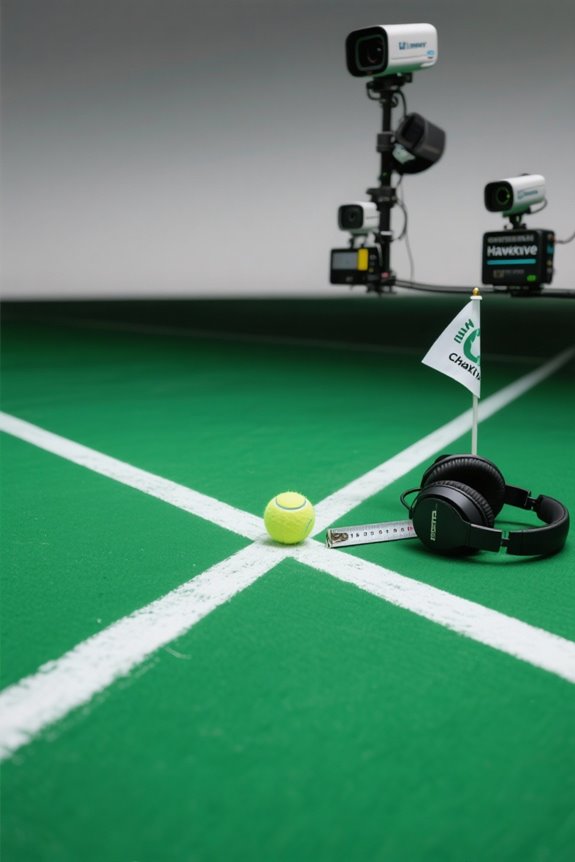
Maneuvering disputes over line calls involves specific procedures that guarantee fair play and maintain the flow of a match. Players must be responsible for line calls, but officials can provide assistance and intervene to facilitate dispute resolution. In cases where an official witnesses an error, play may be halted to correct the call, typically resulting in a replay of the point. On non-clay courts, if a player disputes a line call, they may need to confirm their decision frankly to avoid escalation. Practicing respectful communication with opponents and officials is essential. Similar to pickleball where USAPA approval ensures compliance with competitive standards, tennis governing bodies establish official protocols for resolving line call controversies. Ultimately, efficient resolution of disputes assures minimal disruption to the game, with official intervention key to enforcing rules and preserving the match’s integrity.
Recommended Products

Country Of Origin: China

Versatile Court Markers: This set includes 10 pieces of 14.6" strip line flat markers, perfect for outlining tennis or pickleball courts. Unleash your creativity by designing target areas, marking boundaries, or even creating directional arrows for ball placement.
The Role of Technology in Line Calls

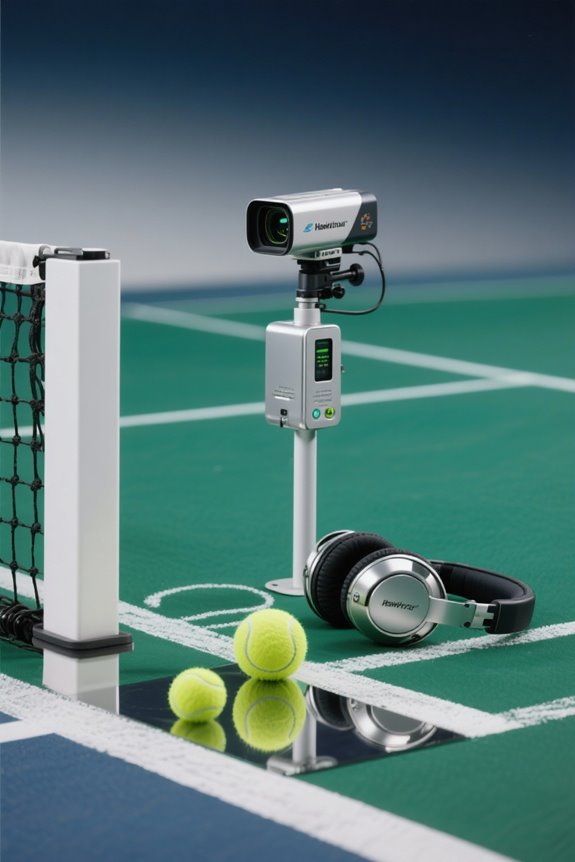
Technology has dramatically transformed the way calls are made in competitive environments. The introduction of electronic line calling (ELC) has enhanced accuracy and efficiency. Major tournaments use automated systems like Hawk-Eye, which employs over 40 high-speed cameras capable of 2,500 frames per second. This tech innovation minimizes human error, reducing player disputes. The International Tennis Federation (ITF) categorizes ELC systems into Gold, Silver, and Bronze tiers, making technology accessible from elite competitions to local matches. With ongoing evaluation, systems like PlayReplay and FoxTenn offer varying levels of affordability and performance. Players appreciate the consistency of these technologies, as they provide near-instantaneous calls, thereby improving match flow and spectator experience. Just as technology enhances line calling accuracy, players can also optimize their practice sessions by selecting appropriate equipment, such as tennis ball baskets with capacities ranging from 75 to 240 balls depending on training needs. Embracing these advancements guarantees fair play in tennis.
Recommended Products

Versatile Design: Doubles as a teaching cart, maximizing your investment

High-Capacity Tennis Teaching Cart: Amp up your tennis practice with our high-capacity teaching cart that holds a whopping 325 balls, making it the ideal choice for serious tennis enthusiasts looking to elevate their game.

The Ballport 220 is the perfect heavy duty teaching cart for pro's on the go!
Umpires and Line Judges in Professional Matches
In competitive tennis, the roles of umpires and line judges are imperative for maintaining fairness and accuracy on the court. Umpires oversee the match, ensuring all rules are followed, while line judges focus on specific lines, calling balls in or out and monitoring foot faults. Their official responsibilities include using verbal cues and hand signals to signify decisions clearly. Coordination between referees is essential; chair umpires may overrule line judges in certain situations when they’ve directly observed the incident. This teamwork fosters transparency and fairness throughout the match. As matches can have up to nine line judges, effective communication and focus are critical, enabling officials to manage the game’s pace and dynamics smoothly. Just as officials must maintain proper footing during long matches, players benefit from durable tennis shoes that provide stability and traction on various court surfaces.
Recommended Products

Honda Collaboration: Official Honda branding adds premium style to advanced protection gear.

FULL-GRAIN POLISHABLE LEATHER UPPER crafted from smooth, durable leather for a sleek, professional look that lasts

Classic brogue oxford with bold detailing
Player Responsibility for Line Calls
While players may rely on officials during matches, the responsibility for line calls primarily lies with them. Players must make honest communications regarding all balls landing on their side of the court, calling them immediately. If there is any uncertainty, players should err on the side of giving their opponent the benefit of the doubt, considering the ball good. Delayed calls are not acceptable; players need to call balls before the next hit occurs. Upholding integrity in self-calls is crucial. In cases of disputes, players can replay the point for accidental errors. Maintaining sportsmanship is essential, so players should promote fair play, assist each other with honest calls, and accept unfavorable decisions gracefully, maintaining respect for the game. Just as proper equipment selection affects performance, choosing the right racquet with features like vibration dampening techniques can help players maintain focus and comfort during extended matches where making accurate line calls becomes increasingly important.
Verbal Communication and Clarity
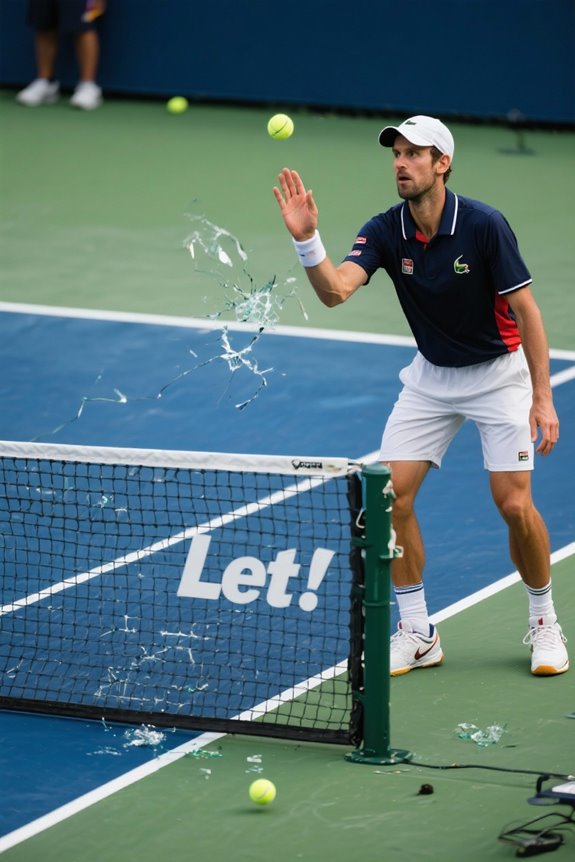
Clear verbal communication is essential in tennis, ensuring that both players understand line calls without confusion. Verbal clarity is paramount; players must call “out,” “let,” or “fault” immediately and audibly to avoid disputes. Using direct terms eliminates ambiguity, helping maintain call consistency throughout the match. Hand signals offer additional clarity, especially in noisy environments or during fast-paced exchanges. Players should be loud enough for their opponent to hear, reinforcing their calls with clear, familiar signals. If unsure about a call, it’s best to assume the ball is in play, demonstrating good sportsmanship. Emphasizing these practices fosters fair play and cordiality, enabling players to focus on performance instead of misunderstandings or arguments. Just as clear communication prevents disputes, using equipment like vibration dampeners can help players maintain comfort and focus by reducing string vibrations that might otherwise cause distraction during critical line call moments.
Etiquette in Respecting Opponents’ Calls
Respecting an opponent’s calls in tennis is fundamental for fostering both fair play and sportsmanship. Players should practice immediate call acknowledgment, accepting decisions promptly to maintain the flow of the game. It is essential to yield the benefit of the doubt on close calls, fostering an environment of respect and honest play. A respectful response involves using a neutral tone and maintaining positive body language, avoiding any negative gestures or sarcastic remarks that could escalate tensions. In cases of disputes, addressing disagreements calmly and suggesting a replay can help resolve issues without hostility. Just as proper equipment like shoes with ankle support can prevent physical injuries during lateral movements on the court, good etiquette prevents emotional tension and maintains the integrity of the match. Ultimately, respecting calls considerably enhances the match experience for both players, reinforcing the spirit of tennis as a game built on integrity and mutual respect.
Fair Play and Honesty in Making Calls
In tennis, fair play and honesty are essential components when making line calls, as these factors directly influence both the game’s integrity and the players’ experiences. Players are responsible for making clear and prompt calls, ensuring opponents understand whether a ball is in or out. If unsure, they should give their opponent the benefit of the doubt, reinforcing fair play. Additionally, players must correct any incorrect calls immediately to uphold integrity assurance. Using technology like Hawk-eye enhances fairness by minimizing disputes, allowing for a smoother game. Players should rely on their judgment and honesty, maintaining respect and openness in their calls. Emphasizing these principles fosters a positive atmosphere, benefiting everyone involved in the match. For practice sessions focused on improving call accuracy, using a tennis ball hopper ensures efficient ball management and allows players to concentrate on developing their line judgment skills.
Replay Policies for Disputed Points
When disputes arise during a tennis match, understanding replay policies is essential. Replay protocols dictate that disputed points are replayed only when the score is in question. Replay begins from the last mutually agreed score, with only the specific points in dispute being replayed. Players recall the score or, if necessary, use a coin toss or racquet spin to decide the next server and court side. This method guarantees an efficient and fair continuation of play, rather than a complete match replay. Emphasizing communication helps prevent confusion, as players should announce scores clearly. Ultimately, prioritizing replaying disputed points fosters a smoother resolution process, particularly in tense scoring disputes where memories may vary. Just as in pickleball where players benefit from larger sweet spots for more forgiving play, clear communication in tennis creates a more generous margin for resolving contentious calls.
Serving Rules and Faults
Serving is a fundamental aspect of tennis that directly impacts the flow of the game. Proper serving etiquette emphasizes that the server must stand behind the baseline without stepping over it before striking the ball. A valid serve must land diagonally in the opposite service box. Players have two attempts to serve; if both missed, a double fault occurs, resulting in the loss of the point. Fault recognition is essential, as common faults include foot faults or balls landing outside the service box. You’ll enjoy the game better if you understand these rules. Remember, let serves allow for re-tries without penalties, helping maintain fairness. Be sure to stay focused, as external distractions can also lead to the chance of a let serve.
Recommended Products

Line Width Capability: This mini dry line marker can make 2-inch lines for baseball and softball fields

1. This mini dry line marker can make 2-inch lines, perfectly for baseball and softball fields

🎾CONTAINS 84 MARKERS: 30 yellow I-shaped and orange I-shaped, 12 yellow L-shaped and orange L-shaped.(After receiving it, please press the court sticker firmly on a flat surface for a few minutes to restore its shape.)
Special Situations and Exceptions
Understanding the nuances of line calling can greatly enhance your tennis experience. Special scenarios arise in various situations, such as interference or lets, demanding prompt decisions for effective play. Call timing is essential; all calls must be made before your opponent hits the ball or the ball is deemed out of play. Delayed calls can result in confusion and unfair advantages, jeopardizing the integrity of the game. If uncertain about a call, you should err on the side of fairness, granting your opponent the benefit of the doubt. In doubles, communication becomes vital, as disagreements must be reasonable. Overall, understanding these exceptions will help cultivate a spirit of fair play, ensuring enjoyable and respectful matches.
Importance of Keeping the Game Flow
Maintaining the flow of a tennis match is essential for both players and spectators. The game rhythm directly impacts performance; when momentum is sustained, players are more likely to excel. Frequent flow interruptions, such as line call disputes, disrupt this rhythm and can lead to increased error rates. Research shows that players in a flow state exhibit superior performance and a higher chance of winning. As most rallies are short, early control through effective serves and returns is vital. Players who maintain focus during critical points generally outperform their opponents. By minimizing interruptions, players can keep their composure, improving not only their rhythm but also their overall game performance. Prioritizing game flow ultimately enhances the enjoyment for everyone involved.
Recommended Products

🏆 MULTI-GAME PLAY: The RACK Triad 7-Foot table delivers billiards, table tennis, and air hockey in one. Smooth gameplay brings family and friends together for indoor play.
VERSATILE GAME COMBO: Elevate your home entertainment with the EastPoint Air Hockey Table, featuring seamless transitions between air hockey and table tennis. Perfect for family game nights, it's a multi game table offering diverse game tables for adults

ELEGANCE IN MOTION: Elevate your wrist with the captivating allure of the Gem Stone King 6X4MM Blue Tanzanite Tennis Bracelet. Crafted in 925 sterling silver, this bracelet features a stunning array of blue tanzanite gemstones that create a graceful flow of elegance.
The Impact of Technology on Fairness in Tennis
The importance of technology in tennis extends beyond simply maintaining game flow; it greatly enhances fairness in match outcomes. Recent technology advancements, such as Hawk-Eye Live and FoxTenn, achieve millimeter-level precision using high-speed cameras and AI algorithms. These systems considerably reduce human error, particularly in challenging visual conditions like clay courts. Player reception has been overwhelmingly positive, with top competitors like Aryna Sabalenka endorsing AI line calls for minimizing mental doubts. While occasional technical failures raise questions about reliability, the transparency of electronic calls fosters trust among players. By diminishing bias and expediting the decision process, technology plays an essential role in ensuring fair competition, benefiting athletes and enhancing the overall integrity of the sport.
Frequently Asked Questions
What Happens if a Player Disputes a Call After the Point Ends?
If a player disputes a call after the point ends, dispute resolution typically hinges on the integrity of previous calls. Without an official’s verification, the players must rely on mutual respect and accept the original call.
Can Players Use Review Technology in Non-Professional Matches?
Players can utilize amateur technology for review in non-professional matches, though this often comes with review limitations, such as a restricted number of challenges per set, to maintain fairness and order during gameplay.
What Should I Do if I Witness a Player Cheating?
When witnessing cheating, it’s essential to report violations without skipping a beat. Maintaining integrity guarantees the sport remains honorable. A swift, confidential report helps preserve fairness, making it clear that honesty is the best policy.
Are There Penalties for Arguing About Line Calls?
Yes, penalties apply for arguing line call disputes, typically starting with warnings. Continued aggressive behavior may escalate to point or game penalties, reflecting the importance of maintaining appropriate player conduct during matches.
How Can I Improve My Line Calling Accuracy?
To enhance line calling accuracy, individuals should embrace refined line calling techniques, cultivating visual focus through deliberate practice. Engaging in video analysis, utilizing slow-motion reviews, and maintaining consistent techniques can further sharpen perceptual skills and decision-making abilities.