As an Amazon Associate, we earn from qualifying purchases. Some links on this site are affiliate links at no extra cost to you. Our recommendations are based on thorough research and editorial judgment.

Understanding Racquet String Tension Loss

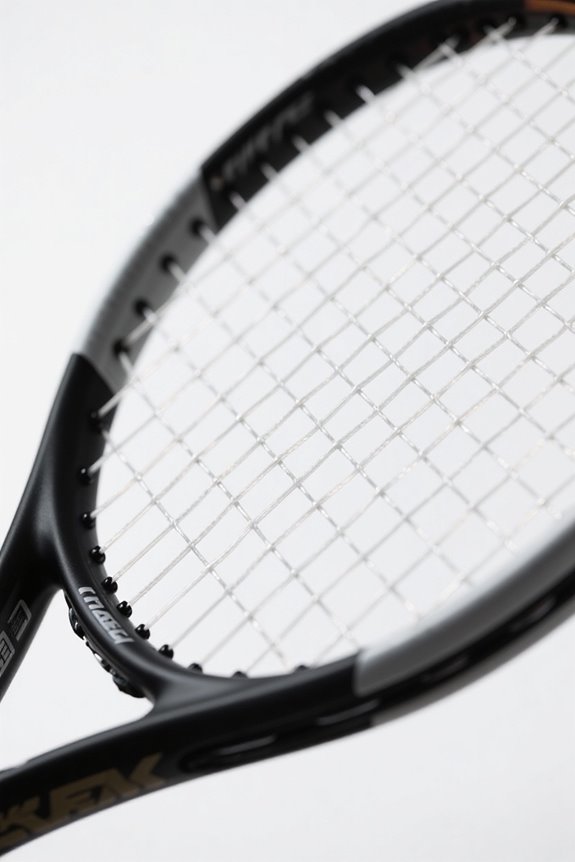
Professional studio photograph showcasing premium tennis racquet strings under controlled lighting conditions. The image displays precise string tension patterns with crystal-clear detail, highlighting the intricate weave and tension points. Shot against a pristine white backdrop with soft, diffused shadows that emphasize the strings’ quality and construction. The composition focuses on the racquet’s string bed, revealing the sophisticated engineering behind optimal tension maintenance. Commercial-grade photography with exceptional color accuracy and 8k resolution captures every fiber detail, perfect for technical sports equipment documentation and high-end retail presentation.
# Understanding Racquet String Tension Loss
Racquet string tension loss is common and can impact your game considerably. Initial mechanical relaxation causes a 6%-10% tension drop immediately after stringing. Environmental factors like humidity and temperature exacerbate this loss, especially in polyester and natural gut strings. A decrease in tension can compromise control and alter launch angles. To maintain performance, competitive players should restring every 10-20 hours. Understanding these issues is essential, and there’s more to explore about managing your racquet strings effectively.
Key Takeaways
- String tension loss occurs due to mechanical relaxation, installation techniques, material properties, and player habits.
- Polyester strings lose tension rapidly, while natural gut strings are affected by humidity and heat.
- Lower tension enhances power but compromises control and consistency in shot execution.
- Regular restringing is vital for maintaining optimal performance and compensating for tension loss.
- Innovations in string technology focus on improving durability and comfort through advanced materials and hybrid setups.
Causes of String Tension Loss
When considering the causes of string tension loss, it’s important to recognize that several factors contribute to the gradual decline in performance. Immediate mechanical relaxation occurs after installation, leading to a loss of 6%-10% in tension. Various installation techniques can affect how well strings hold their original tension. Strings made of polyester exhibit greater tension loss due to their molecular structure and friction effects during play. Additionally, player habits influence tension retention; aggressive strokes may accelerate wear and decrease tension homogeneity across the string bed. Natural gut strings, while resilient, can still be affected by environmental factors, making regular maintenance essential. Weather conditions like humidity and heat can further impact string durability and tension retention, making it crucial to store racquets properly between matches. Understanding these causes helps players manage their string’s performance effectively.
Recommended Products

The G Tour series has been designed for players who are determind to win the match. Focusing on fast swing players and power hitters for that extra advantage on the court!
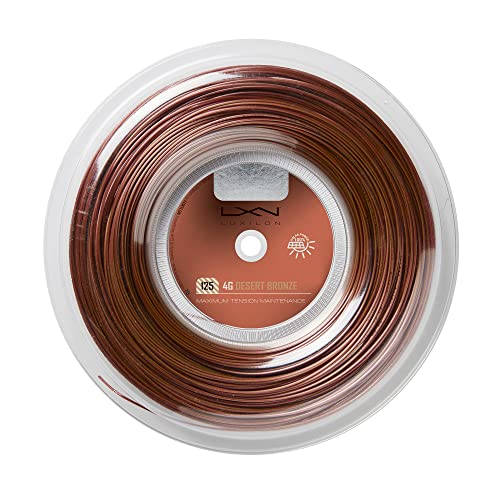
Luxilon 4G 125 Tennis String - 200m Reel, Desert Bronze

The Tecgut string is a soft string that uses nylon multifilament it is beneficial to wide range players.
Effects on Performance
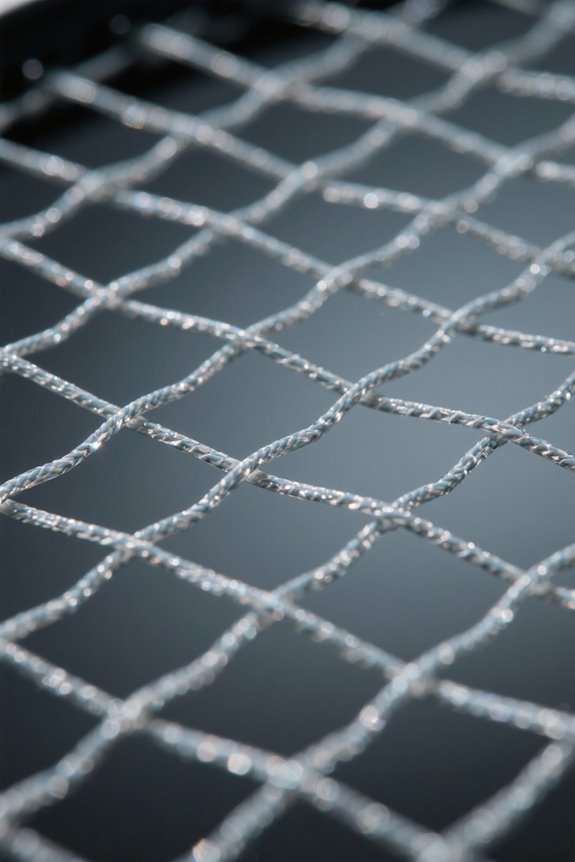
As racquet strings lose tension, players may notice significant changes in how their equipment performs. An important performance comparison reveals that lower tension enhances the trampoline effect, generating additional power but compromising shot precision. With decreased stringbed stiffness, shots can fly deeper and wider than intended due to a longer dwell time. Additionally, altered string dynamics contribute to inconsistent launch angles, making control more challenging. Players may adjust their strokes, often inadvertently, to counter these effects, potentially leading to increased swing speeds. Much like how moisture-wicking materials help maintain focus by managing sweat during intense play, maintaining proper string tension ensures consistent performance by preserving the racquet’s intended characteristics. Overall, tension loss creates a complex interplay of power and control that necessitates regular restringing to maintain ideal performance. Understanding these changes helps players adapt their techniques and achieve more consistent results on the court.
Environmental Factors
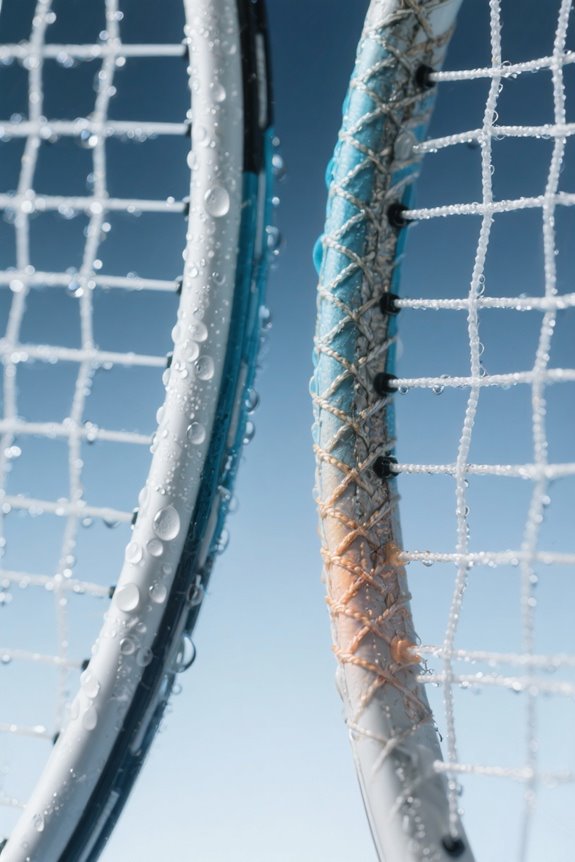
The dynamics of racquet string performance are heavily influenced by environmental factors. Temperature effects play a vital role; warm strings yield more elasticity, while cold temperatures stiffen them, reducing power. Humidity impact cannot be overlooked, as high moisture accelerates material degradation, leading to quicker tension loss. UV exposure from direct sunlight degrades synthetic strings, resulting in a loss of elasticity and brittleness, which necessitates frequent restringing. Altitude considerations also matter; lower pressure at high altitudes can cause quicker tension loss due to reduced external pressure. Effective maintenance practices entail storing strings in controlled conditions to minimize wear patterns and prolong lifespan. Regular players who compete three times per week should monitor their string tension closely and consider restringing every four to six weeks to maintain optimal performance. Understanding these elements will help players optimize their string tension for peak performance.
Recommended Products

ULTIMATE SPIN: The Yonex PolyTour Rev 120 Tennis String is for baseliners with medium-to-fast swing speeds looking for a shaped string (8-sided) that grabs onto the ball for the ultimate spin experience.

CRAFTED FOR COMFORT: Feel how far polyester strings have come with the Yonex PolyTour Pro 125 Tennis String. Designed to be easy on the arm, yet tough on the competition, it is the most comfortable poly string ever created by Yonex. Their unique Thermo-Stretch Method allows strings to deliver comfort without compromising on power, durability, control, and spin.

FULL-GRAIN LEATHER boots, rigorously tested for strength and durability, featuring the lightweight Danner Trailguard TPU shank for stability and underfoot protection on uneven terrain
Material and Construction Influences
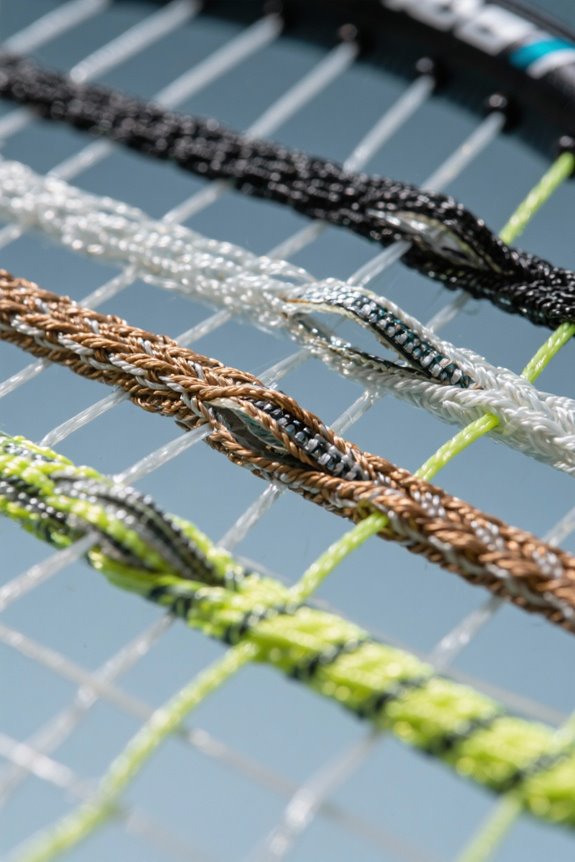
Material and construction factors greatly influence racquet string tension loss. The choice of materials—like Kevlar and polyester—affects both material flexibility and overall string durability. Kevlar’s stiffness often necessitates lower tensions to avoid excessive rigidity. Conversely, polyester strings, known for their durability, quickly lose tension within the first few hours. Natural gut strings are valued for their ability to maintain tension with a mere 5% drop initially. Construction elements, such as core and wrap design, also play a critical role. Solid cores enhance retention, while outer wraps offer added protection. The arrangement of filaments can influence tension maintenance as well. Advanced materials like poly-ether-ether offer enhanced strength and flexibility through aligned molecular chains that help optimize tension retention. Understanding these factors can help players choose strings that align with their performance needs and preferences.
Recommended Products

Scope of application: feather racket,Product color: red, black,100-240V AC 50/60Hz,Input power: 100-240V AC 50/60Hz,Electricity large input power: 120W


Managing Tension Loss
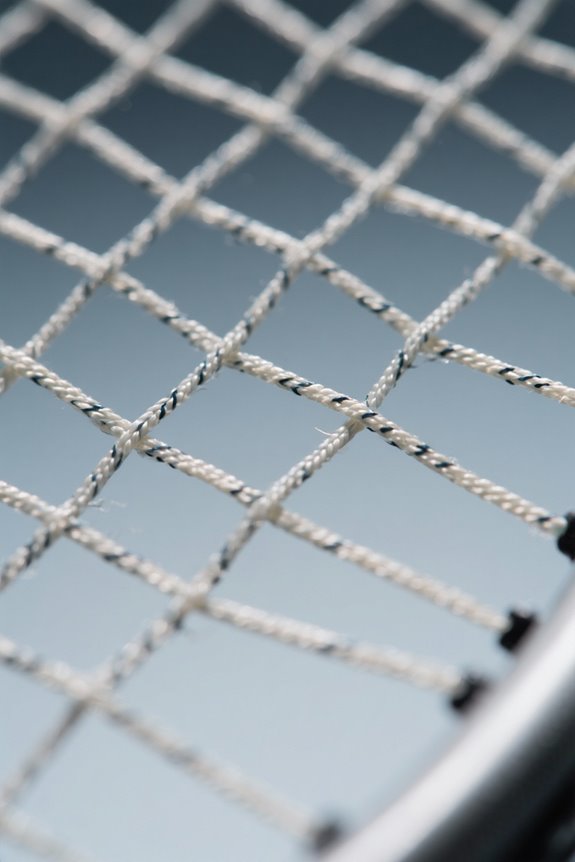
Steering through the challenges of racquet string tension loss requires a proactive approach. To effectively manage this, players should regularly measure tension using special tools or simple tactile feedback. Restringing the racquet remains the primary strategy, particularly for competitive players who may need to do so every 10–20 hours of play. While string pre-stretching helps minimize initial loss, it is less effective for modern polyester strings. Selecting tension-friendly strings, such as Zero or Sync models, can prolong usable life. Additionally, adjusting your playing style can compensate for lower tension. Finally, monitoring environmental factors like humidity and temperature greatly supports anticipating tension variations, allowing players to maintain peak performance during matches. Pairing softer multifilament strings with firmer polyester in a hybrid setup can enhance tension maintenance while providing improved comfort and shock absorption.
Recommended Products

Package length: 19.05 cm

-Spring tension calibrator for checking machine accuracy.
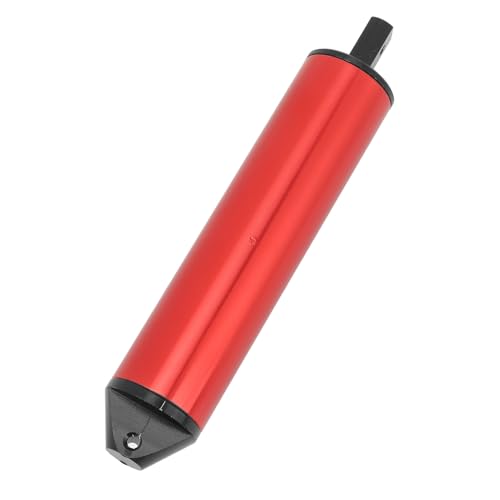
【Aluminum Alloy】the badminton racket tension calibrator is made of premium aluminum alloy, which is sturdy, lightweight and long lasting. at the same time, the badminton racket tension calibrator has stable performance, high resistance, easy to test tension up to 100lbs, practical to use.
Biomechanical Impacts
Managing racquet string tension loss can fundamentally affect how a player experiences the game. The relationship between string tension and racket deformation directly influences biomechanical feedback during play. Lower tension allows for greater deformation, increasing the racket’s trampoline effect but potentially compromising control. Significantly, lower string tensions reduce force transmission to the elbow, promoting injury prevention by lowering the risk of conditions such as lateral epicondylitis. Quantitative studies demonstrate that as string tension decreases, there is a corresponding reduction in peak accelerations at the elbow. This biomechanics insight is vital for players seeking better performance and longevity in their game. Ideal string tension ultimately enhances control and minimizes injury risks, enabling players to enjoy tennis without undue strain. Players experiencing tension-related discomfort can further benefit from vibration dampeners, which absorb shock and alleviate strain on the wrist, elbow, and shoulder during play.
Player Perception of Tension Changes
How do players really perceive changes in string tension? Player perceptions of string tension are deeply subjective and vary greatly among individuals. Players often associate higher tension with increased control, feeling the strings as firmer and more precise. Conversely, lower tension typically evokes a softer, more powerful feel, despite actual ball speed changes being minimal. Feedback during play further complicates these perceptions; hitting the sweet spot feels different than a frame hit, potentially misleading players. Additionally, players may adapt their technique based on their expectations about tension. Misjudgments can occur, making blind tests reveal a preference for looser setups, even when players believe tighter strings enhance control. Just as tennis players must understand their equipment preferences, proper footwear selection requires recognizing how individual foot types influence comfort and performance during extended play. Ultimately, understanding these subjective perceptions is essential for optimizing player preferences.
Recommendations for Stringing Applications
For players looking to enhance their racquet stringing applications, specific recommendations can improve performance considerably. First, consider string selection criteria; choose natural gut or ReString Zero if tension retention is your priority. Adjusting tension preferences diligently can lead to improved playability. Typically, string tensions between 45–55 pounds work well, but lowering the initial tension by 2 pounds for advanced strings like Sync may boost performance. Employ consistent knot techniques and use high-quality stringing machines for accuracy. Investing in a stringing machine with a 6-point mounting system can minimize frame stress and reduce distortion during the stringing process. To maintain responsiveness, monitor the stringbed, noting any “dead” feel. Also, remember that environmental factors, particularly humidity and temperature, influence nylon and gut strings more than polyester. Finally, restring regularly when performance declines to guarantee peak functionality.
Recommended Products

Diablo tensioner and linear pull for the most delicate strings. Glide to Activate string gripper allows tensioning with one hand. Super fast.

The 700 ES Features Patented Time Saving Down-Press Clamps and Gravity Assisted Release

Calibrated tension: manual spring tension winder (9 to 90 lbs. / 4 to 41 kegs) with patented rotational string guide
Common Myths About String Tension
Many players hold onto misconceptions regarding string tension and its impact on performance. For example, it’s commonly believed that string pattern affects tension loss considerably. Myth debunking shows that there’s little difference between one-piece and two-piece patterns. Additionally, many assume that hybrid strings increase the risk of racquet damage; however, this isn’t true if strung correctly. Another prevalent tension misconception is that polyester strings become “dead” as they lose stiffness, affecting playability. The need for regular restringing to maintain peak performance, regardless of play frequency, is often overlooked. Just as players need to replace their grips regularly to maintain grip quality, strings also require consistent replacement to ensure optimal racquet performance. Acknowledging these myths helps players make informed decisions about their equipment and enhances their overall performance.
Future of String Technology and Tension Management
As innovations in string technology and tension management continue to evolve, players can look forward to enhanced performance and personalization in their equipment. Future advancements focus on advanced materials such as new co-polyester blends that offer improved snapback for topspin while ensuring arm comfort. Hybrid constructions, using multifilament strings with unique coatings, provide durability against friction and temperature changes. Digitally driven customization tools allow players to create tailored string setups based on their individual styles. Additionally, with recycling initiatives in string production, sustainability is becoming a priority. Synthetic gut strings with solid core construction continue to offer a balance of comfort and durability, making them a reliable choice for players seeking consistent tension maintenance. These trends signify a move towards string innovation that not only enhances playability but also promotes a responsible approach to equipment manufacturing, enabling players to enjoy a more personalized and eco-friendly playing experience.
Frequently Asked Questions
How Can I Tell if My Strings Need Restringing?
To determine if strings need restringing, conduct a visual inspection for fraying and notching, coupled with a sound test to assess for dull sounds instead of clear “ping.” These indicators signal diminished performance and potential breakage.
Do Different Playing Surfaces Affect String Tension Loss Rates?
Playing surfaces act like chameleons, shifting demands on racquet strings. In this surface comparison, factors such as friction and impact modify tension loss rates, with clay courts yielding more power while grass courts retain control.
What Are the Signs of String Wear Beyond Tension Loss?
Signs of string wear beyond tension loss include string fraying and texture changes, such as notching or a shaggy appearance. These indicators suggest advanced wear, reduced performance, and potentially impending breakage, necessitating timely restringing.
Can String Tension Impact My Racquet’s Frame Integrity?
String tension considerably affects a racquet’s frame integrity. Insufficient tension can mask impacts poorly, leading to frame deformation, while proper tension enhances impact resistance, preserving the racquet’s structure and prolonging its lifespan against physical demands.
How Does String Gauge Influence Tension Maintenance?
String gauge greatly influences tension maintenance; thinner gauges tend to lose tension faster due to increased elasticity, while thicker gauges offer better durability. The choice of gauge affects overall string performance and lifespan during play.