As an Amazon Associate, we earn from qualifying purchases. Some links on this site are affiliate links at no extra cost to you. Our recommendations are based on thorough research and editorial judgment.

How to String Your Tennis Racquet Properly

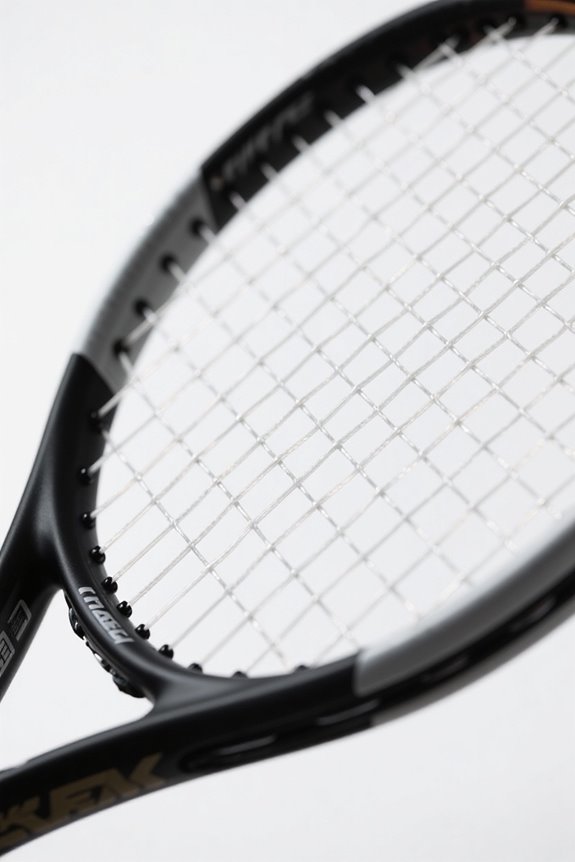
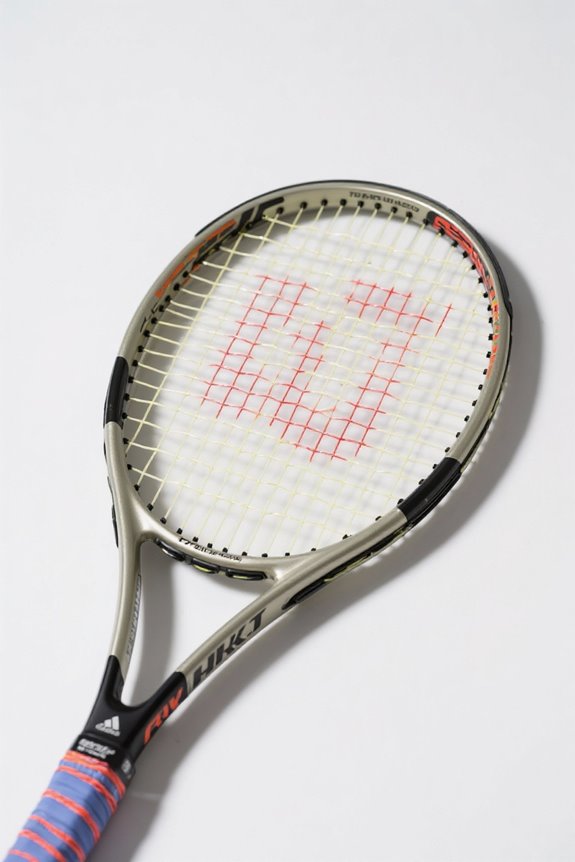
Premium tennis racquet displayed on pristine white backdrop, showcasing intricate string pattern and professional-grade construction. Studio lighting highlights the tension and weave of expertly installed strings, with frame positioned at dynamic angle. Polished grip, vibrant string colors, and manufacturer logos catch eye with crystal clarity. Equipment photographed in catalog-ready composition, emphasizing craftsmanship and precision engineering. Soft shadows create depth while maintaining clean, minimalist aesthetic perfect for e-commerce platforms. Ultra-sharp 8K resolution captures every detail of the professionally strung racquet.
# How to String Your Tennis Racquet Properly
To string your tennis racquet properly, first inspect the frame and remove old strings. Use durable polyester strings, about 5.5 to 6 meters long. Begin with the mains, stringing from the center outwards to maintain balance, and using clamps for even tension. For crosses, lower tension for comfort and apply the one-ahead method to ease weaving. Finally, use a secure knot like the Wilson Pro Knot, ensuring all steps optimize your racquet’s performance and enhance your game. More detailed insights follow.
Key Takeaways
- Thoroughly inspect and clean the racquet frame, checking for cracks and replacing damaged grommets before stringing.
- Start stringing the mains symmetrically from the center out with durable strings, ensuring even tension throughout.
- Use lower tension for cross strings to improve comfort and playability, employing the one-ahead method for easier weaving.
- Choose string tension based on your playing style; higher tension offers precision, while lower tension enhances power.
- Securely tie knots like the Wilson Pro Knot, ensuring consistent tension and trimming excess string to prevent irritation.
Preparing the Tennis Racquet and Tools
Preparing a tennis racquet for restringing is an essential first step that sets the stage for successful play. This process begins with thorough frame inspection; remove all old strings completely and clean the frame to eliminate dirt and grease. Check for cracks or warps that could affect performance. If found, do not proceed with stringing. Also, inspect grommets and bumper guards for damage and replace as needed to protect the strings.
Next, focus on tools organization. Gather the necessary equipment such as clamps, a tension calibrator, and a string cutter. Position your tools within easy reach, guaranteeing you maintain an efficient workflow for a smooth stringing process. Consider keeping a tennis ball pickup tube nearby to collect any test balls efficiently, as some models feature adjustable shoulder straps that allow you to carry equipment hands-free while moving around your workspace. These preparatory actions guarantee a successful restringing every time.
Recommended Products

The most accurate stringer on the market! Provides same quality of machines costing hundreds more.
Head CPS Defender Racquetball Racquet ($49.99 Value)
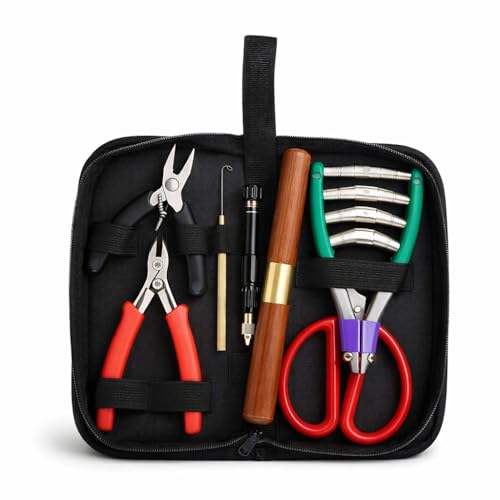
[Complete Stringing Tool kit] This racket stringing set includes all essential tools: bent nose pliers, diagonal pliers, threading hook, starting clamp, scissors, stringing awl, and stringing wire cone—covering every step from pre-threading to final adjustments.
Stringing the Mains (Vertical Strings)
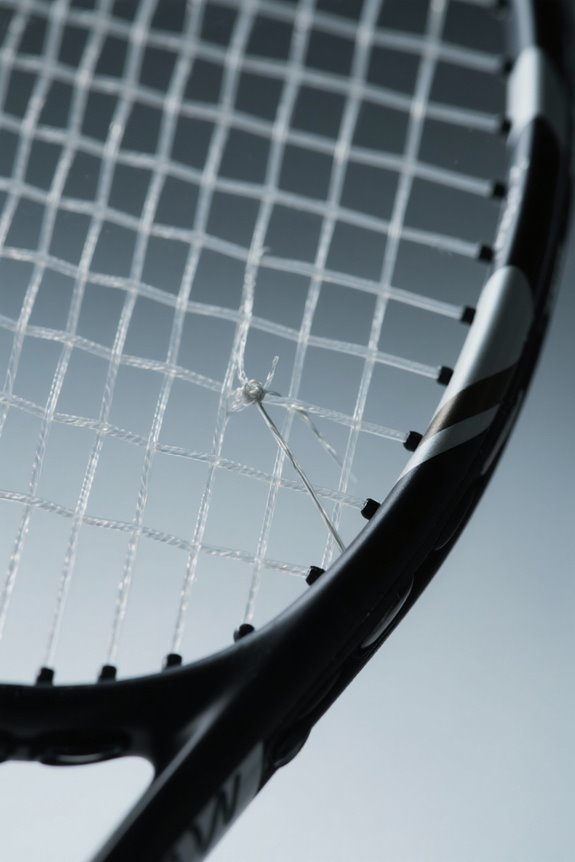
Stringing the mains is an essential stage in the racquet restringing process. Begin by selecting strong, durable materials, such as polyester, which enhance string durability. Generally, you’ll need about 5.5 to 6 meters of string for most racquets. It’s vital to inspect the strings for kinks or frays before starting. Begin from the center, stringing outwards symmetrically to maintain balance. Employ proper stringing techniques to guarantee even tension across the frame. Use a clamp that holds without crushing the string. Consider adding 20% extra tension on the last mains for uniform stiffness, while checking that the tension is consistent throughout. For optimal results, maintain your string tension within the recommended range of 22-26 kg to ensure proper performance and control. Finally, confirm the frame remains straight, promoting peak performance from your newly strung racquet.
Recommended Products

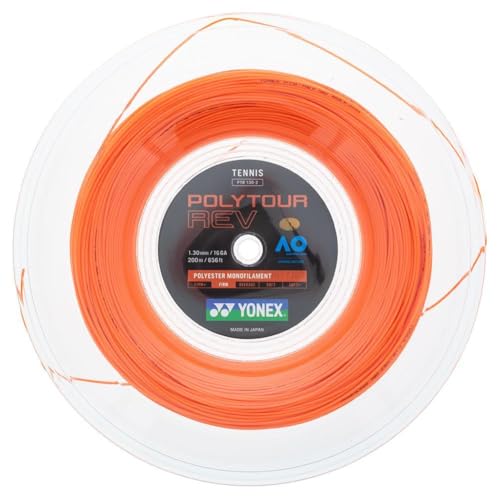
The G Tour series has been designed for players who are determind to win the match. Focusing on fast swing players and power hitters for that extra advantage on the court!

Stringing the Crosses (Horizontal Strings)
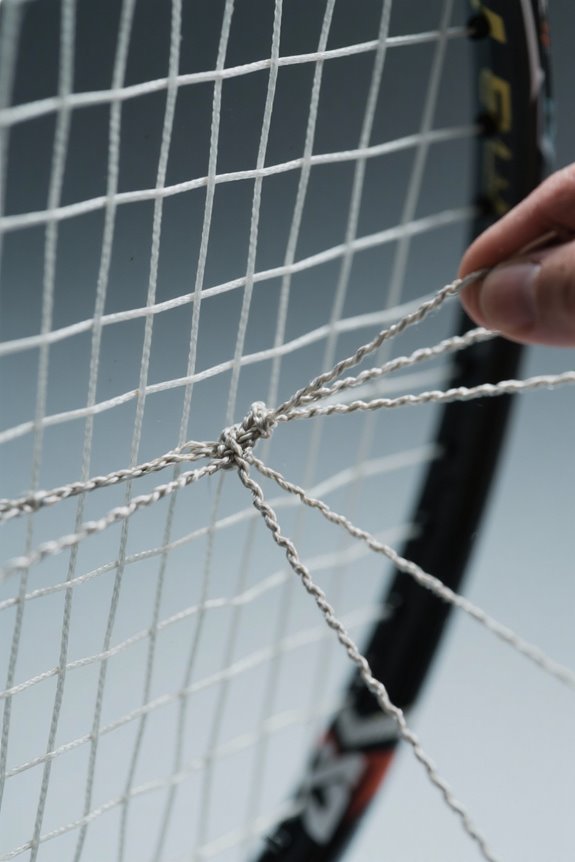
While many players focus on the mains, the crosses are equally essential in creating a well-balanced hitting surface for the racquet. Cross strings account for about 30% of the racquet’s performance. Adjusting tension lower for crosses enhances playability. Employ efficient cross stringing techniques, such as the one-ahead method, to reduce friction and simplify weaving. Using special tools can improve weaving efficiency and help manage tension. Remember, stringing crosses typically takes about 75% of your time and effort. To prevent damage, string from the top down, which distributes pressure evenly. High-quality clamps with quick dual-action systems secure the string effectively during the cross stringing process, reducing slippage and ensuring consistent tension. By mastering these techniques, you guarantee a durable and ideal setup that matches your playing style, thereby enhancing your overall game experience.
Recommended Products

High quality and durable

Universal CNC Precision Clamp fits all Tourna Stringing Machines.

ADJUSTABLE TURNTABLE: This badminton racket starting stringing clamp allows you to access hard to reach areas. The recket starting clamp's adjustable turntable lets you easily access and string difficult spots on your racket
String Tension and Pattern Considerations
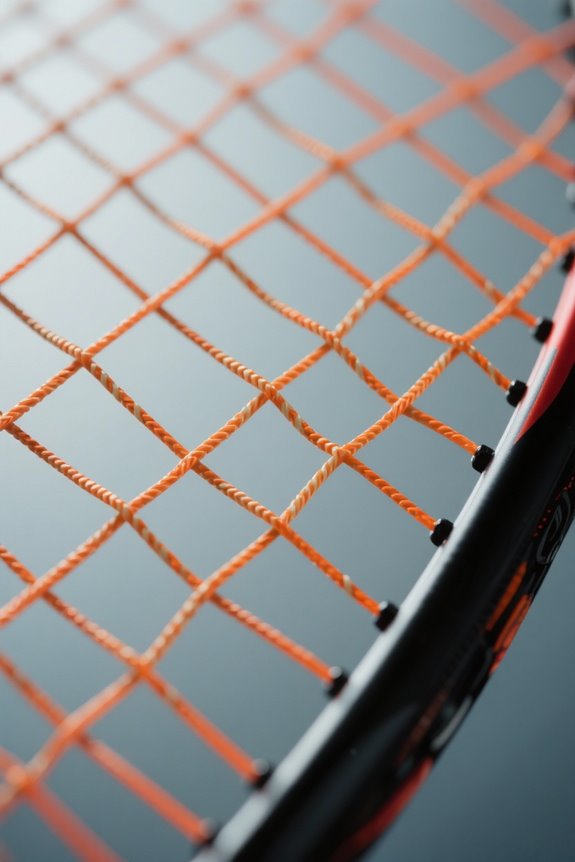
How does string tension impact a player’s game? String tension plays an essential role in performance, affecting power and control. Tension selection varies, as lower tension enhances power and comfort, while higher tension boosts precision. Players should consider their playing style when choosing tension.
Additionally, string pattern effects are significant; open patterns like 16×18 provide better spin and power, while dense patterns, such as 18×20, favor control. The interaction between tension and pattern is critical. Lower tensions often complement dense patterns to maintain playability, while open patterns can handle higher tensions without losing responsiveness. For polyester tennis strings, maintaining proper tension is especially important as these materials require regular tension maintenance to preserve their performance characteristics and spin potential. Ultimately, players should experiment within recommended tension ranges to find their ideal setup, tailoring it to enhance comfort and performance on the court.
Recommended Products

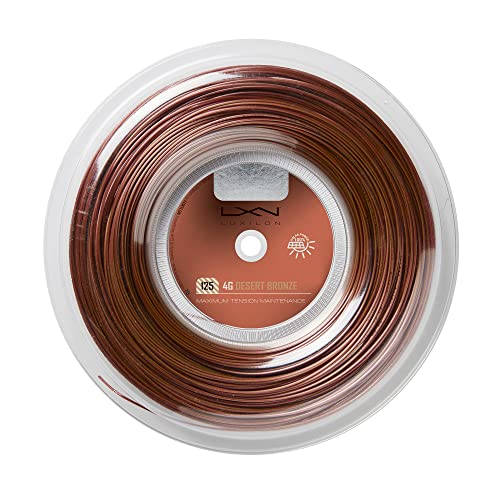
Luxilon 4G 125 Tennis String - 200m Reel, Desert Bronze

Babolat RPM Blast Rough Tennis String Reel offers 660ft /12m of string
Knot Tying Techniques and Finishing Steps
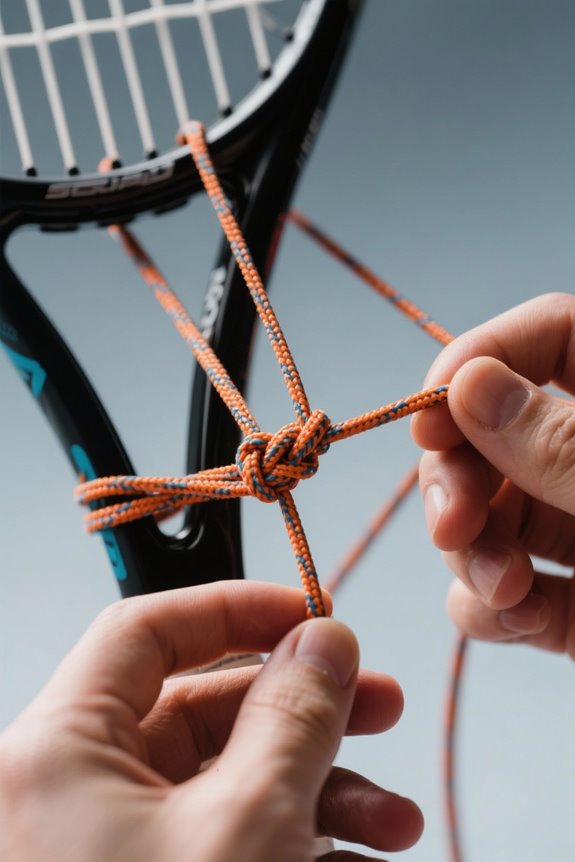
Knot tying is a crucial aspect of tennis racquet stringing that substantially influences the overall performance and durability of the strings. Various knot types, including the Wilson Pro Knot and Parnell Knot, provide different advantages regarding knot security. The Wilson Pro Knot guarantees a compact finish, while the Parnell Knot self-tightens and minimizes tension loss. Begin by creating an initial loop and thread the string through it, making certain to pull snugly without jerking. Employ a starting clamp for consistent tension. After tightening, gently rock the knot to distribute tension evenly. Finally, trim any excess string closely to prevent irritation during play. Consistency in knot application is essential for superior performance and reliability. Just as proper string maintenance is vital, selecting tennis shoes with effective cushioning helps absorb shock and reduces injury risk during intense matches on hard courts.
Maintenance and Post-Stringing Tips
Proper maintenance of a tennis racquet greatly extends the life of the strings and enhances overall performance. Regular string inspection is essential; check for fraying and tension loss after each session. Clean the racquet frame with non-abrasive products to prevent dirt buildup. For temperature control, store your racquet in a climate-controlled environment to avoid extremes that can warp the frame or degrade the strings. After stringing, manage tension by adjusting it based on humidity and temperature. Post-play, wipe down the strings with a damp cloth to remove sweat and dirt. Additionally, maintain your leather grip by cleaning it regularly and avoiding excessive moisture exposure to preserve its condition and ensure optimal comfort during play. Finally, always place your racquet in a protective case to shield it from dust and moisture, ensuring longevity and consistent playability.
Recommended Products

24K Carbon Twill Construction: Built with high-performance 24K Twill Carbon, offering superior durability, precision, and power for professional play.

NEW PRO V3 UPGRADES: This versatile tennis bag now features a mess-free toiletry pocket, dual top handles for easy carrying, a secure hidden pocket, an improved sweat compartment, and stronger metal clips on height-adjustable straps. With expanded space for tennis racket bags and added sleeves for pickleball paddles, it doubles as a pickleball bag too.

VECTOR PRO Spin Max Version 2 If you are a strong player that prefers an oversize paddle, heavier weight, and power, the Vector Pro is the paddle for you. This platform paddle provides an even balance in the head making it feel slightly heavier and this extra swing weight allows for additional power. Weighing 370 grams, the Pro falls into the higher end of “average” weight paddles on the market. The paddle maintains all the premium characteristics that Xenon paddles are known for.
Frequently Asked Questions
How Often Should I Restring My Racquet if I Play Recreationally?
For recreational players, restringing frequency depends on skill. Typically, players who participate once or twice weekly should restring every 2-3 months, ensuring ideal racquet performance and minimizing the risk of injury due to worn strings.
What Is the Best String Gauge for Beginners?
For beginners, 15 to 16 gauge strings serve as sturdy lifebuoys, offering durability and power. These thicker strings provide essential advantages, helping new players navigate the waters of tennis with confidence and minimizing mishaps during play.
Can I Mix Different Types of Strings in My Racquet?
Yes, players can mix different types of strings in their racquet, using hybrid strings. This allows for tailored string tension, combining benefits such as durability and comfort while optimizing overall performance based on individual preferences.
How Do I Know if My Racquet Is Properly Strung?
To determine if a racquet is properly strung, one should assess string tension adjustment and elasticity. A uniform feel, consistent rebound, and minimal string movement during play indicate that the racquet has been well-strung.
What Are the Signs That I Need to Change My Racquet Strings?
Signs indicative of needing to change racquet strings include noticeable tension loss and string fraying. Both symptoms negatively impact performance, leading to decreased control, power, and overall playability if not addressed in a timely manner.