As an Amazon Associate, we earn from qualifying purchases. Some links on this site are affiliate links at no extra cost to you. Our recommendations are based on thorough research and editorial judgment.

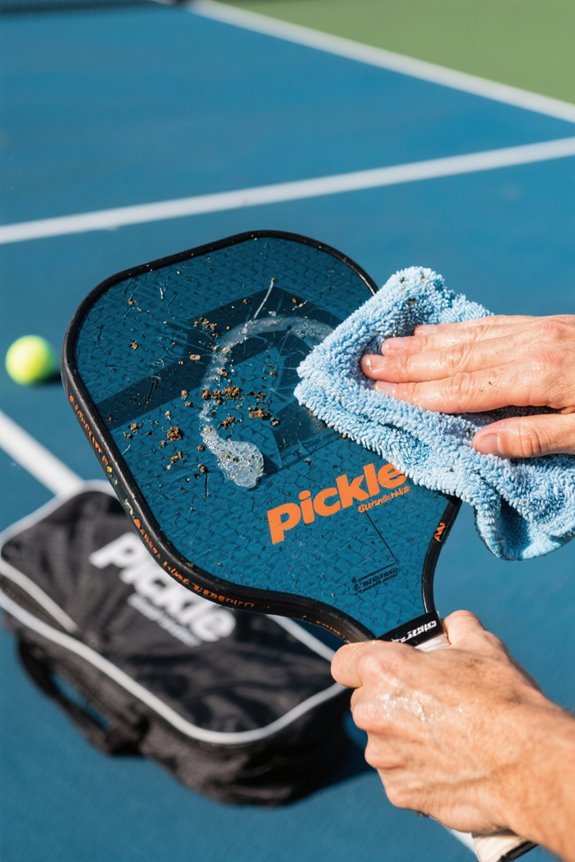
Pickleball Paddle Surface Care Guide

Maintain peak performance with proper paddle surface maintenance. Clean your paddle after each session using a damp microfiber cloth to remove dirt and debris. For stubborn grime, use mild soap and water, avoiding harsh chemicals that damage the surface. Inspect regularly for scratches or wear that affect ball spin and control. Store paddles in protective covers away from extreme temperatures and direct sunlight. Never use abrasive materials or solvents. Proper care extends paddle lifespan, preserves textured surfaces, and ensures consistent play. A well-maintained paddle delivers optimal grip, spin generation, and shot accuracy game after game.
# Pickleball Paddle Surface Care Guide
Maintaining your pickleball paddle’s surface is essential for peak play. Regular cleaning maximizes performance and extends its life. Wipe paddles with a damp microfiber cloth after each session. For deeper cleaning, use mild soap weekly. Always dry them completely to prevent mold. Be cautious with harsh chemicals that can damage the surface. Inspect your paddle regularly for chips or dents, which affect accuracy. Continue to discover effective maintenance strategies to enhance your game.
Key Takeaways
- Wipe your paddle with a damp microfiber cloth immediately after play to remove sweat and dirt, preventing buildup.
- Perform weekly cleanings using mild soap and water, and use a paddle eraser for tougher stains without damaging the surface.
- Dry paddles completely with a microfiber towel after cleaning to prevent moisture damage and mold growth.
- Store paddles in padded bags in cool, dry areas, avoiding sunlight and humidity to enhance longevity.
- Regularly inspect for chips or dents, and assess performance to determine the need for repairs or replacement.
Importance of Regular Cleaning
Clean your pickleball paddle regularly to maximize its performance and longevity. The accumulation of dirt, sweat, and oils creates a barrier that detracts from the paddle’s effectiveness. This build-up impacts spin generation, ball control, and shot accuracy. Keeping a consistent cleaning frequency, such as immediate post-play wipes and deep cleanings every month or two, can prevent detrimental residue from forming. Neglecting this maintenance often leads to a decline in not just performance but also the paddle’s lifespan, as deterioration occurs over time. Players who prioritize cleaning enjoy improved grip, consistent strokes, and a more pleasant playing experience. Just as tournament-approved pickleballs like the Dura Fast 40 are designed for consistent performance, maintaining your paddle’s surface ensures reliable results during every match. In short, maintaining a spotless paddle guarantees that your investments yield the best possible results on the court.
Recommended Products

Wilson Profile Team Pickleball Paddle

RESTORES PEAK PERFORMANCE: Lane Ghost bowling ball wipes are designed to instantly cut through stubborn oil, dirt, and grime that accumulate on your ball during play. By removing these contaminants, the wipes restore your ball’s original tack, ensuring you have better grip and enhanced control. With a clean, tacky surface, you can achieve more precise throws and improved performance on the lanes.

PEAK PERFORMANCE DESIGN: DGYGQ pickleball paddles are precision-engineered to deliver premium performance and unmatched comfort. Made with high-quality carbon fiber, these paddles offer an elite playing experience tailored for players at every level.
Recommended Cleaning Methods
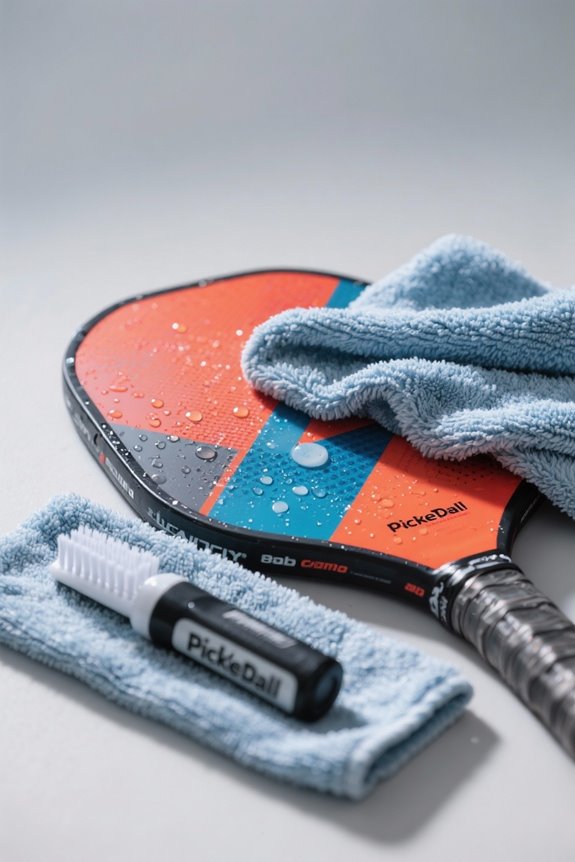
Maintaining the performance of a pickleball paddle involves implementing recommended cleaning methods that balance effectiveness and care. Regular cleaning is essential; users should wipe their paddles with a damp microfiber cloth after each play to remove sweat and debris. Weekly cleaning sessions with a mixture of mild soap and water can enhance paddle longevity. This eco-friendly option allows for thorough cleaning without harsh chemicals, which can damage the paddle. For tougher stains, using a paddle eraser gently preserves the surface quality. Always dry paddles completely with a microfiber towel to prevent moisture damage and mold growth. Storing paddles in padded bags will protect them from dirt and extreme temperatures, ensuring peak performance for future matches. Many pickleball backpacks feature dedicated paddle compartments that provide additional protection during transport and storage between cleaning sessions.
Recommended Products

Multiple Colors & Size Options: Epoxy colored sand floor paint achieve a high-gloss finish with a unique colored sand texture that adds elegance to any space. Choose from six stunning colors to create the perfect look for your outdoor area

Lightweight Pickleball Set: If you buy our pickleball paddle set, you will get 4 carbon fiber pickleball paddles, 3 outdoor pickleball, 3 indoor pickleball, 4 pickleball overgrip, 2 bracers and 1 pickleball bag to accommodate with all your essential pickleball accessories. This pickleball racket set caters to players of all skill levels. It's a great set for beginner and intermediate players

PICKLEBALL SET FOR 2: This pickle ball rackets 2 pack includes all the pickle ball equipment you need! Comes with 2 premium pickleball rackets with neoprene covers, 2 outdoor pickleballs, and a green nylon bag with sling strap. Everything you need in a pickleball set. Ideal as a pickleball starter set for beginners and advanced players.
Tools and Materials for Paddle Care
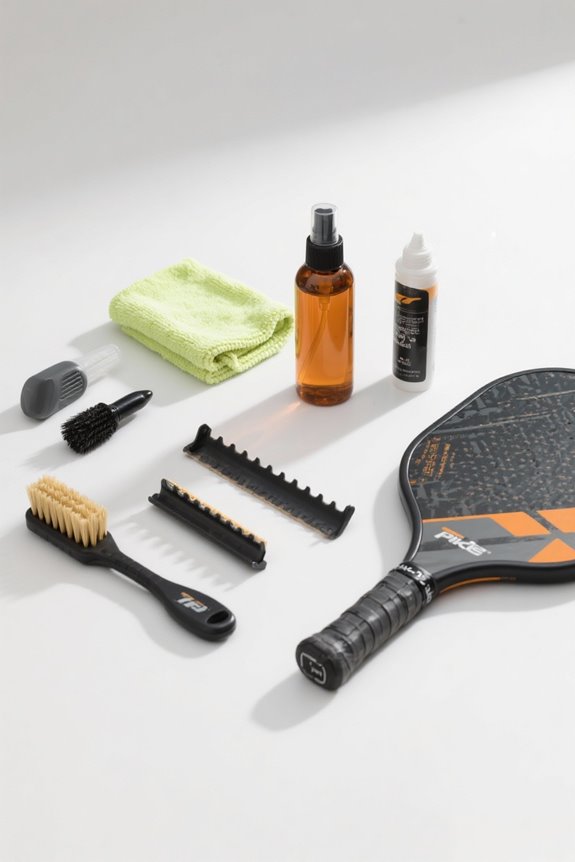
Effective paddle care relies on the right tools and materials to maintain performance. Essential paddle maintenance tools include lint-free microfiber cloths for gentle wiping, and paddle erasers for removing stubborn debris. Mild detergent solutions are ideal for dissolving oils without damaging surfaces, whereas soft-bristled brushes effectively scrub textures. Utilize spray bottles with distilled water to keep cleaning controlled.
For protection, paddle covers and durable storage bags shield paddles from scratches and dust. Edge guards can prevent chipping, while soft cloth wraps offer additional defense. Cleaning accessory options such as paddle-safe surface sprays and small detail brushes guarantee thorough cleaning, even in hard-to-reach areas. High-quality surface textures like RPM Grit technology resist scratches and maintain their performance characteristics when properly cleaned and maintained. Investing in these tools will prolong the life of paddles and enhance performance on the court.
Recommended Products

1 x Microsoft Xbox One Elite Series 2 Controller | 1 x Microfiber Cloth

All-Inclusive. Customizable Whiteboards. Interchangeable Templates. Snap-in Marker with Eraser Cap

CHROMAPOP filters specific wavelengths of light that cause color confusion, to deliver greater definition, natural color, and unmatched clarity with 100% UV protection in any lighting conditions.
Drying and Storage Best Practices
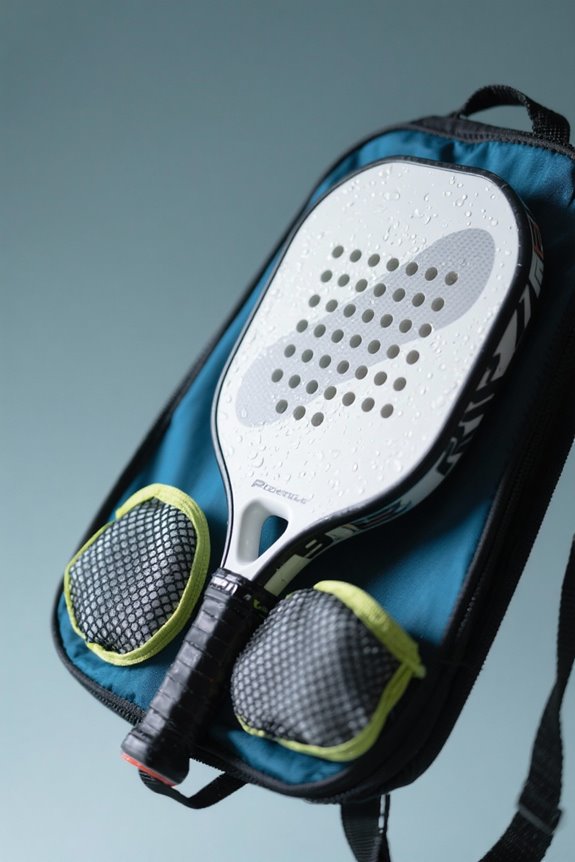
Proper drying and storage are essential for paddle longevity and performance. After cleaning, utilize effective drying techniques by immediately wiping the paddle with a lint-free microfiber towel. Avoid air drying, as moisture can linger in crevices, potentially damaging the paddle. Make sure the paddle is completely dry before storing it; never place a damp paddle in its bag or case. Ideal storage locations include cool, dry spaces, such as closets or shelves. The temperature should range from 50°F to 80°F, away from sunlight and humidity. Consider using a padded bag for protection, and include silica gel packets to absorb excess moisture. Regularly inspect your paddle for damage to maintain its prime condition and performance. Proper care can help extend your paddle’s lifespan, which typically ranges from 1 to 2 years depending on play frequency and maintenance habits.
Maintenance Beyond Surface Cleaning
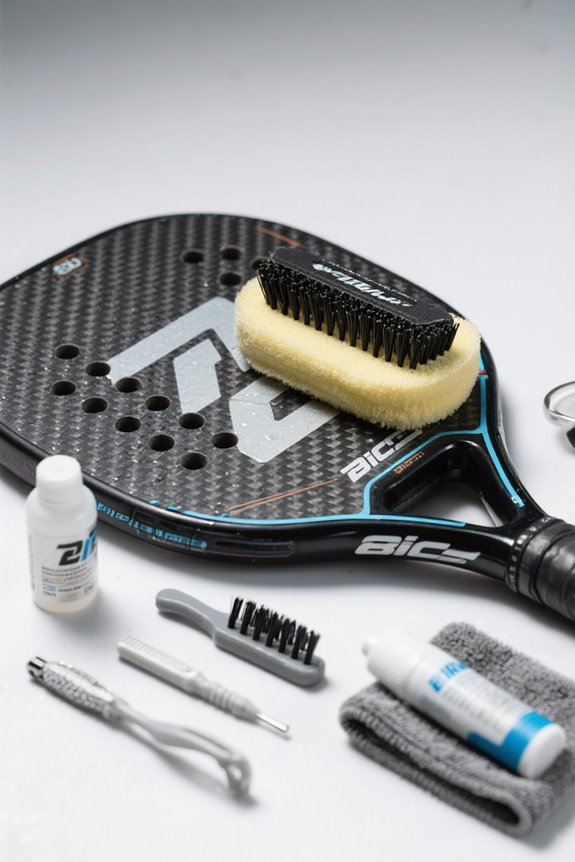
Regular maintenance goes beyond just cleaning the surface of a pickleball paddle; it involves an all-encompassing approach to preserving its performance and longevity. Implement paddle longevity tips by routinely inspecting for wear, ensuring a firm grip, and checking the paddle’s edges. This is where edge protection techniques come into play; using a protective sleeve can shield against scratches and impacts. Proper storage is essential—place your paddle in dry, padded cases away from direct sunlight and extreme temperatures. Many quality paddle covers feature padded designs that provide crucial impact protection during transport and storage. Monitor for any signs of damage, such as cracks, which may necessitate repair or replacement. By following these practices, you greatly enhance your paddle’s durability and enhance your game performance, maximizing your enjoyment on the court.
Common Mistakes to Avoid
Attention to detail is crucial in releasing the full potential of a pickleball paddle. Common mistakes can considerably affect performance and durability. Avoid using harsh chemicals or abrasives, as they can leave residues and scratch the surface. Over cleaning risks compromising the paddle’s integrity, particularly when exposed to excessive moisture. Improper drying after cleaning can lead to mold growth and material deterioration. Additionally, neglecting regular cleaning can degrade grip and control by allowing dirt to accumulate. Store paddles in temperature-controlled environments, away from dampness, to prevent damage. Just as tournament-approved pickleballs require precision-drilled holes for consistent performance, your paddle surface needs proper maintenance to deliver optimal playability. Finally, rotating your paddle during frequent play will guarantee even wear, enhancing its lifespan. Following these guidelines will help maintain both the performance and longevity of your paddle.
Surface Texture and Performance
The surface texture of a pickleball paddle plays a pivotal role in enhancing performance on the court. Textured paddles, featuring grit or grooves, greatly boost texture benefits by increasing friction and facilitating spin generation. This increased friction allows players to apply diverse spins such as topspin, slice, and sidespin, making shots more challenging for opponents to return. Conversely, smooth surfaces limit friction, hindering spin potential and control. Remarkably, carbon fiber paddles often provide superior spin due to their soft surface characteristics, encouraging longer ball contact and enhanced grip. While textured paddles may be pricier, their ability to improve playability and shot manipulation makes them a valuable investment for serious players seeking competitive advantages. To maintain these performance benefits, regular maintenance is necessary for carbon fiber paddles, including proper cleaning and storage to prevent damage and sustain the textured surface quality.
Recommended Products

FAMILY-OWNED: At Selkirk, we are committed to fueling the pickleball obsession found within every player. Through uncompromising quality and a never-satisfied drive for innovation, we serve players around the world from beginners to pros.

Wilson Bela V3 Padel Racket - Size 2 - 4 1/4"

EXCEPTIONAL CONTROL WITH SOFTER IMPACT: The STIGA 18K 2 Cybershape delivers ultimate control and precision with a softer ball impact for refined touch in every rally. Fine-tuned for competitive players, it offers a medium balance and 360 g weight, giving you the responsiveness to handle tough shots without losing feel or accuracy.
Evaluating Paddle Wear and Damage
When evaluating the condition of a pickleball paddle, it’s essential to inspect for visible damage, as this can greatly influence performance. Paddle inspection techniques should focus on identifying bubbling, warping, or cracks that signal structural weakness. Chips or dents can disrupt shot accuracy, while worn edges lead to further deterioration. Regularly assess for performance decline, noting any loss of sound, feel, or power, which can indicate core wear. Environmental factors play a vital role; humidity and temperature extremes can compromise paddle integrity. Utilizing effective damage assessment strategies, including regular cleaning and appropriate storage, can notably prolong your paddle’s lifespan. Modern paddles constructed with glueless thermoforming technology are less susceptible to delamination, which is one of the most common forms of structural failure in traditional paddles. Ultimately, recognize when it’s time for a replacement to maintain your game’s effectiveness and reliability.
Recommended Products
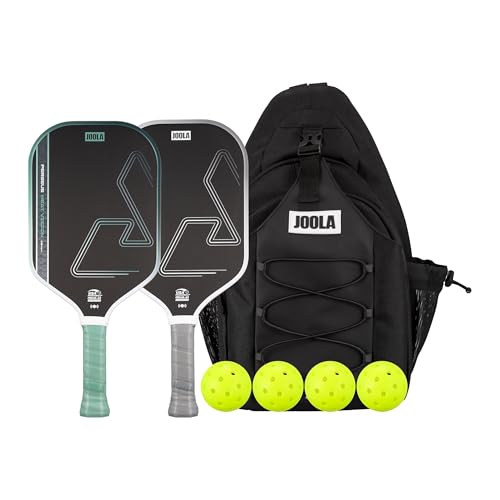
OFFICIAL PADDLE SPONSOR OF WORLD #1 PICKLEBALL PLAYER BEN JOHNS & THE PPA TOUR: An innovator & global leader in table tennis for 70+ years, JOOLA teams up with Ben Johns to create a new line of pickleball equipment that will forever change the game.

4-LAYER K29 ARAMID FIBER FACE: TENVINA POWERNOVA PRO pickle ball paddle feature 4-layer thermoforming K29 aramid fiber face, lightness and elasticity, providing far more power and control than traditional carbon fiber pickleball paddle. High impact resistance enables it to recover rapidly after deformation and achieve the optimal hitting effect.
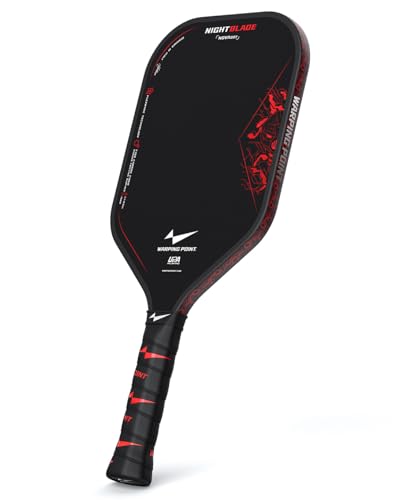
Built for 4.0–4.5 players: Perfect for players who thrive on fast counterattacks, spin-heavy play, and switching between baseline power and soft net shots. Trusted by pro-level athlete Tina Pisnik.
Frequently Asked Questions
How Often Should I Clean My Pickleball Paddle?
Cleaning frequency guidelines suggest competitive players wipe their paddles after each match, while casual players can clean every 2-3 weeks. Following paddle maintenance tips guarantees peak performance and longevity, preventing dirt buildup and surface damage.
Can I Clean My Paddle While It’s Still Wet?
Cleaning a paddle while still wet is not advisable. Proper paddle maintenance involves using appropriate cleaning techniques to avoid moisture damage and guarantee peak performance, as water can weaken adhesive bonds and affect grip.
Are There Specific Products Designed for Paddle Cleaning?
Yes, there are specific paddle cleaning products, such as specialized erasers and liquid-based solutions. Maintenance recommendations suggest using these tailored products to guarantee effective cleaning while preserving the paddle’s surface integrity and performance.
Is It Safe to Use Disinfectant Wipes on My Paddle?
Using disinfectant wipes on paddles requires caution; many contain harsh chemicals that may harm surfaces. For effective paddle maintenance, opt for alcohol-free, non-abrasive wipes, and prioritize testing on small areas to assess disinfectant effectiveness.
What Environmental Factors Can Damage My Paddle Over Time?
Outdoor exposure considerably damages paddles over time, with humidity impacts leading to moisture absorption, warping, and delamination. Additionally, prolonged sun exposure and environmental wear from dust or chemicals further compromise paddle integrity and performance.