As an Amazon Associate, we earn from qualifying purchases. Some links on this site are affiliate links at no extra cost to you. Our recommendations are based on thorough research and editorial judgment.


Maintaining Synthetic Court Surfaces

Professional studio photograph showcasing essential maintenance equipment for synthetic sports courts. The pristine white background highlights premium cleaning tools including a specialized court broom with reinforced bristles, industrial-grade squeegee, pH-balanced surface cleaner in sleek bottles, and professional drag brush. Equipment arranged in balanced composition with optimal studio lighting creating subtle shadows. Chrome and high-impact plastic components gleam under professional lighting, emphasizing quality construction. Vibrant color accents on tool handles pop against the minimalist backdrop, perfect for high-end sports facility catalogs and e-commerce platforms.
# Maintaining Synthetic Court Surfaces
Maintaining synthetic court surfaces requires regular inspection and cleaning to preserve performance. Daily leaf removal, weekly inspections, and monthly deep cleanings will combat mold growth and improve surface integrity. Effective tools include petrol-powered sweepers and grooming tools to keep courts in top condition. Installation might cost between $25,000 to over $120,000, but maintenance expenses remain low. Understanding care specifics helps extend the life of your court, so keep exploring to uncover essential maintenance details.
Key Takeaways
- Conduct daily leaf removal and weekly inspections to prevent debris buildup and ensure proper drainage on synthetic surfaces.
- Utilize petrol or diesel-powered sweepers for effective debris management and keep the court clean.
- Implement monthly deep cleaning routines to eliminate mold and mildew, preserving surface integrity and play quality.
- Regularly check for and repair cracks with specialized kits to maintain the court’s structural integrity.
- Allocate a budget for equipment needed for maintenance, ensuring ongoing high-quality play conditions.
Understanding Synthetic Court Types
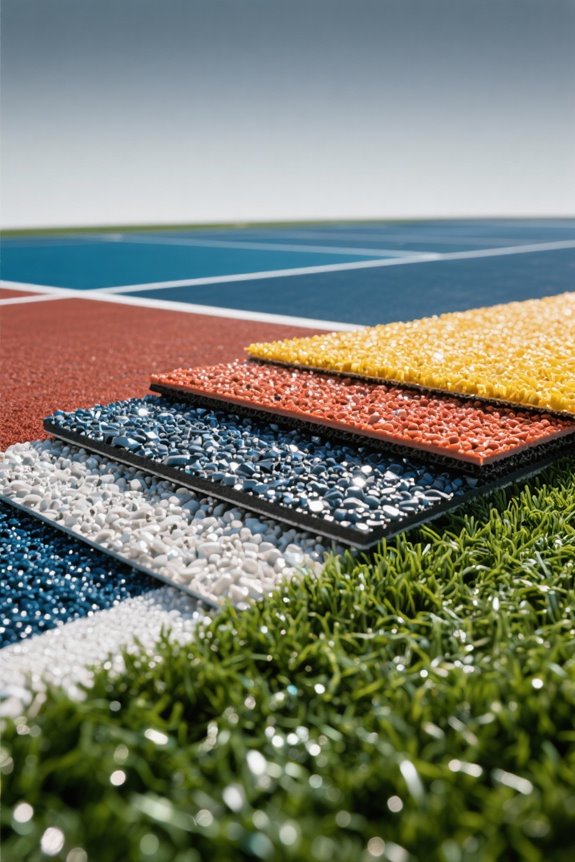
Understanding the various types of synthetic court surfaces is essential for anyone looking to choose the right option for their needs. There are several synthetic advantages, each impacting court performance. Acrylic hard courts, for example, promise low maintenance and customizable speeds. Synthetic grass offers a softer impact but can alter ball bounce. Artificial surfaces, including carpets, are ideal for various environments, while modular courts provide versatility for temporary installations.
Subsurface materials like concrete or asphalt enhance durability, though they can impact joint health. Synthetic courts typically guarantee quick drainage and consistent performance across weather conditions. When practicing on these surfaces, selecting a tennis ball basket with appropriate capacity and portability features can significantly enhance your training efficiency. By weighing these options, you can find a surface that maximizes playability while meeting your specific requirements and preferences.
Essential Maintenance Practices
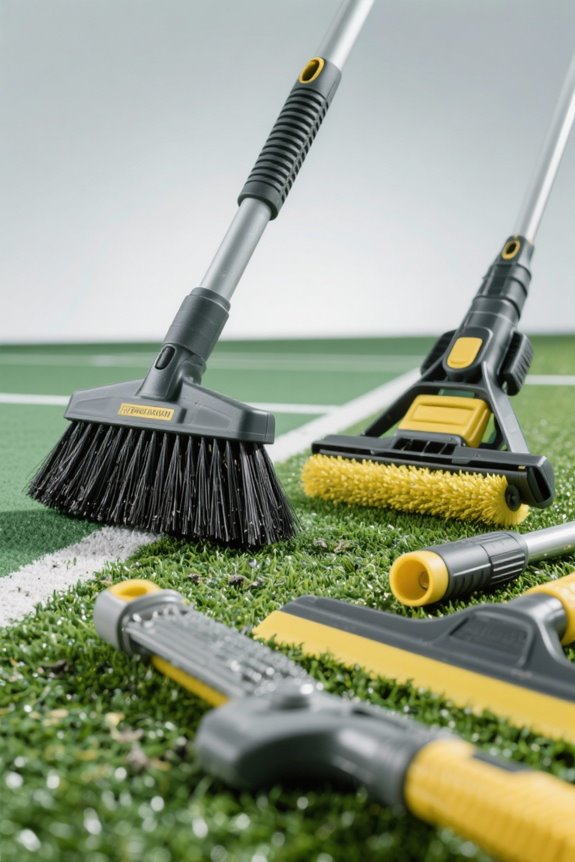
Maintaining synthetic court surfaces requires a structured approach to assure peak performance and longevity. Essential maintenance practices include diligent inspection routines to identify mold or algae and regular debris management to prevent contamination. Daily tasks, such as removing leaves, help maintain a clean surface, while weekly inspections confirm proper drainage. The use of soft-bristled brooms during cleaning prevents surface damage, crucial for sustaining play quality. Monthly deep cleaning serves to combat mold and mildew buildup, further enhancing surface integrity. Preventive measures, like annual mold treatments, considerably extend the court’s lifespan. Just as quality construction keeps equipment secure during transport in professional tennis bags, proper maintenance techniques protect the structural integrity of synthetic court surfaces. By adhering to these methods, owners can guarantee their synthetic courts remain safe and enjoyable for all users, preserving ideal playing conditions with minimal downtime.
Recommended Products

THE PERFECT SIZE FOR MOST GARAGES & SHOPS: The 24” width is easy to control, lightweight enough for comfortable use, and ideal for home garages, workshops, and small commercial spaces. If you don’t need a warehouse-sized broom, this is the right size.
INDOOR AND OUTDOOR USE: Designed for rugged indoor/outdoor cleaning

Big 13 in. sweeping surface with sturdy flagged-tip plastic bristles
Tools and Equipment for Effective Maintenance
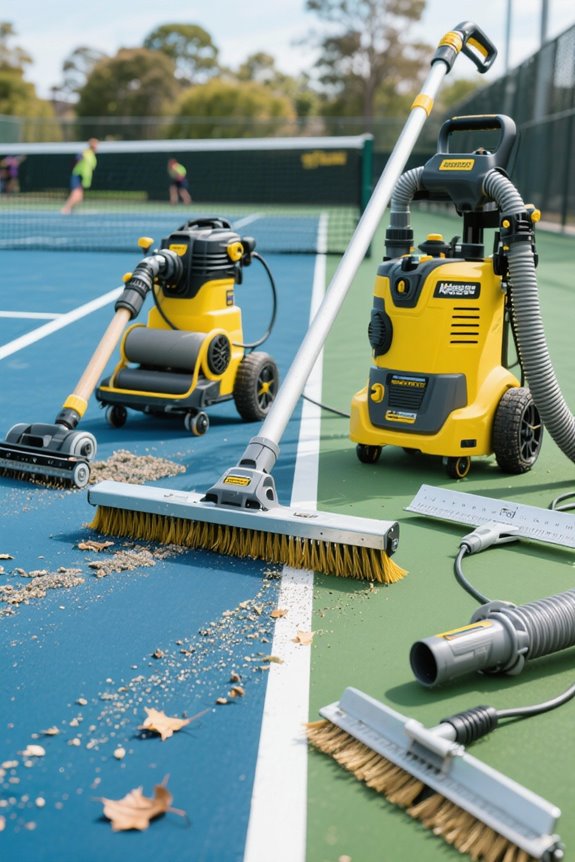
The right tools and equipment play a significant role in maintaining synthetic court surfaces effectively. Proper equipment selection guarantees peak cleaning, repair, and upkeep. Petrol or diesel-powered sweepers, like the Texas Handysweep 600TG, are excellent for debris removal. Multi-purpose machines, such as the Comet Court, help redistribute infill without leaving messes. For surface preparation, steel screeds and wide scrapers level low spots, while crack repair kits restore integrity. Line marking with chalk line sets and line paint applicators keeps court boundaries sharp. Grooming tools, including turf brushes and infill levelers, enhance play quality, guaranteeing your court remains in top shape. Using the right maintenance tools consistently can extend the court’s lifespan and provide a superior playing experience. For facilities that also maintain racquet equipment, investing in machines with 6-point mounting systems ensures minimal stress on frames during the stringing process.
Recommended Products

LONG-LASTING MATERIAL: Made of aircraft structural aluminum, eliminating rust and corrosion.

Luxuriously crafted from durable, buttery-soft faux leather in slightly metallic color.

4 - Specially Designed Courtclean Towels
Cost Considerations and Budgeting
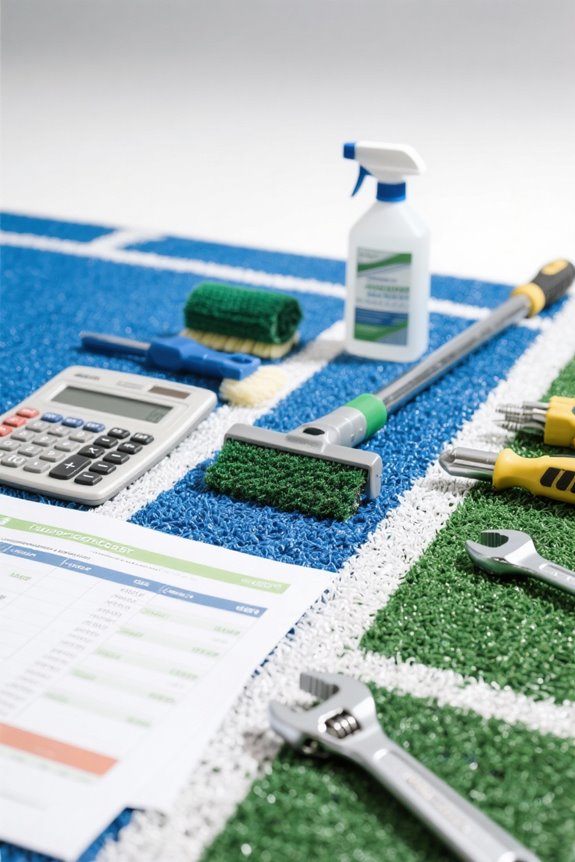
Budgeting for synthetic court surfaces involves careful consideration of both initial and ongoing costs. Installation expenses can range from $25,000 to over $120,000, influenced by material choice and site conditions. Though higher upfront, synthetic surfaces require less maintenance, making them cost-effective in the long run. Regular upkeep consists of debris removal and minor inspections, ensuring playability without the expenses of watering or pest control. Maintenance budgeting is essential, as annual costs are generally lower than for natural surfaces. Resurfacing costs between $25,000 and $35,000, depending on the court’s condition. Additionally, factoring in equipment costs such as pressurized tennis balls helps ensure a complete budget, as regularly replacing worn balls maintains optimal play quality on your synthetic surface. Therefore, planning an accurate budget incorporates installation, routine maintenance, periodic repairs, and eventual resurfacing, ensuring smooth operations for years to come.
Recommended Products

Quick And Easy Setup: Transform any space into a pickleball court with our pickleball court marking stencil kit. It's perfect for driveways, home gyms, parks, and indoor facilities. Our versatile court marking kit ensures a professional-quality template for court markings wherever you play. It takes 15-20 minutes to lay out the cardboard stencil kit, then another 15-20 minutes to paint. Let dry for 30 minutes and your pickleball court is ready to play on.

[Oversized 44x20 Feet Template] Complete pickleball court marking template perfect for backyards, schools, and clubs. Easily create accurate, professional-grade courts for family fun, school sports, or club play, enhancing every pickleball experience with precise and durable court lines.

EVERYTHING YOU NEED: Our pre-measured pickleball court marking kit includes (2) sidelines, (2) baselines, (2) middle serve lines (2) kitchen lines, and net hash marks, all ready to peel-and-stick. Each kit includes step-by-step illustrated instructions to guarantee a perfectly square, regulation court — even for first-time installers.
Environmental Impact and Sustainability
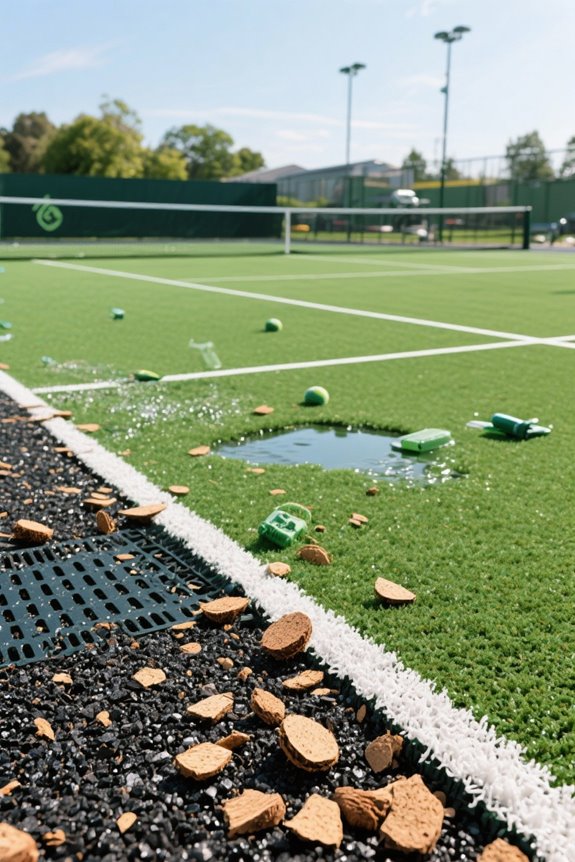
How does the choice of surface impact both playability and environmental health? The environmental footprint of synthetic turf is substantial, with significant carbon emissions arising from its manufacturing and transportation. While natural grass contributes greenhouse gases through maintenance, it also serves as a carbon sink. Synthetic surfaces do not require irrigation, making them appealing in water-scarce regions, but they slowly release microplastics and harmful chemicals, like PFAS, into ecosystems. Emerging eco-friendly materials are being developed, aiming to comply with environmental regulations and reduce ecological harm. However, disposal remains a critical issue, as limited recycling options often lead to landfill accumulation. Just as proper maintenance extends the lifespan of athletic equipment, regular care of synthetic court surfaces can prolong their usability and delay the need for replacement, reducing the frequency of material disposal. Careful considerations are essential in selecting surfaces that balance playability with long-term sustainability.
Frequently Asked Questions
How Does Weather Affect Synthetic Court Maintenance Schedules?
Weather considerably influences synthetic court maintenance schedules; rain effects delay essential inspections, while temperature fluctuations necessitate repairs and adaptations throughout seasons. Seasonal strategies must prioritize drainage and surface integrity to address these varying conditions effectively.
Can Synthetic Courts Be Used for Multiple Sports?
Like a chameleon shifting hues, synthetic courts embrace multiple sports, showcasing their versatility benefits. These adaptable surfaces invite basketballs, tennis balls, and more to dance across them, creating a harmonious playfield for various athletic pursuits.
What Common Mistakes Should Be Avoided When Maintaining Synthetic Courts?
Common mistakes to avoid when maintaining synthetic courts include neglecting maintenance schedules and using improper cleaning techniques, which can lead to surface damage, contamination, and ultimately shorten the court’s lifespan and performance capabilities.
How Long Do Synthetic Courts Typically Last With Proper Maintenance?
Synthetic court lifespan typically ranges from 12 to 20 years with proper maintenance frequency. Key maintenance practices, including regular cleaning and fiber replacement, considerably contribute to extending the lifespan and ensuring ideal playing conditions over time.
Are There Any Specific Certifications for Synthetic Court Maintenance Professionals?
What credentials validate expertise in synthetic court care? Various certification programs exist, ensuring compliance with maintenance standards. Notable certifications include the Certified Sports Field Manager and Certified Synthetic Turf Installer, enhancing professionalism and court longevity.