As an Amazon Associate, we earn from qualifying purchases. Some links on this site are affiliate links at no extra cost to you. Our recommendations are based on thorough research and editorial judgment.

Pickleball Court Positioning Fundamentals

Effective court positioning in pickleball integrates teamwork and strategy. Players should start centered in doubles, sharing coverage for ideal defense. Awareness of the kitchen line is vital; it restricts volleying and encourages longer rallies. Communicate clearly with partners using verbal cues and body language to guarantee fluid gameplay. Track the ball closely, positioning your paddle correctly for maximum impact. Mastering the third shot drop enhances your advantage. Exploring further will reveal additional tips for improving your game strategy.
Key Takeaways
- Start centered in doubles to effectively cover middle responsibilities and prevent gaps in defense.
- Shift positioning dynamically based on shot trajectories to optimize court coverage and respond to opponents.
- Maintain awareness of the kitchen line, ensuring no part of the body touches it while attempting volleys.
- Communicate verbal cues with your partner to clarify responsibilities and avoid confusion during play.
- Utilize the two-up formation for aggressive net play and enhanced volley opportunities against opponents.
Understanding Court Coverage
Understanding court coverage in pickleball is essential for effective gameplay. Players must develop strong court awareness and strategic positioning to maximize their performance. In doubles, both players should start centered, sharing middle coverage responsibilities to avoid gaps. When the ball goes wide, the nearest player must shift to cover the line while the partner adjusts toward the center. Deep shots require one player to retreat, maintaining balance. Lateral shifts and coordinated movement guarantee both players cover open spaces effectively. Anticipating opponents’ shots through observing paddle position helps in making proactive adjustments. Communication, whether verbal cues or pre-point planning, solidifies teamwork and enhances overall court coverage, making it a critical skill for successful pickleball play. Proper footwear with cushioning technology can reduce fatigue during extended matches, allowing players to maintain quick lateral movements throughout gameplay.
Importance of the Kitchen Line
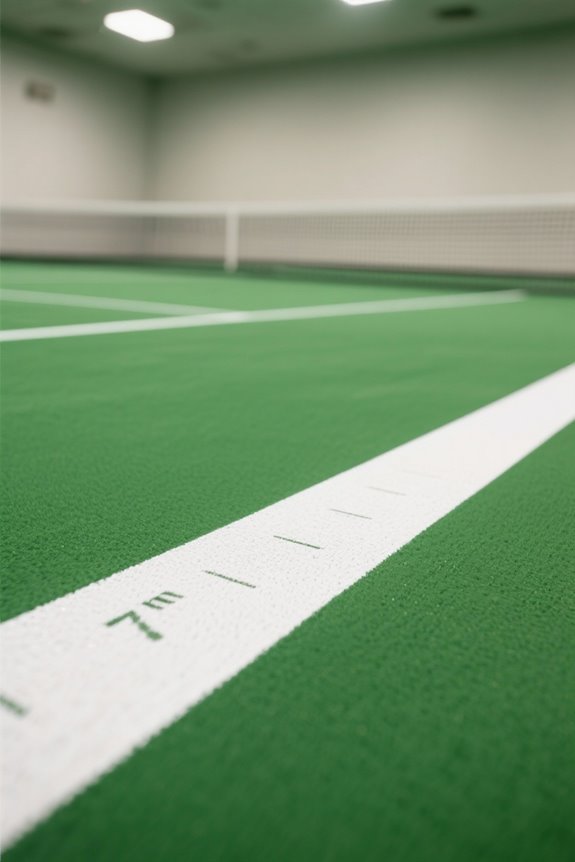
The kitchen line plays an important role in pickleball, serving as an essential boundary that shapes gameplay strategies. It marks the non-volley zone, requiring players to be aware of their positioning. Players cannot volley if any part of their body touches this line, increasing the need for spatial awareness and precision. The kitchen line encourages strategic play, allowing for longer rallies by limiting aggressive net dominance. It influences kitchen strategies that utilize dinking and soft shots, enhancing point construction. When serving, players must guarantee their serve does not touch the kitchen line, adding another level of complexity. Just as tennis players benefit from proper grip thickness and comfort preferences to maintain control during extended rallies, pickleball players must develop a refined touch at the kitchen line to execute delicate shots effectively. Mastering these rules enhances both volley techniques and overall game performance, making the kitchen line a key element in successful gameplay.
Effective Doubles Positioning
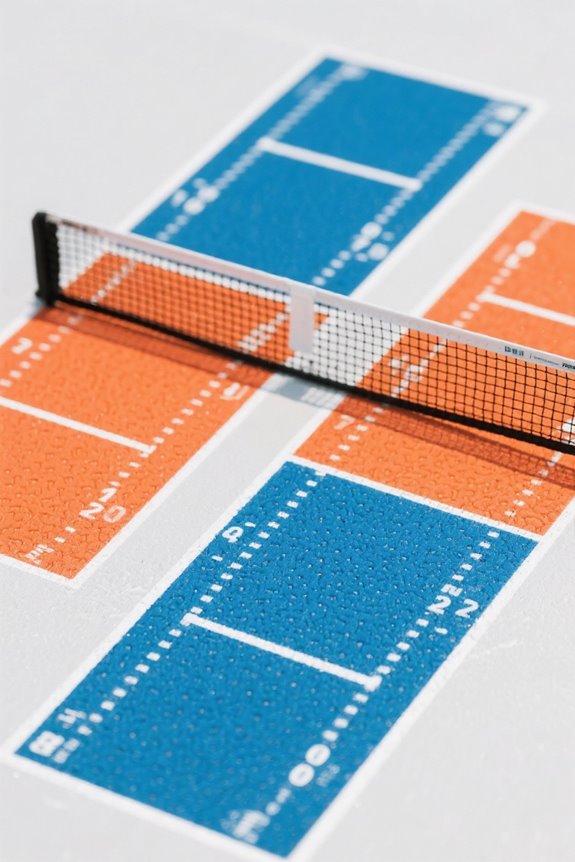
Mastering effective doubles positioning greatly enhances a player’s performance on the court. Proper court formations notably influence play style and strategy. The two-up formation, for instance, positions both players at the kitchen line, promoting aggressive net play and better volley opportunities. Conversely, the two-back formation serves a defensive purpose, though it may leave middle court areas exposed. Meanwhile, side-by-side alignment ideally covers the court for sharp angles. Employing dynamic movement strategies allows teams to adjust positioning based on opponents’ shot trajectories, leading to quicker shifts between defense and offense. To capitalize on opponents’ weaknesses, positioning changes should occur to maintain pressure, creating openings for effective shots. Just as good traction in proper footwear prevents slips during rapid directional changes, maintaining balanced court positioning enables players to execute controlled movements and respond quickly to opponents’ shots. Ultimately, flexible and strategic movement is key for effective doubles positioning.
Recommended Products

The glow perpetuates in the Nike Air Force 1 '07, the B-Ball OG that gives a new twist to what you know best: durable stitched overlays, clean finishes and the perfect amount of flash to make you shine
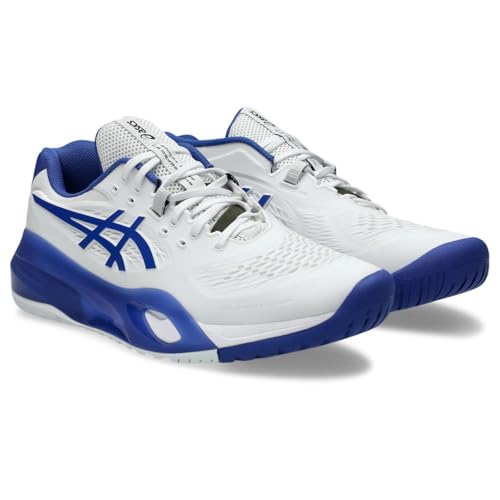
Optimises lateral movements and allows easy return to the starting position.

FLYTEFOAM technology: Provides lightweight cushioning and impact absorption
Communication and Coordination
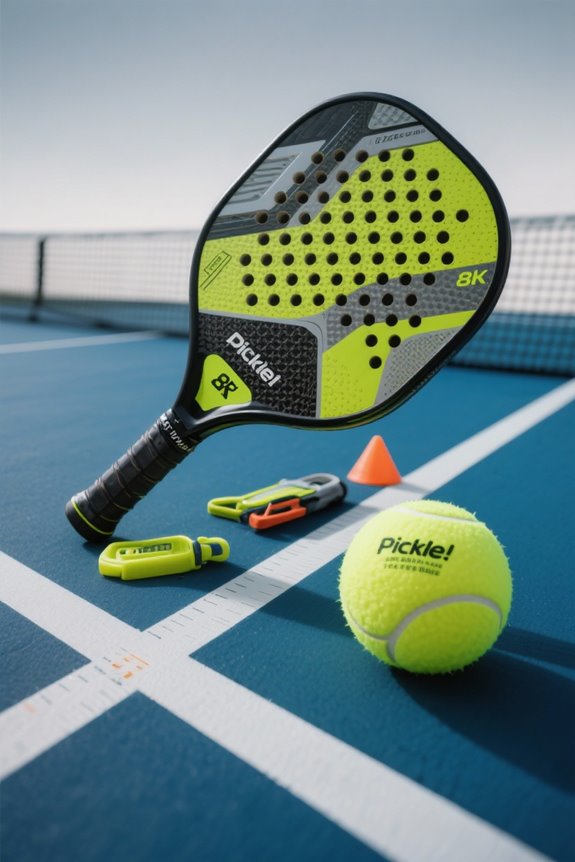
Effective communication and coordination are essential for success on the pickleball court. Players must utilize both verbal cues and non-verbal signals to operate seamlessly as a team. Before matches, it is crucial to discuss court responsibilities, including who will cover the middle to avoid confusion. During play, clear and simple phrases like “mine” and “yours” can minimize shot overlap. Quick feedback post-points enhances team synergy. Non-verbal strategies, such as eye contact and subtle gestures, can convey readiness or shot intentions without interrupting play. Additionally, players should observe body language to gauge emotional states, ensuring both teammates stay composed. Just as proper footwear with effective arch support enhances physical performance and reduces fatigue during extended play, maintaining clear communication helps players stay mentally focused and coordinated throughout the match. By actively engaging in both forms of communication, players can enhance their court positioning and overall game performance.
Coverage Between Partners
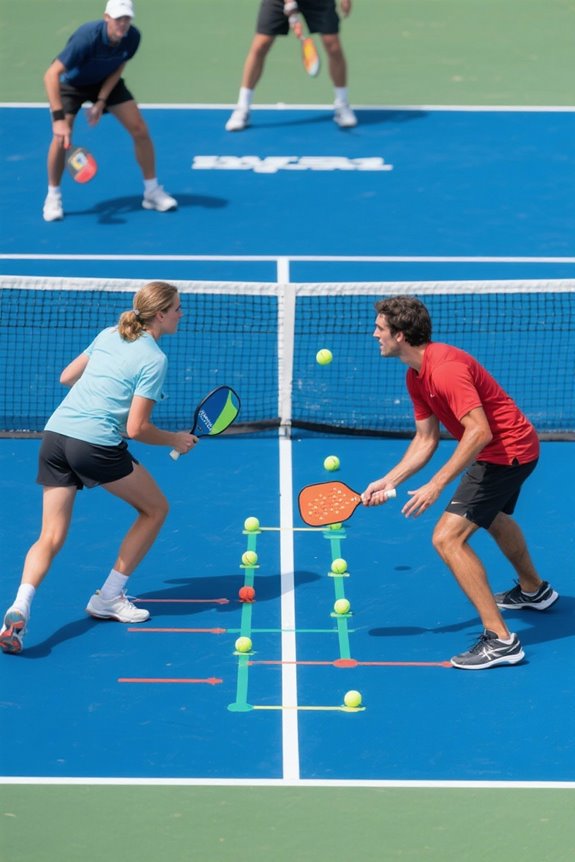
Building on the importance of communication and coordination, coverage between partners plays a vital role in maximizing court effectiveness. Effective partner alignment allows each player to cover about half the court width, minimizing coverage gaps. Positioning side-by-side near the kitchen line enables control over the non-volley zone. Maintain a slight diagonal offset when opponents send angled shots to guarantee coverage of potential openings. Both partners should dynamically adjust their spacing based on ball position, allowing one to handle middle shots while the other covers sidelines effectively. Practicing zoned divisions reduces confusion and enhances shot anticipation. Finally, smooth lateral movement helps prevent middle court gaps, maintaining balance and strategic advantage during fast-paced exchanges. Just as tennis players consider head size considerations when selecting equipment for their playing style, pickleball partners must evaluate their court positioning strategy based on their individual strengths and weaknesses.
Shifting From Defense to Offense
Shifting from defense to offense in pickleball requires quick thinking and a strategic approach. Players must employ effective defensive tactics before recognizing opportunities to implement offensive strategies. For instance, executing reset shots or lobs can open the court, pushing opponents back and creating advantageous angles. Quick footwork and a balanced stance are essential for responding effectively to opponents’ shots. In addition, maintaining communication with partners enhances change fluidity. Mental agility is equally important, allowing players to adapt to changing conditions. Recognizing when to use dink shots or angled returns can catch opponents off guard. By mastering timing and selecting the right shot at the appropriate moment, players can confidently shift from defense to offense, creating scoring opportunities throughout the match. Advanced players seeking to maximize spin potential can benefit from paddles with RPM Grit technology, which enhances control during aggressive transition shots.
Anticipating Opponent Shots
Anticipating opponent shots can greatly enhance a player’s overall performance in pickleball. Effective shot analysis is key to recognizing paddle techniques that suggest a player’s next move. For example, a downward paddle angle often indicates a drop shot or slice, while an open paddle face points to a soft dink or lob. Players can also observe a drawn-back paddle, which typically signals preparation for a powerful drive. By understanding these clues, players can position themselves wisely and respond effectively. Practicing these observational skills not only sharpens anticipation but also improves decision-making during essential moments in a match. Just as tennis players benefit from understanding grip size and comfort to enhance control over their shots, pickleball players can improve their paddle handling through proper equipment selection. Ultimately, developing a keen eye for paddle techniques can be the difference between winning and losing.
Recommended Products

IDEAL FOR PRACTICE - Allows new lacrosse players to feel more at ease and confident. The softer outer fabric is both less intimidating and doesn’t hurt as bad if you get hit by a ball.

THE STANDARD ON COURT: USAP approved, chosen as the official ball for both the US Open Pickleball Championships and USA Pickleball, and engineered for official size and weight, these pickleball balls deliver consistent performance for both pro and amateur players

FAMILY-OWNED: At Selkirk, we are committed to fueling the pickleball obsession found within every player. Through uncompromising quality and a never-satisfied drive for innovation, we serve players around the world from beginners to pros.
Ball-Tracking Techniques
Effective ball-tracking techniques are an essential component of successful pickleball play. Players must prioritize visual tracking of the ball, keeping their focus on its contact point with the paddle. Using a consistent vocal cadence, such as saying “see” when the ball hits one’s own paddle and “look” for the opponent, reinforces timing and concentration. The paddle itself serves as a useful reference, aiding players in predicting the ball’s trajectory. To enhance ball-tracking accuracy, it is important to minimize distractions from opponent distractions. Players can practice drills that incorporate watching the ball hit the paddle, which strengthens both visual tracking and shot timing. Consistent training has a profound impact on hand-eye coordination and overall game performance.
Positioning Relative to Opponents
Positioning relative to opponents is essential for maximizing your effectiveness on the pickleball court. Players should focus on angle positioning and recognizing opponent tendencies to enhance performance. For instance, when facing opponents with strong drives, positioning just off the non-volley line allows extra reaction time. Conversely, moving closer to the net aids in cutting off softer shots. Observing opponents’ play reveals when to adjust court spacing. Proper positioning compresses shot angles, limiting opponent options and increasing predictability. Coordinated movement, especially moving “up and together,” helps maintain ideal court coverage. By reducing gaps and anticipating their shots, teams can create a formidable defense, disrupt opponents’ rhythms, and maintain control over the game’s tempo. When practicing these positioning fundamentals, consider using a portable pickleball net that allows for quick setup in various environments, enabling you to refine your court awareness and positioning skills in driveways, parks, or any available space.
Maximizing Paddle Sweet Spot
Achieving ideal performance on the pickleball court goes beyond strategic positioning against opponents; it also involves understanding the paddle’s sweet spot for maximum shot effectiveness. The sweet spot—usually found in the center or slightly below center of the paddle—is where you’ll gain optimal power and control. Incorporating sweet spot techniques, players should maintain focus on the ball and position the paddle slightly out in front. This adjustment enhances the likelihood of hitting the sweet spot. Furthermore, varying paddle designs impact sweet spot size and location, affecting overall playability. Practicing these techniques consistently reinforces muscle memory, allowing for more accurate and powerful shots while reducing vibration and potential injury risk. Clear paddle positioning is essential for success. When selecting equipment, consider that wider paddle designs provide larger hitting surfaces, which can increase the size of the sweet spot and improve your chances of making solid contact with the ball.
Recommended Products

Enjoy a 15° tilt and rocking for relaxation. Adjustable armrests for customized support and space-saving convenience

Capacity Up to 5.5 cups uncooked rice / 1.0 liter

Intelligent Balance System A system with side rails that allows the player to adjust the racket's balance according to their preferences.
The Role of the Third Shot Drop
Mastering the third shot drop is essential for players seeking to dominate the pickleball court. This drop technique relies heavily on trajectory control, aiming for ideal kitchen placement. Players should focus on striking the ball in front of the body to guarantee better accuracy and control. Minimal wrist movement enhances consistency, while a shoulder-driven motion maintains the necessary power and soft touch. Effective shot selection considers opponent positioning; drops work well against opponents who are deep on the court. Practice drills should emphasize varied paddle-face angles and follow-through lengths to adapt to different scenarios. The goal is to land the ball within three feet of the kitchen line, enhancing strategic options and delaying your opponent’s attack. Just as professional tennis players rely on dedicated equipment compartments to organize their gear efficiently, pickleball players should maintain organized storage for their paddles to ensure quick access and optimal performance during matches.
Recommended Products

Durable Aramid Weave Surface - This professional pickleball paddle's special Aramid weave surface offers exceptional strength and longevity, ensuring optimal performance and precision on the court.

Triple Layer Carbon Fiber Construction - The innovative triple layer carbon fiber design ensures durability and strength for a powerful and consistent performance on the pickleball court.

Durable Aramid Weave Surface - This professional pickleball paddle's special Aramid weave surface offers exceptional strength and longevity, ensuring optimal performance and precision on the court.
Strategic Movement and Footwork
Strategic movement and footwork are critical in pickleball, allowing players to enhance their court coverage and improve overall performance. Practicing strategic footwork through targeted movement drills can greatly boost agility and reaction times. For instance, players should maintain a ready position to respond swiftly, using forward and backward movements to maintain their stance during rallies. Coordinated movements with partners help cover the width of the court effectively, ensuring minimal gaps. Additionally, anticipating the ball’s trajectory allows for quicker adjustments, which is essential in high-pressure situations. Emphasizing recovery techniques after each shot can further solidify court positioning, ultimately leading to better scoring opportunities and enhanced teamwork. Prioritizing strategy in footwork makes all the difference in competitive play.
Recommended Products

All-in-one design—no more juggling balls, rackets, and bottle. The hopper holds everything. Just load, zip, and go. Less mess, less hassle, more training.

ADJUSTABLE BALL SPEED & SPIN CONTROL: Fine-tune your pickleball sessions with adjustable ball speeds up to 65 MPH. Simulate gentle volleys to high-speed ground strokes while adding heavy topspin or backspin for competitive game situations.

📱【PUSUN App Drill Control】:Scan the QR code on the machine to download and use the PUSUN App, compatible with both iOS and Android devices. Use the App to adjust speed, feed interval, spin, height, landing points, and training modes. Practice dinks, volleys, drives, cross-court shots, deep returns, and random feeds with this automatic pickleball launcher.
Frequently Asked Questions
How Can I Improve My Court Awareness During Games?
To improve court awareness during games, one must enhance court vision and spatial recognition. Practicing drills, observing opponents, and maintaining an athletic stance enables quicker reactions and better anticipation of plays, enhancing overall performance.
What Drills Help Enhance Positioning Skills in Pickleball?
Like dancers on a court, players refine their art through shadowing drills and positioning drills. These exercises enhance spatial awareness, enabling quick adjustments and seamless movements, essential for mastering the subtle choreography of pickleball gameplay.
How Do I Know When to Switch Positions With My Partner?
To know when to switch positions, players should rely on timing strategies and communication cues. Observing shot trajectories and using verbal signals enables effective coordination, ensuring both partners can ideally respond during play and maintain court control.
What Mistakes Should I Avoid in Doubles Positioning?
To avoid common positioning mistakes in doubles, players should prioritize clear partner communication, synchronize movements, and maintain appropriate court positioning, thereby enhancing coverage, reducing vulnerabilities, and increasing overall effectiveness during rallies and vital game moments.
How Does Wind Affect My Court Positioning Decisions?
In windy conditions, one must channel their inner meteorologist: wind direction demands heroic adjustments in court positioning and shot selection, lest the ball take an unexpected journey, and the score becomes a comedy of errors.