As an Amazon Associate, we earn from qualifying purchases. Some links on this site are affiliate links at no extra cost to you. Our recommendations are based on thorough research and editorial judgment.

Understanding Tennis Court Geometry

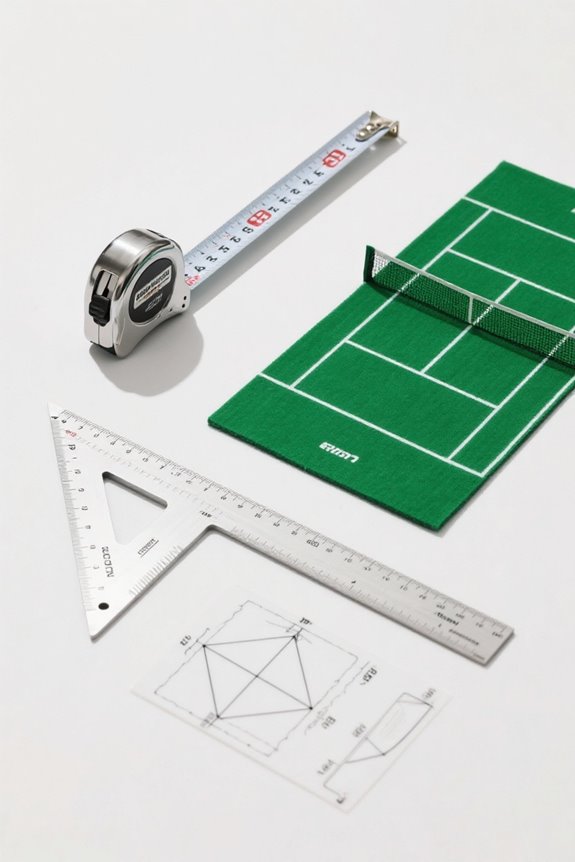
Professional studio photograph showcasing precision tennis court measurement tools and geometric diagrams on pristine white background. Features premium measuring tape, angle ruler, court dimension templates, and regulation line markers arranged in minimalist composition. Studio lighting creates soft shadows, emphasizing the technical precision of court layout equipment. Vibrant white lines contrast against deep green court surface sample. Sharp focus captures every measurement marking and geometric detail. High-end catalog quality presentation demonstrates professional court construction standards, baseline dimensions, service box angles, and net placement specifications in commercial-grade 8k resolution.
# Understanding Tennis Court Geometry
Understanding tennis court geometry is essential for players and fans. An official court measures 78 feet long and 27 feet wide for singles, expanding to 36 feet for doubles. Clearances are important; at least 60 feet of space around the court enhances safety. The net height is 3 feet at the center. Both court types promote distinct strategies, with singles emphasizing precision and doubles focusing on teamwork. There’s even more to explore about various court formats and their specifications.
Key Takeaways
- An official tennis court measures 78 feet long and varies in width between 27 feet for singles and 36 feet for doubles.
- The net tapers from 42 inches at the posts to 36 inches at the center, affecting ball trajectory.
- Minimum recommended clearances are 60 feet wide and 120 feet long for safety and performance during play.
- Different strategies are employed in singles versus doubles, adapting to the court’s width and available angles.
- Adequate run-off areas enhance player safety, with recommended side and back clearances varying based on court type and event level.
Official Tennis Court Dimensions
Tennis court dimensions serve as the foundation for competitive and recreational play. The length of an official tennis court is consistently measured at 78 feet (23.77 meters). A standard doubles court spans 36 feet (10.97 meters) in width, while a singles court measures 27 feet (8.23 meters). The International Tennis Federation (ITF) regulates these dimensions to guarantee uniformity worldwide, enhancing the player experience. Additionally, the recommended minimum clear area around the court is 60 feet wide and 120 feet long, promoting safety and accessibility. The choice of court surface—be it hard, clay, or grass—also influences gameplay characteristics like ball speed and bounce. Consequently, understanding these dimensions is essential for both players and enthusiasts alike. For consistent practice sessions, pressureless tennis balls maintain reliable bounce characteristics across different court surfaces without performance degradation over time.
Singles vs. Doubles Court Size
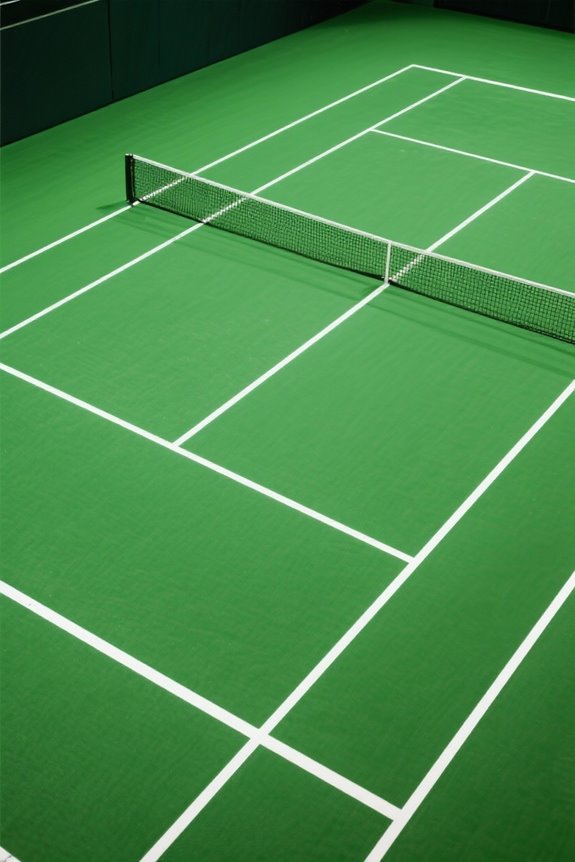
With clear distinctions in width, singles and doubles courts cater to different playing styles and strategies. A singles court measures 27 feet wide, while a doubles court expands to 36 feet, incorporating the alleys. These court dimensions greatly impact gameplay strategies. Singles emphasizes precision and direct shots within a tighter space, promoting longer rallies that rely on consistency. Conversely, doubles utilizes the extra width, facilitating aggressive tactics like wide serves and quick net plays. The doubles alleys introduce new angles and shot options, increasing game complexity. Players pivot their approach based on the court’s width, with singles demanding quick lateral movements, while doubles enhances teamwork through strategic coverage. These differences shape how players engage in each format. Serious players often invest in specialized tennis bags that can accommodate multiple racquets and equipment needed for both singles and doubles matches.
Recommended Products

Separate padded compartment accommodating two (2) tennis racquets or three (3) pickleball paddles. Complementary wristlet for a seamless ensemble. Crafted from durable Saffiano cross-grain faux leather.


POWER & VERSATILITY: The Babolat Pure Drive 107 11th Gen Tennis Racquet is perfect for players in search of power and forgiveness and is extremely popular among doubles players hitting volleys. A new plastic piece in the throat accentuates the energy return and provides extra power.
Total Playing Area Calculations
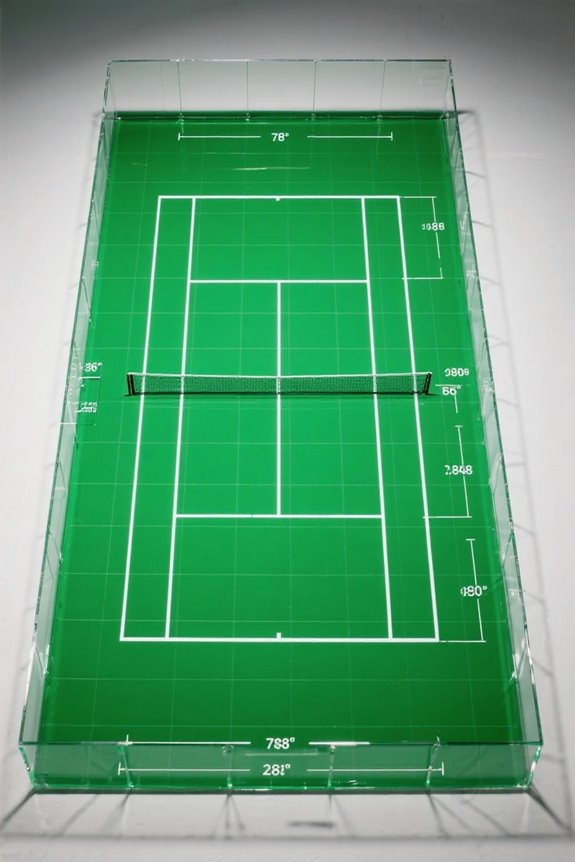
The dimensions of tennis courts extend beyond the simple measurements of singles and doubles play. Total playing areas include the court area dimensions and crucial clearance zones for player safety. For instance, a doubles court measures approximately 260.87 m², while a singles court is around 195.65 m². To guarantee a safe playing environment, clearances extend 6.4 m beyond baselines and 3.66 m along sidelines, bringing the minimum total area to about 668.9 m². The type of playing surface impacts regulations on these zones, as different materials require unique safety considerations. Understanding these calculations is essential for both players and facility managers, guaranteeing adequate space for ideal play and injury prevention. Adequate clearance zones also help minimize the risk of knee injuries, which is why many players use knee supports to maintain stability during rapid movements across the court.
Service Line Positioning
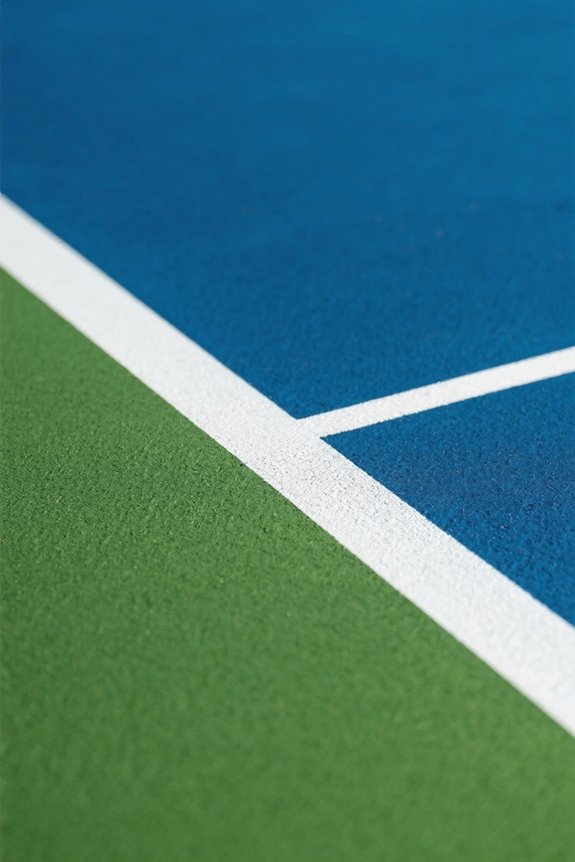
Precision is essential when it comes to service line positioning on a tennis court. The service line is located 21 feet from the net, running parallel to it and marking the front edge of the service boxes. Significantly, this distance is identical on both sides of the court. Service line accuracy is critical, as it defines the valid landing area for a serve. Players must note the implications of this line, as overstepping the baseline during a serve constitutes a foot fault. Each service box measures 21 feet deep and 13 feet 6 inches wide, maintaining equal dimensions for singles and doubles play. Therefore, understanding the service line’s function enhances a player’s tactical approach. Serious players often carry multiple racquets to matches, with professional tennis bags accommodating anywhere from 3 to 9 racquets depending on individual needs and practice schedules.
Net Height Specifications
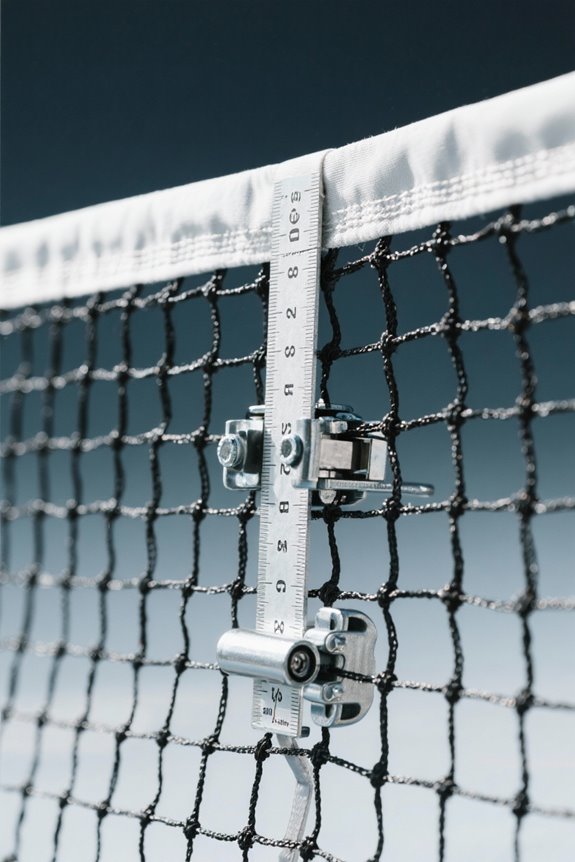
Net height plays an essential role in the game of tennis, directly influencing gameplay and player strategies. According to the International Tennis Federation, the official net height at the center must be 3 feet (0.914 m), while it rises to 42 inches (106.5 cm) at the posts. This slight slope is necessary for maintaining proper tension and facilitating effective serves and volleys. Regular net maintenance, including checks and adjustments, helps prevent sagging during play. For accurate height measurement, specialized tools are recommended, though a racket handle can suffice for quick checks. Consistent net height guarantees fairness and integrity in the game, allowing players to focus on shot timing and accuracy without worrying about varying conditions. Just as net specifications remain standardized, maintaining proper string tension on your racket is equally important, as tension dynamics can significantly affect power, control, and overall shot performance.
Court Boundary Markings
Court boundary markings are essential elements that define the playable area of a tennis court, guiding players on where shots can be deemed valid or out of bounds. These court markings include baselines, centerlines, and service lines, each serving a specific function in gameplay. For instance, shots landing beyond the baseline are considered out, while those in the service box need to be accurately placed for successful serves. Thickness standards of 2 to 4 inches guarantee player visibility, enhancing clarity. Players benefit greatly from understanding these markings, as they help in forming strategies for shot placement and court positioning. Maintaining the visibility of these lines is imperative for effective gameplay and player safety. When applying court line markings, using weather-resistant tape with proper adhesion ensures the lines remain visible and intact under heavy foot traffic and varying environmental conditions.
Measurement Protocols
While players may focus on their skills and strategies, understanding measurement protocols is equally important in tennis. Accurate dimensions enhance the integrity of the game. A standard tennis court measures 78 feet in length and varies in width. Singles courts are 27 feet wide, while doubles courts measure 36 feet. The net height is also critical, set at 3 feet in the center. Players should appreciate that court materials can affect playability, making accurate measurements crucial. Compliance with standards set by organizations like the ITF and USTA guarantees global consistency in court dimensions. Just as court specifications matter, equipment maintenance is essential, and players should remember that regular replacement of tennis grips helps maintain optimal performance and control during matches. By adhering to these protocols, players can enjoy a fair and safe playing environment, fostering a more enjoyable and competitive experience on the court.
Court Surrounding Space Requirements
Accurate measurements are important not just for the court itself but for the area surrounding it as well. A minimum of 60 feet in width and 120 feet in length is necessary to guarantee sufficient clearance space. For player safety, the side clearance should range from 12 to 15 feet from the doubles sidelines. Fixed court obstacles, such as fences or walls, must be placed outside this area to minimize injury risks during play. Additionally, a recommended runback clearance of 21 feet for recreational courts and 27 feet for professional courts facilitates safe shot chasing. Overhead clearance also needs careful consideration, with a minimum height of 30 feet for covered courts to avoid ball interference. The net itself should be 42 feet long and taper from 42 inches at the posts to 36 inches in the center, meeting official specifications for competitive play.
Recommended Products

Package includes Fence Fabric, Stainless Steel Fence Poles, Ground Spikes, Base Mounts, Ground Stakes, Plastic Sleeves, Clips. Fence Fabric and Fence Poles are unassembled. We provide Clips for fixing Fabric to the Fence Poles.

A Must for Your Home: Whether you’re looking for a way of adding more privacy to your family’s outdoor space, or you simply want to keep your garden forever fresh and with a modern look, the Can Fence privacy screen outdoor is the perfect choice!

ENDURO FENCE ONLY - 50' Dark Green
Importance of Run-off Areas
Run-off areas play an essential role in maintaining player safety and enhancing performance during tennis matches. The run-off significance lies in the protection it provides, allowing players to decelerate safely after intense movements. Major tournaments often recommend run-off distances, with side areas of 21 to 25 feet and back zones of 27 to 33 feet. These spaces help prevent collisions with fences or obstacles, addressing critical safety considerations for players. For recreational courts, a minimum of 12 feet from sidelines and at least 21 feet behind baselines are imperative. When space is limited, players can enhance their practice routines by incorporating tennis rebound nets that provide effective training without requiring extensive court dimensions. Ultimately, adequate run-off guarantees not only player safety but also the overall quality of play, making it a fundamental aspect of tennis court design.
Net and Post Placement Guidelines
Tennis court geometry requires careful attention to net and post placement. The official net length spans 42 feet for both singles and doubles play. Posts must be positioned 3 feet outside the sidelines to maintain proper spacing. This alignment is essential for ideal net tension, which prevents sagging during play. At the center, the net height is standardized at 3 feet, while the posts rise to approximately 3.6 feet. Routine maintenance guarantees net tension remains adequate, impacting overall play quality. Inspecting the net and posts regularly can prevent wear and maintain compliance with regulations. Proper alignment and tension secure consistent conditions, allowing players to focus on their performance without equipment interference. For players who string their own rackets, having a machine with 6-point mounting systems helps ensure consistent string tension that complements properly maintained court equipment.
Key Areas of the Tennis Court
The layout of a tennis court is essential for ideal play and understanding the sport’s dynamics. Key areas include the baseline, service boxes, and alleys. Singles courts measure 27 feet in width, while doubles courts expand to 36 feet. Serving occurs from designated boxes, each 21 feet wide, facilitating strategic player movements. The service line, 21 feet from the net, is pivotal for accurate serves. In doubles matches, the doubles alley, which is 4.5 feet wide, offers additional space, aiding teamwork. The court surface varies—grass, clay, or acrylic—which impacts gameplay. Sufficient clearance of 21 feet behind the baseline guarantees safety, reducing injury risks during dynamic play. These aspects create a functional space for all players.
Recommended Products

FUNCTIONAL FIELD APPLICATION - Perfect for leveling various sports fields such as baseball fields, golf fairways, clay tennis courts, soccer fields, and more. This StadiumMax Steel Drag Mat ensures a consistently even playing surface.


Used By Professional, College, and High School Basketball/Volleyball/Tennis Teams
Role of Court Lines in Play
Understanding how court lines function can greatly enhance a player’s performance on the tennis court. The lines define the boundaries of play, making them essential for court line strategy. Each line, from the baseline to the service boxes, serves a specific purpose that impacts shot placement. Shots landing outside these lines result in point loss, creating a need for precision. In singles, players focus on tight shot placement, while doubles strategies leverage the wider court. The center mark aids serving alignment, helping players guarantee a valid serve within the service box. By mastering the role of court lines, tennis players can develop a more strategic approach, using positioning to challenge opponents effectively and improve their overall gameplay.
Governing Standards for Court Design
In a world where precision dictates performance on the court, adhering to governing standards for court design is essential for players and builders alike. The International Tennis Federation (ITF) lays down global dimensions, defining a singles court as 78 feet long and 27 feet wide. The American Sports Builders Association (ASBA) outlines construction standards, covering critical aspects such as surface types, drainage, and longevity. Additionally, the National Park Service (NPS) enforces guidelines on net height and lighting for courts on federal lands. Local authorities add another layer of regulations, ensuring compliance with accessibility and safety codes. Observing these standards fosters uniformity in court play, enhancing both safety and enjoyment for players across all levels of competition.
Recommended Products

VARIOUS SIZES - Choose from a wide range of sizes tailored to your specific needs, ensuring a perfect fit for backstops, batting cages, and facility protection.
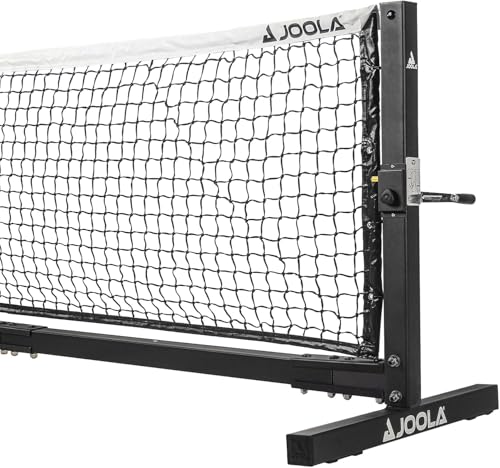
OFFICIAL PADDLE SPONSOR OF WORLD #1 PICKLEBALL PLAYER BEN JOHNS & THE PPA TOUR: An innovator & global leader in table tennis for 70+ years, JOOLA teams up with Ben Johns to create a new line of pickleball equipment that will forever change the game

Premium Performance & Durability – The C&D Qualifier Pickleball Net System is built for long-lasting use with high-quality materials. Its sturdy construction ensures stability during intense gameplay. Designed to withstand outdoor conditions, it features corrosion-resistant stainless steel hardware. Ideal for clubs, community centers, and backyard courts, this system delivers professional-level performance.
Comparison of Professional and Recreational Courts
Professional and recreational tennis courts present notable differences that can considerably impact player experience and performance. At the professional level, court surfaces are crafted for superior quality, ensuring consistent ball bounce and ideal player safety. Recreational courts, however, often utilize lower-grade materials, leading to variable surface quality that may affect gameplay. Maintenance differences also play a significant role; while pro courts undergo regular upkeep, recreational adaptations might suffer from uneven wear and fading markings. Space requirements for professional courts are meticulously planned, including necessary clearances for player movement, whereas recreational facilities may compromise space for usability. These factors collectively influence the enjoyment and effectiveness of play on different types of tennis courts.
Recommended Products

⭐ Internal Spin Technology 🌀: Unique internal rotation system precisely simulates professional players' various serving effects, providing the most realistic training experience

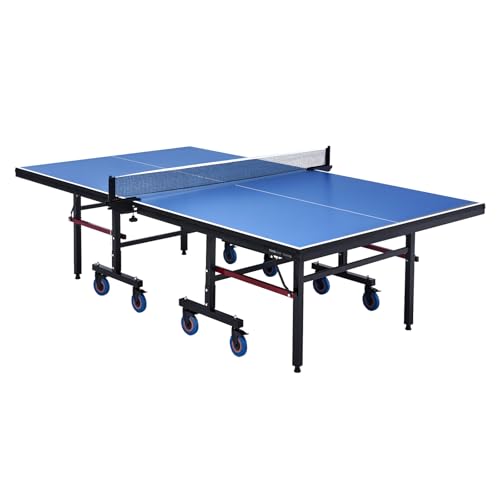
Home Competition Quality: A tournament-grade 107.9x60x30 inch / 2740x1525x760mm standard size portable table tennis table and net set is perfect for use in your home, office, or community center. Professionally designed to enhance your sporting experience with greater convenience.
Variations in Alternative Tennis Formats
Alternative tennis formats have emerged to accommodate diverse skill levels and playing styles, offering unique ways to engage with the sport. Modified singles courts, commonly used in junior tennis, are narrower than standard courts, fostering learning in a smaller area. The gameplay often incorporates modified service lines, allowing younger players to develop their skills more effectively. Additionally, some courts feature wider baselines to emphasize specific techniques. Equipment also undergoes adjustments; smaller racquets and modified ball sizes enhance control for junior players. These formats may also implement time limits or alternate scoring systems, ensuring a more dynamic playing experience. Overall, these alternatives promote accessibility and versatility, making tennis enjoyable for all participants.
Frequently Asked Questions
How Are Tennis Courts Constructed and Maintained?
Tennis courts are constructed with durable materials like concrete and acrylic while employing robust techniques for leveling, drainage, and maintenance. Regular resurfacing and crack repair juxtapose with the precise standards ensuring safety and playability.
What Surfaces Are Used for Tennis Courts?
Tennis courts primarily utilize clay courts and grass courts among other surfaces. Clay courts offer slow play with high bounces, while grass courts facilitate faster games but require significant maintenance to preserve their natural appearance.
How Do Weather Conditions Affect Play on Different Court Types?
Weather conditions greatly affect play on tennis courts; for instance, humidity impacts ball bounce, while wind effects can alter shot trajectory. These variables differ widely across surfaces, influencing player performance and overall match outcomes.
Are There Special Rules for Adapted Tennis Courts?
Yes, special rules for adapted tennis courts include the use of adapted equipment and inclusive design elements, allowing for diverse participation; adjustments like wheelchair modifications and lower nets facilitate a welcoming environment for all athletes.
Can Tennis Court Dimensions Vary for Junior Players?
Tennis court dimensions surely delight young players as they shrink to fit their size, fostering skill development. In youth tournaments, junior dimensions vary greatly, ensuring that even the tiniest athletes have their moment to shine.