As an Amazon Associate, we earn from qualifying purchases. Some links on this site are affiliate links at no extra cost to you. Our recommendations are based on thorough research and editorial judgment.


Building a Powerful Tennis Serve Motion

Professional studio photograph showcasing premium tennis serve training equipment against pristine white background. High-end sports catalog composition features state-of-the-art motion analysis tools, resistance bands, and serve development aids arranged in minimalist layout. Shot with 8k resolution capturing vibrant colors and sharp details. Soft studio lighting creates subtle shadows enhancing dimensional depth. Centered product placement emphasizes commercial e-commerce style. Equipment includes professional-grade training accessories designed to develop explosive power, proper biomechanics, and consistent ball toss technique. Premium quality photography highlights innovative design and superior craftsmanship of serve enhancement tools essential for competitive tennis players.
# Building a Powerful Tennis Serve Motion
Building a powerful tennis serve motion requires understanding the kinetic chain. Key muscle groups like the quadriceps, glutes, and core generate force and stability. Focus on the five phases of the serve: preparation, toss, acceleration, contact, and follow-through. A solid stance enhances balance and energy transfer. Effective leg drive synchronizes movements, while consistent practice improves your serve’s speed and accuracy. Proper technique can greatly reduce injury risk. Continue exploring to uncover more strategies for enhancing your serve.
Key Takeaways
- Master the kinetic chain by engaging lower body muscles for force generation and transferring energy smoothly through the body during the serve.
- Focus on the five key phases of the serve: preparation, toss, acceleration, contact, and follow-through for optimal performance.
- Maintain a consistent stance and proper alignment of feet, hips, and shoulders to enhance balance and power during the serve.
- Emphasize regular practice sessions aimed at targeting serve speed and accuracy, aiming for a first serve success rate of 70%-75%.
- Prioritize injury prevention through proper technique and strengthening exercises, particularly for the shoulder and upper body muscles involved in serving.
Understanding the Kinetic Chain in Serving
The kinetic chain in serving is a fascinating yet complex sequence that considerably impacts your tennis performance. Essentially, this chain begins at the ground, where energy is generated through your legs and hips. This energy then transfers sequentially through your trunk, shoulders, elbows, wrists, and finally to the racquet. The effectiveness of your serve depends on the ideal coordination and timing of each segment. Consider that a break in this chain can lead to increased stress on your shoulder and elbow joints, raising the risk of injury. Additionally, enhancing energy transfer through techniques like stretch-shortening cycles can amplify racket speed. By understanding this kinetic chain, players can focus on improving their serve’s efficiency and power while minimizing injury risks. Similar to how precision-drilled holes in tournament pickleball balls ensure consistent flight performance, each segment of the kinetic chain must function with precision to optimize energy transfer and serve execution.
Key Muscle Groups Involved in the Serve

Understanding how different muscle groups function during a tennis serve is fundamental for optimizing your performance on the court. Key muscle recruitment includes the lower body, core, shoulder complex, and arm muscles. Lower body muscles, like the quadriceps and glutes, enhance force generation while stabilizing the pelvis. The core, through the obliques and abdominals, guarantees trunk stability and facilitates rotation. The shoulder complex stabilizes during significant phases, while the rotator cuff aids in controlling arm movement. Additionally, wrist muscles play an important role in racket positioning. Developing functional strength in these areas not only improves serve velocity but also reduces the risk of injury. Balancing training across these groups is essential for success. Just as proper arch support is crucial for reducing foot strain and preventing plantar fasciitis in tennis footwear, targeted strengthening of these muscle groups helps prevent common tennis-related injuries.
Phases of the Tennis Serve
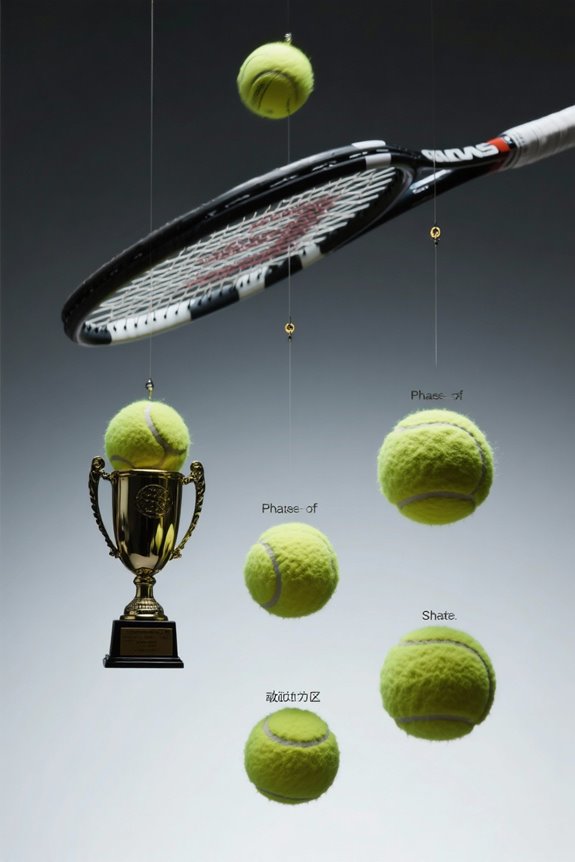
Phases in the tennis serve represent critical stages that determine overall effectiveness and precision. The serve dynamics consist of five key phases: preparation, ball toss and backswing, acceleration, contact and pronation, and follow-through. Each phase requires timing coordination for ideal results.
In the preparation phase, achieving balance and coiling the body is essential. During the ball toss, control and timing guarantee consistency. The acceleration phase involves transferring energy through the kinetic chain, maximizing power. As the player reaches contact, pronation improves accuracy and spin. Finally, the follow-through allows for fluid deceleration, minimizing strain. Mastering these phases enhances overall serve performance, leading to greater effectiveness on the court. Understanding these intricacies fosters improvement in individual skill development. Supporting quick lateral movements during serve execution requires proper footwear with shock-absorbing technology to reduce impact on joints and maintain stability throughout each phase.
Importance of Stance and Setup
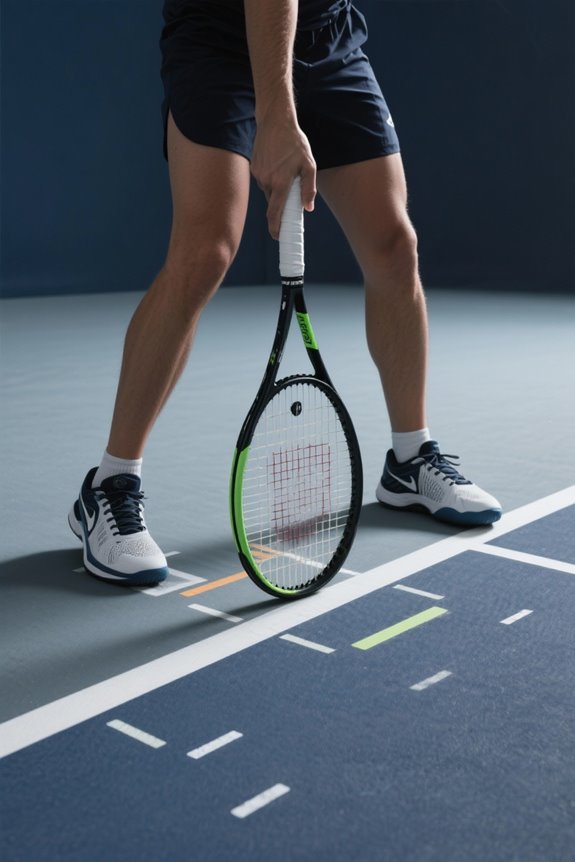
With respect to achieving a powerful serve, stance and setup play pivotal roles. There are two primary serve stances: the platform stance and the pinpoint stance. The platform stance offers stability and is often favored by taller players, while the pinpoint stance can enhance vertical lift for shorter athletes. Foot positioning during setup considerably influences energy transfer and balance, impacting overall serve effectiveness. Proper alignment of feet, hips, and shoulders guarantees an efficient kinetic chain during the serve. Also, a stable stance helps players maintain control during trunk rotation, resulting in increased racket speed. Ultimately, finding the right serve stance is an individual journey, as top ATP players showcase various preferences based on their unique strengths and styles. Using a lightweight carbon fiber racquet can further enhance maneuverability and reduce arm strain during the serving motion, allowing for faster swing speeds and better overall control.
Recommended Products
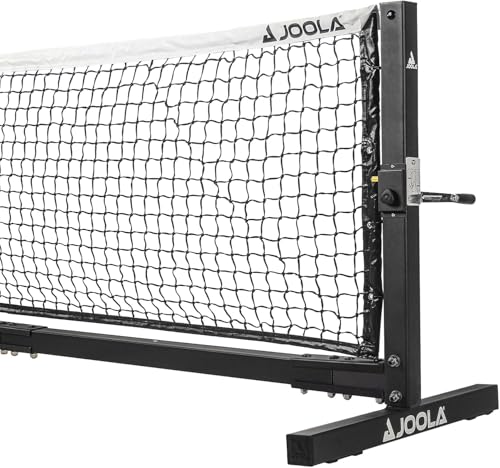
OFFICIAL PADDLE SPONSOR OF WORLD #1 PICKLEBALL PLAYER BEN JOHNS & THE PPA TOUR: An innovator & global leader in table tennis for 70+ years, JOOLA teams up with Ben Johns to create a new line of pickleball equipment that will forever change the game

Material: High elastic carbon + 2G-Namd Speed + VDM+MINOLON

Material: High elastic carbon + Vibe slayer carbon, Reactlezin, VDM
Techniques for Effective Leg Drive
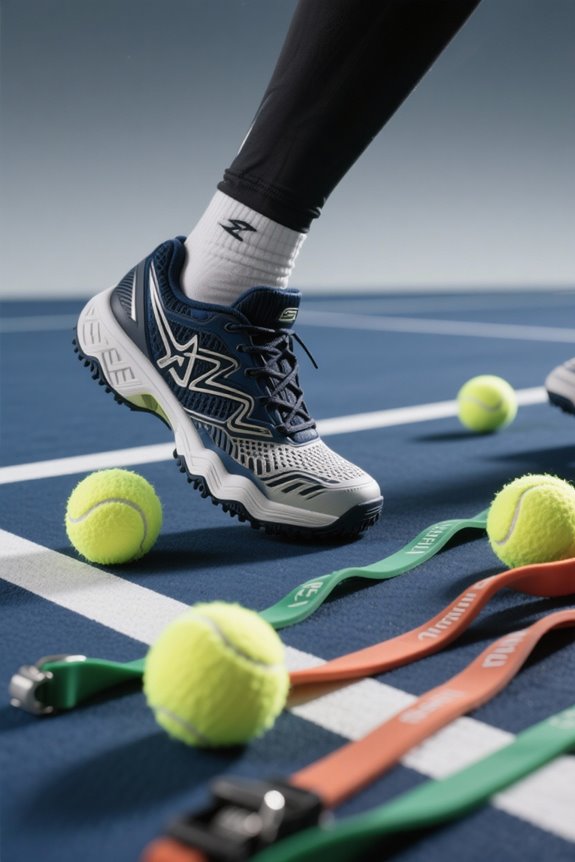
Maximizing leg drive is essential for achieving a powerful tennis serve. Effective leg drive mechanics involve timing and coordination during the serve motion. At the trophy position, you should bend your knees while your racket rises. Push off both legs, ensuring weight distribution favors the front leg at about 60%, to maintain balance and maximize power. It’s important to synchronize your leg drive with arm acceleration for peak force transfer. A stable platform stance allows efficient push-off, preserving power and avoiding premature weight shifts. Drills focusing on controlled leg bends and explosive upward movements help develop muscle memory for consistent leg drive. Just as athletes require breathability and flexibility in their athletic wear during intense movements, your serve motion demands unrestricted mobility throughout the kinetic chain. By following these techniques, players can enhance their serve’s effectiveness through improved leg drive.
Recommended Products

【ARM LEG ELLIPTICAL TRAINER】Arm and leg electric elliptical machines are particularly suitable for seniors and those needing hand/leg rehab. Low-intensity exercise can burn calories, improve cardiovascular health, enhance muscle strength and flexibility, while also helping hands and feet adapt and recover quickly.

40 POUND FLYWHEEL: 40-pound flywheel keeps the momentum of your legs moving forward as you pedal. Whether you ride hard or ride slow, you will always be in control of your workout.

MIZUNO ENERZY CORE: New advanced midsole material, delivering the most resiliency and softness. It improves comfort and adds spring to drive optimum performance.
Enhancing Arm Acceleration and Racket Speed
Enhancing arm acceleration and racket speed is essential for any player looking to elevate their serve’s effectiveness. Peak angular velocities in the upper arm and shoulder greatly impact serve speed. Remarkably, during critical serves, shoulder internal rotation can reach around 2,400° per second. This highlights the importance of arm velocity in optimizing racket dynamics. The elbow extension can achieve angular speeds nearing 1,500° per second, while wrist flexion reaches about 1,900° per second, contributing to the final whip-like acceleration of the racket. Coordinated movements from the trunk to the arm allow for smooth energy transfer, thereby maximizing performance. By mastering these elements, players can enhance their serving power and accuracy, ultimately improving overall game performance. Proper footwear with adequate arch support stabilizes the foot and redistributes pressure for better alignment during the explosive movements required in serving.
Recommended Products

Unique tennis rebounder design which supports multiple racket sports including pickleball, padel, squash, racquetball, and table tennis. Perfect for athletes of all levels.

Racket Composition: Graphite and Glass Fiber

Weight: TR40 10.6oz/300g; TR40 Lite 9.7oz/275g ; TR40 Junior 8.4 oz/240g
Strategies for Serve Variety and Placement
A diverse serving strategy is essential for players aiming to elevate their match performance. Serve patterns should include a mix of placements targeting both the forehand and backhand to create placement variety. Top ATP players win slightly more points serving to the forehand, revealing the effectiveness of serve unpredictability. Implementing targeted strategies, like occasional forehand second serves, can catch returners off guard and increase the chance of winning points. On hard courts, serves aimed wide are statistically favorable, while on clay, adapting to opponent tendencies is vital. Players should track their serve effectiveness, focusing on real-time feedback to adjust patterns and maximize their chances of winning vital rallies, particularly in high-pressure situations. Selecting the right equipment, such as racquets with larger sweet spots, can boost confidence and consistency when executing these varied serve placements.
Recommended Products

ENHANCED INDOOR TABLE TENNIS EXPERIENCE – 15mm performance ping pong table delivers consistent bounce, reliable control, and smooth gameplay for home game rooms, basements, offices, and recreational spaces.

Intelligent Balance System A system with side rails that allows the player to adjust the racket's balance according to their preferences.

COMFORT THAT FITS YOUR GAME: Designed for smooth grip and swing mechanics, this ultra-light frame offers arm-friendly comfort as well as quick maneuverability
Reducing Injury Risk Through Proper Technique
Players looking to improve their tennis serve can greatly reduce injury risk by focusing on proper technique. Emphasizing injury prevention, a strong serve relies on biomechanics analysis to refine movement patterns. By enhancing upper body strength, particularly in the trapezius muscles, players can lower their injury risk considerably. Additionally, understanding how to maintain an ideal dominant arm internal/external rotation strength ratio is essential. Biomechanical adjustments can improve serve speed while mitigating the likelihood of repetitive stress injuries often seen in the upper limbs. Regular feedback through video analysis helps players correct techniques, ensuring effective kinetic chain movement. Prioritizing these factors in training can ultimately lead to better performance and a safer playing experience on the court. Supporting the lower body with proper ankle stability can further enhance confidence and reduce the risk of injury during explosive serving motions.
Recommended Products

Hidden Internal Oscillation System: Leap in stability and precision, no vibration during operation

VARIOUS SIZES - Choose from a wide range of sizes tailored to your specific needs, ensuring a perfect fit for backstops, batting cages, and facility protection.

PORTABLE TENNIS BALL MACHINE & 4H RUNTIME: Train anytime without relying on a hitting partner. Weighing just 8.5kg (18.7lbs) with ergonomic non-slip handles, it folds to 15.4" × 10.7" × 17.6" (392 × 271 × 448 mm) for easy transport, compact enough for any trunk or garage. The removable battery delivers up to 4 hours of continuous practice and supports up to 1,800 shots per charge. Dual-wheel system launches up to 75 MPH with consistent ball placement for repeatable precision training.
The Role of Consistent Practice in Mastery
Consistent practice serves as the cornerstone of mastery in tennis, particularly when it comes to developing a powerful serve. The average player hits only 43 serves in a typical 77-minute session, reflecting an underprioritized aspect of training. To improve, players should develop a serve routine that emphasizes targeted practice consistency. Studies indicate that serve speed is essential for winning matches, and achieving a first serve success rate of 70% to 75% separates elite players from the rest. Implementing serve drills that track speed and placement can lead to measurable improvements. By incorporating regular, dedicated sessions focusing on serves, players can effectively bridge the gap between practice and match performance, thereby enhancing their overall game. Just as young players require proper equipment with lightweight materials for agility during training, adult players benefit from footwear that supports the rapid direction changes and explosive movements essential to serve development.
Frequently Asked Questions
What Role Does Mental Focus Play in Serving Effectively?
Mental focus markedly enhances serving effectiveness through visualization techniques that promote accurate targeting and confidence building. Players, by maintaining concentration, can improve their serve performance, leading to increased accuracy and consistency during competitive play.
How Does Hydration Affect Serve Performance and Power?
Dehydration can sabotage serve performance like a wrecking ball. Effective hydration strategies are essential; performance testing reveals that even mild fluid loss drastically reduces power, coordination, and precision during critical moments on the court.
Should I Use Special Footwear for Serving?
Yes, using specialized footwear enhances serve stability and footwear traction, which are essential for effective leg drive and push-off. This alignment reduces injury risk and improves the overall efficiency of a player’s serving motion.
Can Yoga Improve My Serve Technique and Flexibility?
Yoga can greatly enhance serve technique and flexibility. Just as a willow bends without breaking, incorporating yoga poses and flexibility drills allows players to achieve greater range, power, and precision in their tennis serves.
How Often Should I Change My Racket Strings for Optimal Performance?
For ideal performance, players should consider restringing their rackets every 4–6 weeks, depending on string material and playing style. Monitoring string tension is essential, as polyester strings lose tension faster than other materials.