As an Amazon Associate, we earn from qualifying purchases. Some links on this site are affiliate links at no extra cost to you. Our recommendations are based on thorough research and editorial judgment.

Essential Footwork Patterns for Pickleball Players

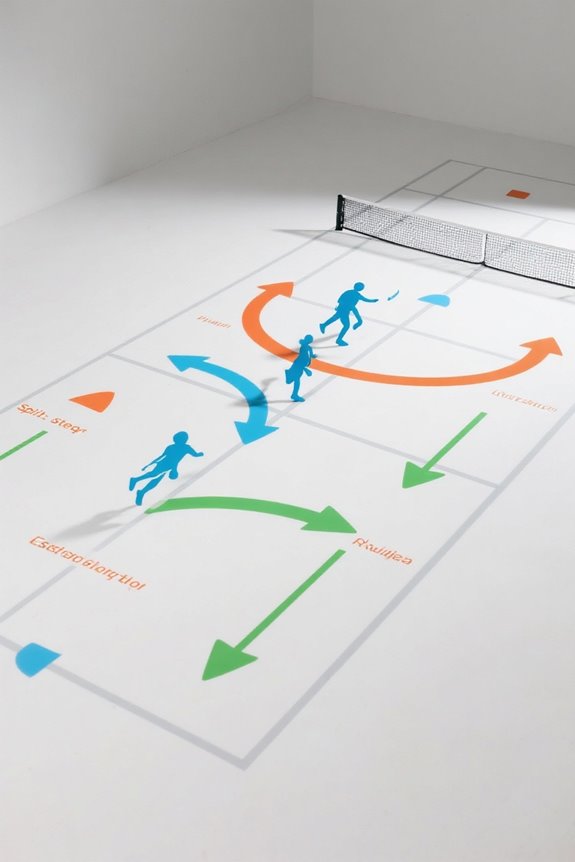
Professional studio photograph showcasing pickleball court footwork diagram overlay on pristine white surface. High-quality sports training visual featuring color-coded movement arrows in vibrant blues, oranges, and greens indicating split-step, lateral shuffle, and ready position patterns. Premium athletic equipment catalog presentation with precision-painted court lines, geometric positioning markers, and directional indicators. Shot with 8k clarity under balanced studio lighting creating subtle shadows. Minimalist composition centers the instructional footwork pattern system, demonstrating fundamental movement sequences essential for competitive play. Commercial-grade photography highlighting professional training methodology through clean, engaging visual design.
# Essential Footwork Patterns for Pickleball Players
Essential footwork patterns are crucial for pickleball players seeking to improve their game. Start by positioning your feet shoulder-width apart and maintaining a slight knee bend for balance. Focus on lateral movements and execute a split-step as your opponent prepares to hit. Drills like agility ladders and cone exercises can boost your speed and coordination. Precise footwork increases shot accuracy, enhances court coverage, and influences serve efficiency. Discover more strategies to elevate your play further ahead.
Key Takeaways
- Maintain a shoulder-width stance with knees slightly bent for balance and athletic readiness.
- Execute a split-step as your opponent prepares to enhance your reaction time.
- Use lateral footwork to ensure stability and control during exchanges at the kitchen line.
- Apply drop steps to create space for better shot placement and reset opportunities.
- Continuously recover to a central position to effectively cover the court for angled returns.
Basic Footwork Fundamentals
Mastering basic footwork fundamentals is essential for every pickleball player looking to enhance their performance on the court. Players should start with proper foot positioning, maintaining feet shoulder-width apart to create a balanced base. A slight bend in the knees keeps the body in an athletic stance. Weight distribution is key; ensuring balance on the balls of the feet allows for rapid directional changes. Player readiness improves markedly with hands positioned for paddle engagement. Incorporating a slight forward lean encourages proactive movement toward incoming shots. Utilizing a split step technique resets the stance and prepares for explosive movements. These foundational elements foster stability, agility, and responsiveness, vital for executing successful shots during competitive play. Investing in quality footwear with excellent traction supports these quick lateral movements and pivots, reducing the risk of slips and injuries during intense gameplay.
Advanced Kitchen Line Footwork Patterns
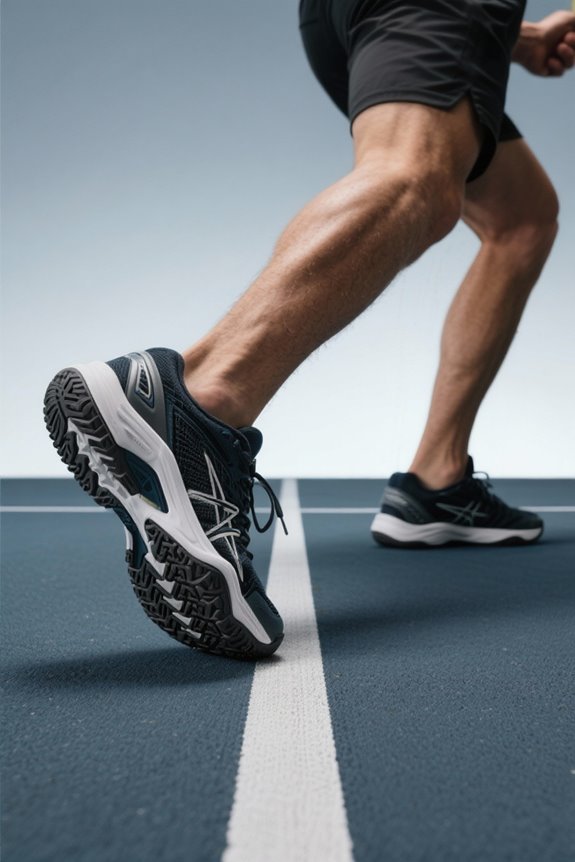
Frequently, players at the kitchen line face intense rallies that demand precise footwork patterns. Mastering lateral footwork is essential for maintaining balance during quick exchanges. The split-step, executed just as your opponent prepares to hit, positions you for instant reaction. Keeping weight on the balls of your feet avoids flat-footedness. Incorporating a drop step creates valuable space for reset shots, enhancing your control under pressure. Additionally, using a shuffle step allows for efficient lateral movement, ensuring you’re always poised to adjust your positioning. After each shot, recovery to a central position is critical, enabling coverage for angled returns. Just as tennis players require proper tension maintenance in their strings for consistent performance, pickleball players need consistent footwork patterns to maintain their competitive edge at the net. Consistent practice of these techniques can transform your game, allowing for sharper responses and strategic advantages at the net.
Recommended Products

FIT: Built for Court Sports: K-Swiss Women’s pickleball shoes have a wide toe box that suits the flexibility needed for pickleball, Heels stay secure, no slipping, even during quick moves.

Innovative, durable, and breathable mesh upper with synthetic support overlays
Essential Footwork Drills
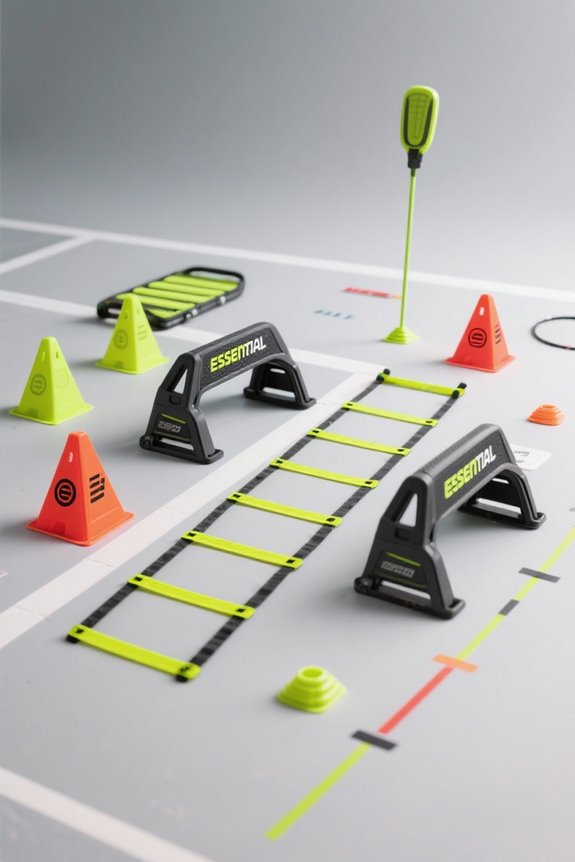
Effective footwork drills are essential for any pickleball player looking to elevate their game. Agility ladder drills play a significant role in enhancing coordination and speed, enabling players to cover the court more efficiently. By practicing quick lateral and forward movements, players develop rapid foot placement, which reduces reaction times. Adding variations like high knees increases the complexity and effectiveness of these drills. Additionally, cone drills simulate real game scenarios, improving lateral and forward footwork. Players should tap cones while maintaining focus on pushing off the inside leg for stability. Incorporating zigzag patterns around cones can enhance agility and precision. Consistent practice of these drills fosters muscle memory, resulting in smoother directional changes during actual play. To further improve reaction times and footwork precision, consider incorporating a pickleball practice rebounder that features marked zones for reflex training with realistic ball returns.
Recommended Products


Train Anywhere – No court? No excuses! Set up the rebounder in your garage, driveway, or backyard. Practice anytime, anywhere, and keep your skills sharp with zero court dependency.
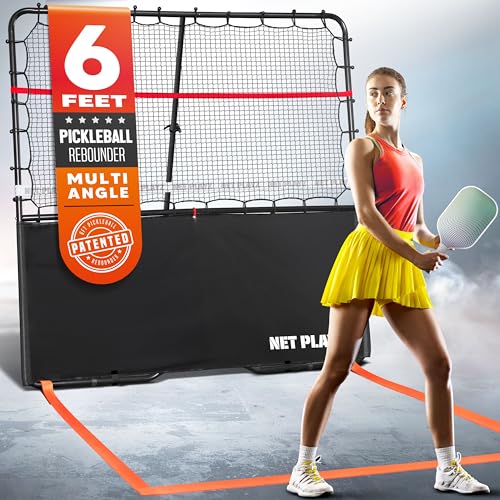
Train Anywhere – No court? No excuses! Set up the rebounder in your garage, driveway, or backyard. Practice anytime, anywhere, and keep your skills sharp with zero court dependency.
Key Movement Strategies in Play
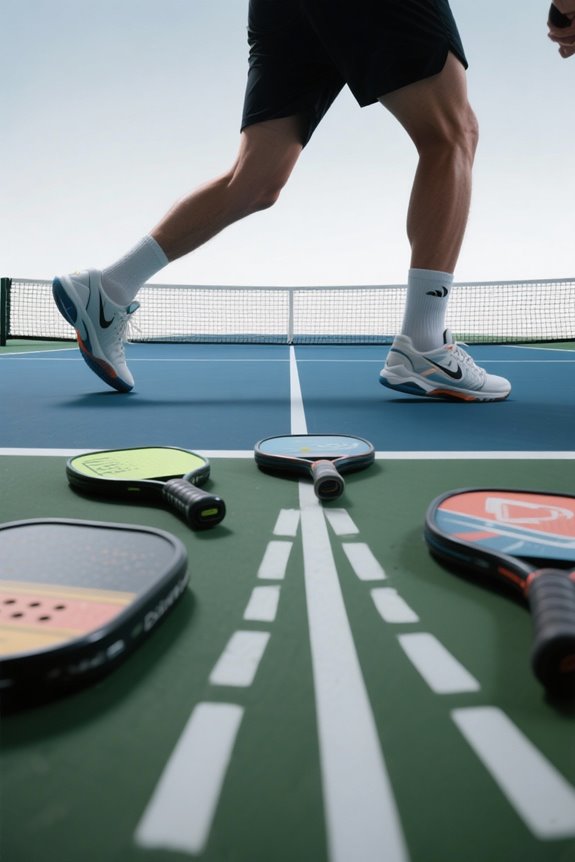
Understanding key movement strategies in pickleball can greatly enhance gameplay and overall performance. Effective court positioning is vital; players should aim for centerline positioning to optimize reaction times and returns. This enables quick movements to intercept shots and maintain strategic advantage. A solid serve strategy, including deep serves and varied placements, challenges opponents and keeps them guessing. For example, targeting their non-paddle side can create opportunities for attack. Additionally, maintaining adaptability is essential. Players must adjust their positioning based on opponents’ movements to gain control over the middle court. Selecting equipment that supports quick movements is also crucial, with lightweight paddles typically weighing between 7.7-8.5 ounces helping reduce fatigue during extended play. By mastering these strategies, players can elevate their gameplay, creating more dynamic rallies and increasing their chances of winning points effectively.
Recommended Products

Explosive 13mm Velocity Core: Built for pure speed, the 13mm core provides a thinner, more responsive feel with instant "pop" for finishing points.

A separate back compartment fits two (2) tennis racquets or three (3) pickleball paddles. The spacious main compartment. Matching cosmetic case is included.

Separate back compartment fits two (2) tennis racquets or three (3) pickleball paddles
Footwork’s Impact on Performance Metrics
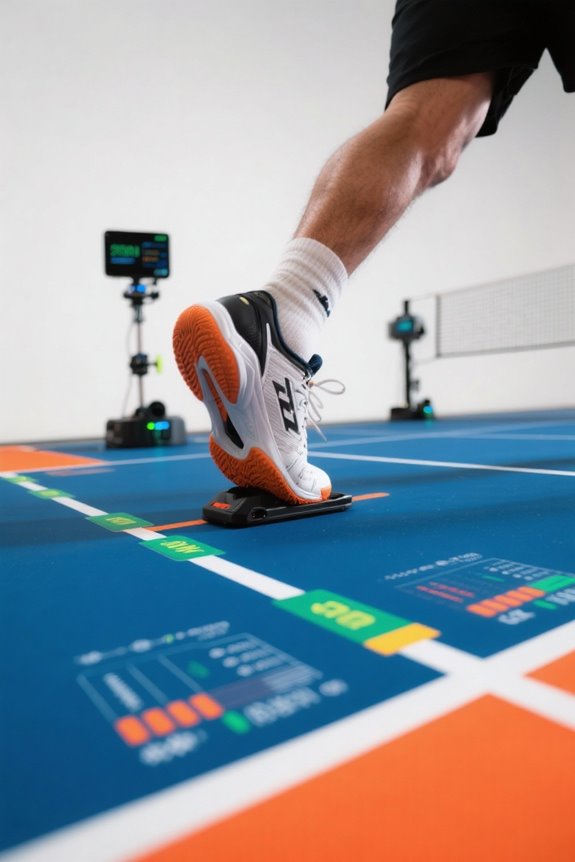
Footwork greatly influences various performance metrics in pickleball, highlighting the importance of precise movements on the court. Effective footwork enhances court coverage, allowing players to reach more shots while maintaining balance. Footwork analysis shows that superior movements correlate with higher shot accuracy and reduced unforced errors. When players exhibit agile footwork during rallies, their endurance improves, ensuring they maintain performance longer. The relationship between footwork quality and serve efficiency is significant; precise movements lead to better toss placement and greater power. Just as tennis players must select the appropriate equipment for different court surfaces, pickleball athletes benefit from understanding how court surface types affect their footwork patterns and movement strategies. Ultimately, mastering footwork patterns is essential for performance improvement. By focusing on detailed movements and analyzing court coverage, players can enhance their overall game and achieve notable performance metrics.
Recommended Products

The glow perpetuates in the Nike Air Force 1 '07, the B-Ball OG that gives a new twist to what you know best: durable stitched overlays, clean finishes and the perfect amount of flash to make you shine
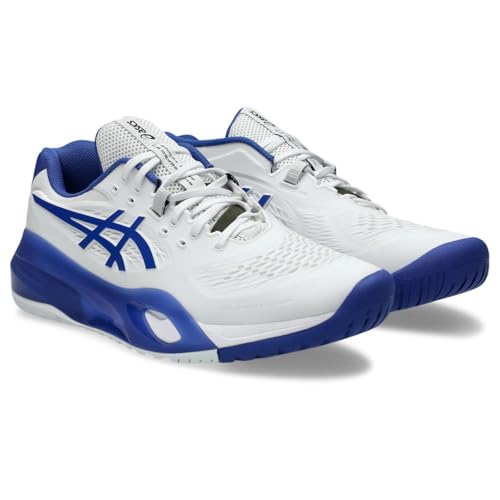
Optimises lateral movements and allows easy return to the starting position.

FLYTEFOAM technology: Provides lightweight cushioning and impact absorption
Frequently Asked Questions
How Can I Improve My Footwork Speed in Pickleball?
Like a dancer gliding effortlessly across the stage, one can improve footwork speed in pickleball through agility drills and precise footwork techniques, enhancing responsiveness and court coverage while ensuring efficient movement under pressure.
What Shoes Are Best for Pickleball Footwork?
The best shoes for pickleball footwork incorporate advanced pickleball shoe technology, emphasizing lateral stability and grip. They also consider court surface impact, ensuring players minimize slips and enhance performance on various playing surfaces.
Are There Specific Warm-Up Exercises for Footwork?
Dynamic stretching exercises and agility drills are essential for warm-ups. They fire up muscle coordination and enhance flexibility, ensuring athletes are primed for action, ready to release lightning-fast footwork on the court.
How Does Footwork Influence Shot Strategy?
Footwork considerably influences shot strategy by enhancing shot placement and improving court awareness. Efficient movement allows players to cover angles, adjust positioning rapidly, and strategically respond to opponents, maximizing the effectiveness of each shot during gameplay.
Can Footwork Techniques Reduce Injury Risk?
Footwork techniques subtly guide players towards safeguarding their bodies, promoting injury prevention through ideal foot alignment. This careful choreography reduces stress on vulnerable joints, enhancing both performance and longevity on the court while minimizing the risk of mishaps.