As an Amazon Associate, we earn from qualifying purchases. Some links on this site are affiliate links at no extra cost to you. Our recommendations are based on thorough research and editorial judgment.


How to Hit an Effective Tennis Slice

Master the tennis slice with proper technique and form. This essential shot requires a continental grip, high-to-low swing path, and an open racket face at contact. Position yourself sideways to the net, prepare early with a shoulder turn, and brush down the back of the ball to create backspin. The slice stays low, making returns difficult for opponents. Perfect for defensive situations, approach shots, or varying pace during rallies. Practice consistent contact point and smooth follow-through for maximum control and effectiveness on court.
# How to Hit an Effective Tennis Slice
To hit an effective tennis slice, use a continental grip for control. Maintain a high-to-low swing path with a slightly open racket face at contact. Keep your racket head above the grip, ensuring your wrist is stable. Position your body sideways and transfer weight to your front foot at impact. Early preparation is key, as is a balanced stance for recovery. Mastering these techniques helps disrupt your opponent’s rhythm and elevate your gameplay. More insights await you as you explore further.
Key Takeaways
- Use a continental grip for maximum stability and control over your slice shots.
- Maintain an “L shape” arm position with the racket head above grip level for better accuracy and spin.
- Employ a high-to-low swing path with a slightly open racket face at contact to generate effective underspin.
- Prepare early by reaching the ‘power position’ with a bent elbow, ensuring the racket head is at shoulder height.
- Adopt a sideways stance and engage core muscles while transferring weight to your front foot during contact for improved balance.
Grip and Racket Position for Slice
Achieving an effective tennis slice begins with the right grip and racket position. The continental grip serves as the primary slice grip, ensuring stability and control throughout the shot. This grip naturally angles the racket downward, creating the essential slice effect. For players facing wide balls, the eastern backhand grip offers a viable alternative, allowing for better racket angle and responsiveness. Maintain the racket head above grip level while forming an “L shape” with your arm; this position enhances leverage and control. A stable wrist is vital, as it prevents unwanted floating slices. When adjusting your stance, remember that a balanced grip paired with the correct racket angle maximizes your slice effectiveness. Your preparation will greatly influence your overall shot execution. Just as the right grip enhances your slice technique, selecting strings with textured designs can help maximize spin potential once you’ve mastered the fundamentals.
Recommended Products

TOP-PERFORMANCE RACQUET GRIP TAPE: GAMMA Supreme Overgrip will help you rule the court; These soft grip-tape wraps are made to be long-lasting and feature absorbent material combined with extreme durability to keep up with your game.

INLCUDED: Inlcuded in your purchase is 1, 2, 3, 4, 5, or 6 packages of Yonex Super Grap 30-Wrap Overgrip Reel in your choice of color.

Used by many pros on tour
Swing Path and Stroke Mechanics
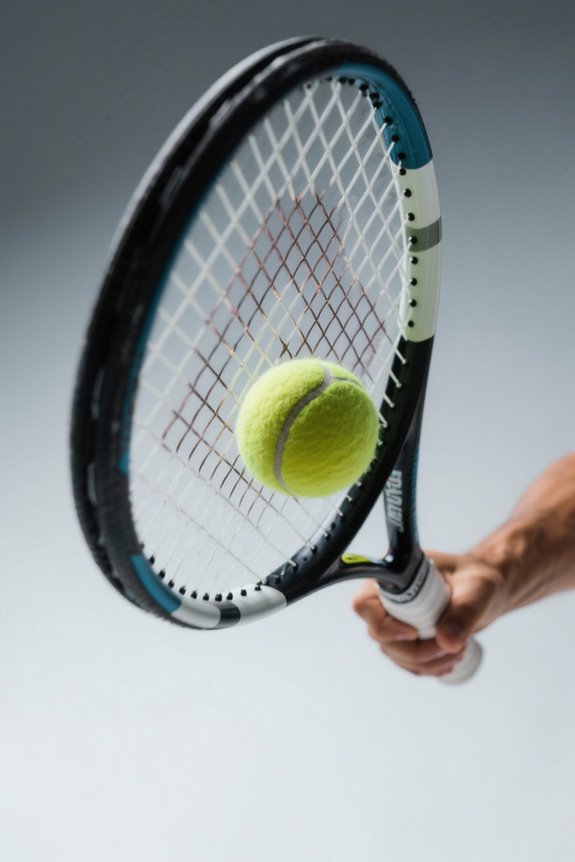
When executing a tennis slice, understanding the swing path and stroke mechanics is essential. A high-to-low or high-to-medium swing plane is vital for effective spin generation. The swing should move across the body, finishing on the opposite side of your hitting arm. Keep the racket face slightly open during contact to bite the ball and create underspin. Avoid a flat swing, as it diminishes spin and causes the slice to float. Maintaining a firm wrist enhances stroke consistency, ensuring you create a stable “L shape” at contact. Additionally, a steady head position helps in accurately striking the ball. Following these mechanics will help achieve a consistent, penetrating slice that stays low and skids effectively on the court. To further enhance your stroke power and shoulder strength for slicing, incorporating resistance bands into your training routine can target the essential muscles used in this technique.
Preparation and Timing
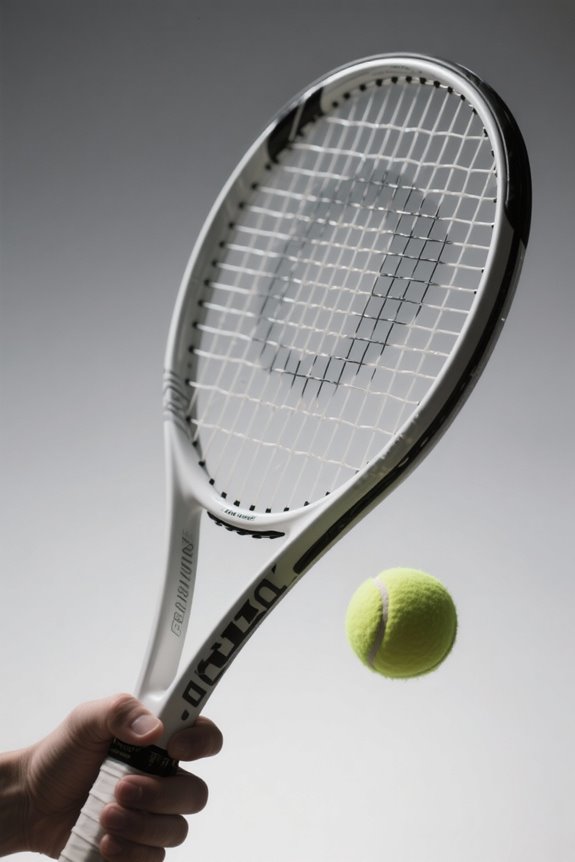
Proper preparation and timing are essential for executing a successful tennis slice. Early preparation is vital; players should change to the continental grip while taking back the racket. This allows for a smoother swing path. The racket must reach the ‘power position’—with the racket head above the shoulder and elbow bent at about 90 degrees—as the ball approaches. Observing the timing dynamics is imperative; players should initiate the forward swing just before contacting the ball. This helps create the correct angle and spin. Keeping the non-hitting hand on the throat of the racket during preparation enhances balance. The right footwear with proper traction and grip is essential for maintaining stability during quick direction changes required for slice preparation. Ultimately, mastering these elements can greatly improve slice effectiveness, positioning players for better control and shot outcome.
Recommended Products

Wilson Pro Staff 97UL V14 Performance Tennis Racket - Grip Size 1 - 4 1/8", Strung with Sensation 16 Natural at Mid Range Tension

Wilson Ultra Power 103 Adult Recreational Tennis Racket - Grip Size - 4 3/8"

PREMIUM GRAPHITE PRE-STRUNG TENNIS RACKET: Pre-strung tennis racket with modern beam design to maximize power and maneuverability for intermediate players
Stance and Footwork
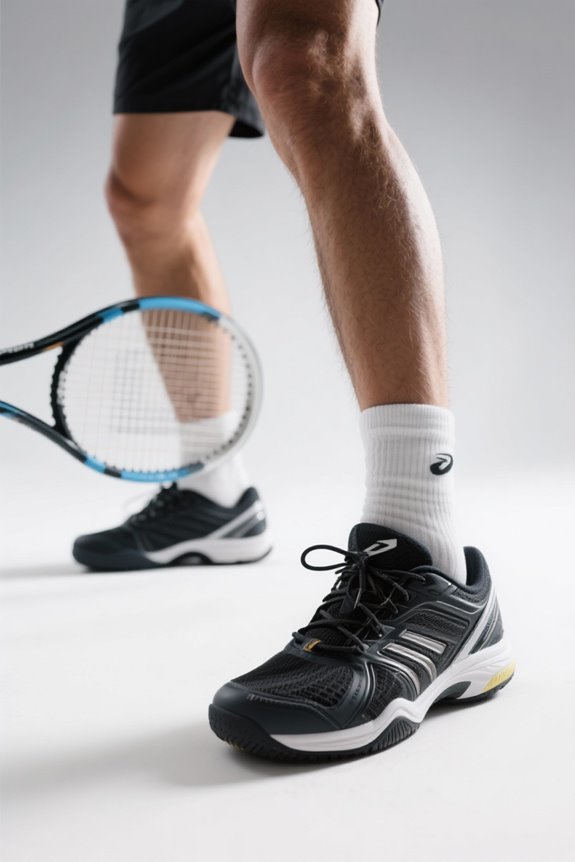
A stable stance is indispensable for executing a successful tennis slice. Players should adopt a sideways stance, with their shoulders turned and hips aligned with the net. This position allows for better weight transfer onto the front foot at the moment of contact. Movement is fundamental; the left foot, for right-handers, must adjust to guarantee balanced recovery after the shot. Engaging core muscles helps stabilize the upper body, preventing collapse. Proper spacing is essential; stepping into the ball effectively creates room for the racket to extend through contact. Additionally, maintaining momentum through the shot is indispensable, as it enhances both stability and rhythm, promoting a more consistent slice that can captivate the competition. Having the right equipment, such as a tennis bag with organized compartments, ensures you can easily access your gear and maintain focus on your footwork and technique during practice sessions.
Recommended Products

Wilson complete set of 9 golf clubs for women (left hand) with cart bag, ideal for beginners and casual players with a height of 161-180 cm, wood is titanium/steel, irons are 17-4 stainless steel

Separate padded compartment accommodating two (2) tennis racquets or three (3) pickleball paddles. Complementary wristlet for a seamless ensemble. Crafted from durable Saffiano cross-grain faux leather.

Court Couture signatured Monogram material with vintage racket print.
Effects and Uses of Slice
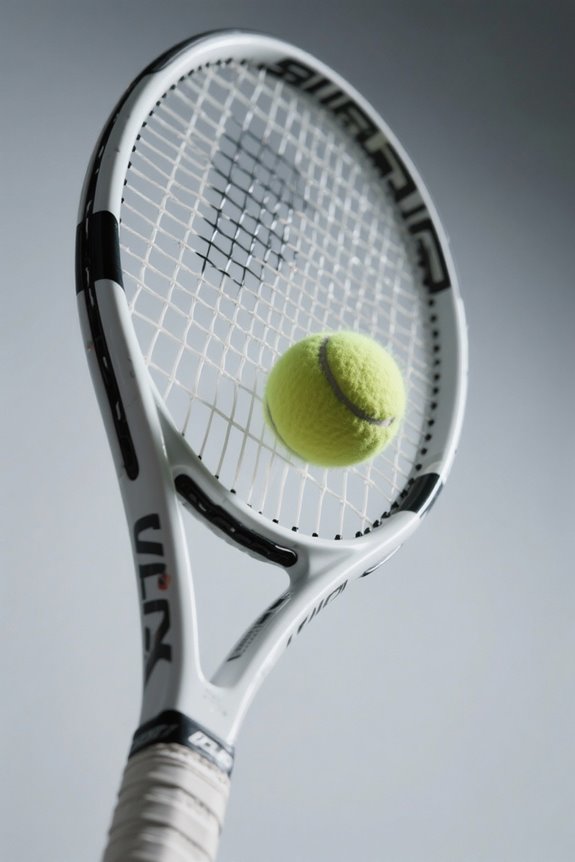
Slice shots serve as versatile tools in a tennis player’s arsenal, capable of altering the dynamics of a match. They provide distinct slice shot advantages, including generating backspin that keeps the ball low after bouncing. This effect disrupts opponents’ timing and rhythm, particularly those accustomed to flatter shots. Slice shot variations can change the pace of rallies, forcing competitors to respond awkwardly. When used defensively, slices extend rallies and regain court position. Offensively, they set up easy volleys by forcing opponents to hit upward. Additionally, on faster surfaces, the ball skids lower, enhancing slice effectiveness. Utilizing slices strategically can destabilize basedline players, making them reconsider their positioning and shot selection throughout the match. To maximize control when executing slice shots, many advanced players opt for polyester tennis strings that provide enhanced spin potential and precision.
Recommended Products

Luxilon ALU Power 125 Tennis String - 200m Reel, Lime Green

ALU Power - The original Big Banger. Available in Silver - 1.15mm, 1.20mm, 1.25mm, 1.30mm. Available in Black, Lime Green, Ocean Blue, and Ice Blue - 1.25mm.

ULTIMATE SPIN: The Yonex PolyTour Rev 120 Tennis String is for baseliners with medium-to-fast swing speeds looking for a shaped string (8-sided) that grabs onto the ball for the ultimate spin experience.
Frequently Asked Questions
What Are Common Drills to Practice Slicing Techniques?
Common drills to practice slicing techniques include wall practice, shadow swings, and simulated match scenarios. These drill variations enhance slice accuracy and develop muscle memory, helping players effectively control their slice during competitive play.
How Can I Incorporate Slices Into My Match Strategy?
Incorporating slices into match tactics involves utilizing slice variations to disrupt opponents’ rhythm, targeting their weaker sides, and creating space by mixing slice shots with aggressive plays, thereby enhancing overall strategic effectiveness during rallies.
What Are the Benefits of a Slice Over a Topspin Shot?
Slice advantages include producing low bounces, disrupting opponent rhythm, and offering varied trajectory compared to topspin shots. This strategic approach provides defensive benefits while enabling opportunities for offensive plays during competitive matches.
How Does Weather Affect the Effectiveness of Slice Shots?
Weather acts like a fickle guardian, influencing slice shots’ effectiveness markedly. Temperature effects enhance or diminish bounce, while wind conditions play tricks on trajectory, making precision essential for successful execution amid nature’s unpredictable whims.
Can Slice Shots Help With Injury Recovery in Tennis?
Slice shots can greatly aid injury recovery in tennis by serving as effective rehabilitation techniques. They promote injury prevention through reduced joint stress, improved muscle balance, and enhanced movement efficiency while allowing players to gradually reintegrate into competitive play.