As an Amazon Associate, we earn from qualifying purchases. Some links on this site are affiliate links at no extra cost to you. Our recommendations are based on thorough research and editorial judgment.

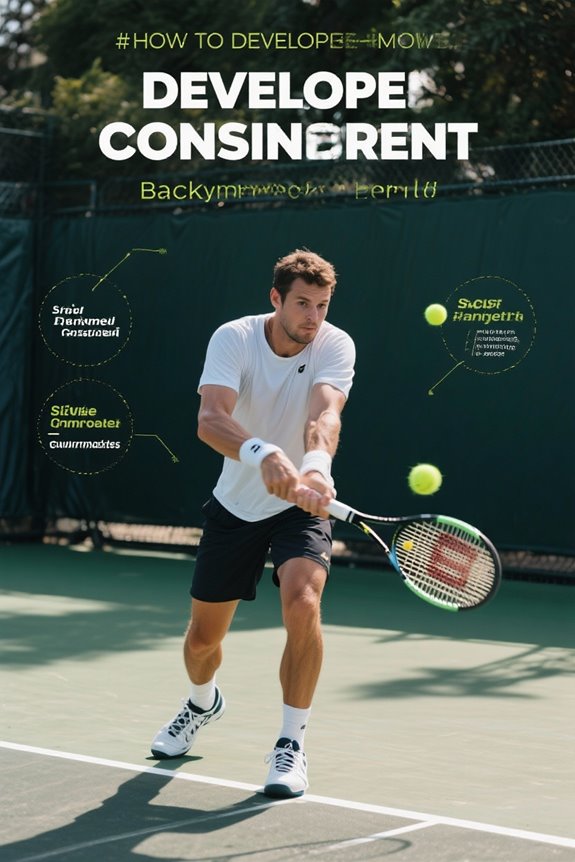
How to Develop a Consistent Tennis Backhand

Master your tennis backhand with precision and power. This comprehensive guide covers proper grip techniques, footwork fundamentals, and swing mechanics essential for consistency. Learn optimal body positioning, weight transfer, and follow-through methods used by professionals. Features detailed analysis of both one-handed and two-handed backhand variations, common mistakes to avoid, and progressive drills for skill development. Perfect for players seeking to eliminate errors and build reliable shot execution. Includes expert tips on slice backhands, topspin generation, and match-play strategies for competitive advantage.
# How to Develop a Consistent Tennis Backhand
To develop a consistent tennis backhand, focus on key elements like grip, stance, and swing mechanics. Choose from grips like Eastern or Semi-Western for topspin. Maintain a neutral stance for balance while executing your shots. Confirm your racket face is aligned and contact is made in front of your body for control. Regular practice with structured drills can enhance your skills. A disciplined approach will yield results, and more detailed strategies await your exploration.
Key Takeaways
- Experiment with different grips like Eastern or Semi-Western to find what suits your style and playing surface best.
- Maintain a correct stance and proper footwork to enhance balance and reach during backhand shots.
- Focus on swing mechanics, ensuring a locked wrist during the backswing for increased control and speed.
- Make contact with the ball in front of your body, ideally between waist and shoulder height, for optimal power and spin.
- Use structured training methods, such as shadow swings and directional drills, to progressively build consistency in your backhand.
Grip Selection and Hand Positioning
When selecting the right grip for a tennis backhand, players must consider their personal style and the demands of the playing surface. Grip variations include the Eastern, Semi-Western, and Continental grips, each suited for different conditions and player preferences. For instance, the Eastern Grip is effective for generating topspin, while the Semi-Western excels on high-bouncing courts. Finger placement is critical; the index finger’s position directly influences shot control. A stable two-handed grip combines a Continental grip with a Semi-Western in the non-dominant hand. Correct grip pressure and alignment guarantee that power and control are maintained. Just as grip size is essential for control and comfort in racquet selection, ensuring your grip fits snugly in your hand will enhance your ability to execute consistent backhands. Ultimately, experimenting with these grips during practice will lead to greater consistency and a stronger backhand on the court.
Recommended Products

Wilson Endure Pro V1 Padel Racket - Size 2 - 4 1/4"

Wilson Clash 100L V3 Strung Adult Performance Tennis Racket - Grip Size 2 - 4 1/4", Strung with Sensation 16 Natural at Mid Range Tension

Butterfly ZLC outer ply orientation for more speed and a crisp feel
Stance and Footwork
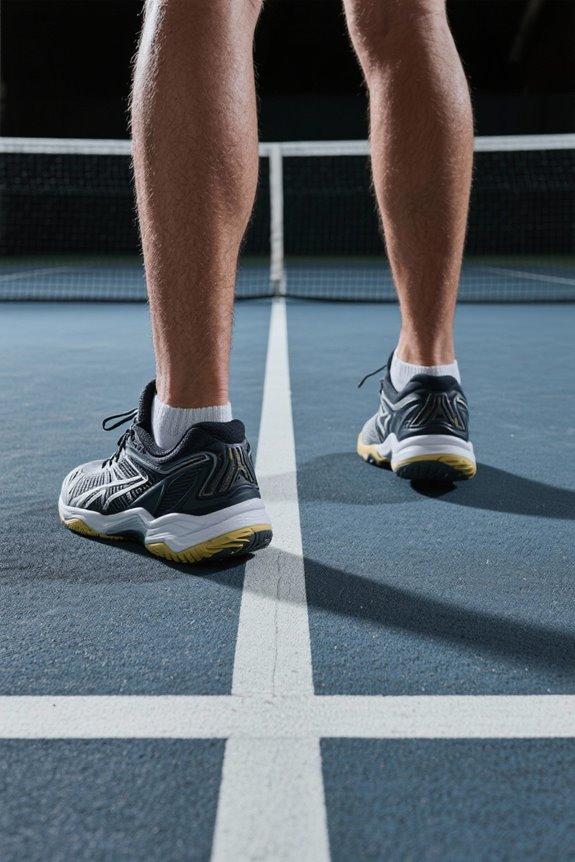
A solid grip enables players to focus on the next important aspects of their backhand: stance and footwork. Selecting the correct stance is key for effective shots. Players commonly use the neutral stance for easy balls; feet facing sideways optimizes balance. For wider shots, the closed stance allows full hip rotation. Open stances are generally avoided for one-handed backhands due to instability. Footwork patterns also play an essential role. Quick, small adjustments help set up before a stroke, while a large crossover step is important for covering wide balls. Adaptive stances, like sidesteps for low or fast balls, enhance reach. Practicing these stance types and footwork patterns can greatly improve backhand consistency and performance. Just as choosing the right string gauge impacts your racket’s performance, selecting the appropriate stance for each shot situation maximizes your backhand effectiveness.
Swing Mechanics and Preparation
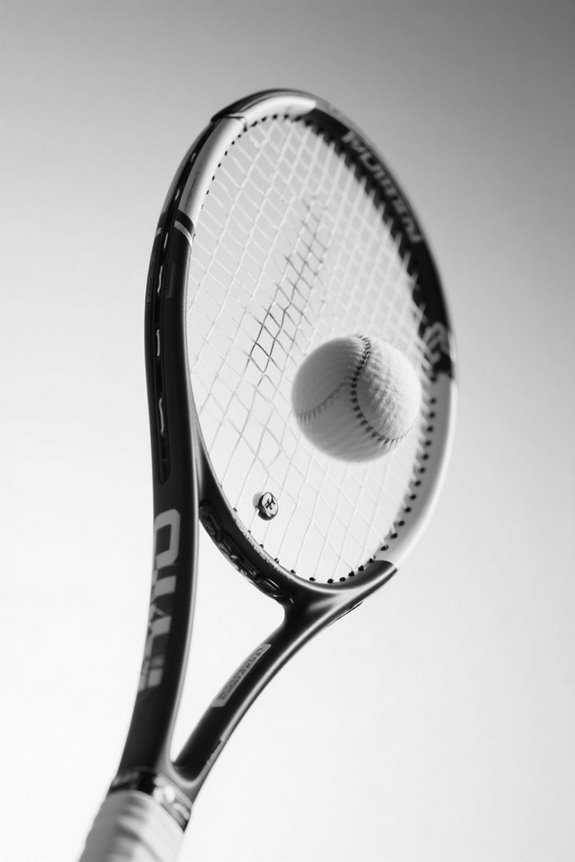
Mastering the swing mechanics and preparation for a tennis backhand is essential for consistent performance on the court. Effective grip and hand positioning considerably influence swing dynamics, enabling better control and power. For two-handed backhands, utilizing a semi-western grip on the dominant hand provides stability while generating topspin. Energy storage occurs during the backswing when players lock the wrist, creating a lag for increased racket speed on the forward swing. Proper backswing techniques involve shoulder rotation and maintaining space between arms and body, ensuring a fluid motion. As players coil their hips and shoulders away from the target, they harness considerable energy. This preparation sets the stage for a powerful and effective backhand stroke. Selecting the right equipment, such as multifilament strings that provide added power and comfort, can complement your technique and reduce arm strain during extended practice sessions.
Recommended Products

Wilson NXT 16 Tennis String - 200m Reel, White

Gauge: 16 / 1.30mm

HEAD PERFORMANCE: Born out of revolutionizing how we ski and play tennis, HEAD has constantly pushed athletic equipment into the modern era. With decades of experience in all racquet sports; HEAD offers nothing but top tier tennis equipment.
Contact and Control
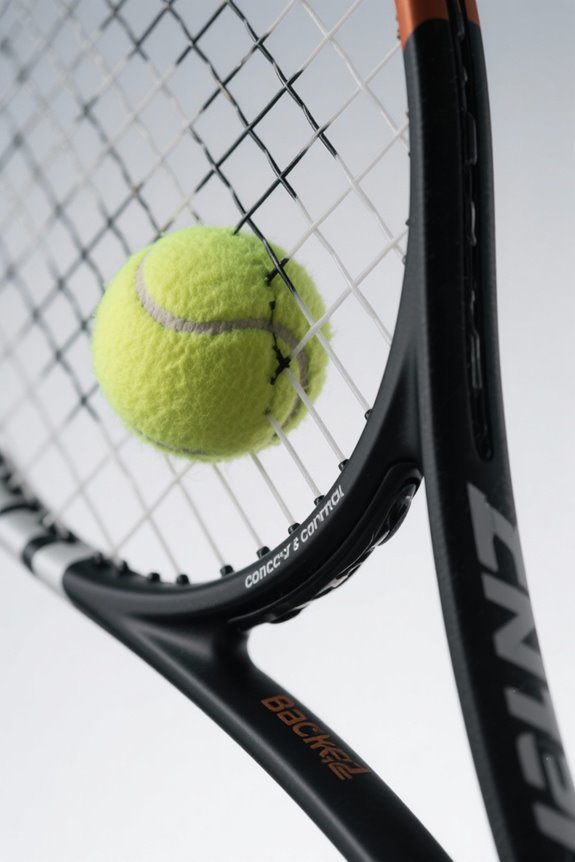
Achieving reliable control over a tennis backhand begins with understanding the critical aspects of contact. The ideal contact point occurs slightly in front of your body, typically between waist and shoulder height. This positioning maximizes leverage and control. When you align your racket face properly—using an open face for slices or a neutral face for topspin—you enhance your ability to manage ball trajectory. Striking the ball in the center of the string bed is paramount, as it aids in producing spin and power. To capitalize on these factors, visualize the contact point before every shot. Adjust your stance for low balls by bending your knees, ensuring stable posture through the shot to improve consistency and minimize errors. Maintaining proper string tension in your racket is equally important, as it directly affects the feel and control you experience during contact, with most players benefiting from a tension range between 22-26 kg.
Recommended Products

True Constant Pull Tensioning with extremely sensitive electronic tensioner with advanced microprocessor technology

Professional-Grade Electronic Tensioning: High-precision rotational tensioner delivers fast, consistent pulls for tour-level accuracy and repeatable string jobs

Racquet Stringing Machine - with 6-point frame shooting system and K-shaped racket grippers, designed to minimize stress and protect racket when stringing.
Consistency and Mental Approach
Consistency in tennis relies heavily on the player’s mental approach, which dictates performance during matches. Developing mental resilience is essential. A strong pre-shot routine can keep focus sharp, especially during high-pressure points. For example, training under stress, such as simulating a vital game score, enhances performance when it matters most. Visualization techniques also play a pivotal role; picturing the ideal shot trajectory can lead to more effective swings. By simplifying decision-making—aiming for clear, straightforward targets—players can enhance baseline consistency. Players should avoid passive swings, maintaining active mental engagement at all times. Additionally, maintaining a secure and comfortable hold on your racquet through proper moisture-absorbing grips helps prevent slippage during intense rallies, allowing you to stay mentally focused on shot execution. These strategies help build confidence and reliability in shot-making, ultimately creating a more consistent backhand during match play.
Progressions and Advanced Refinements
Developing a dependable backhand requires a structured approach to training that gradually builds skills through progressions and advanced refinements. Start with shadow swings to focus on form without the distraction of ball contact. Next, engage in mini tennis rallies to enhance basic mechanics while maintaining consistent timing. As confidence grows, move on to using a ball machine for specific drills that hone in on grip changes and backswing control. Incorporate directional control drills to practice hitting cross-court and down the line, reinforcing targeting skills. Each session should center on a single technical element to guarantee mastery. To maintain optimal training quality, regularly replace worn balls as performance diminishes with age and wear, ensuring consistent bounce and response during backhand practice drills. These progressions will solidify the foundation needed for a powerful, consistent backhand as players advance to full-court play.
Recommended Products

ADJUSTABLE BALL SPEED & SPIN CONTROL: Fine-tune your practice sessions with adjustable ball speeds ranging from 35 to 80 MPH. Simulate gentle volleys to high-speed ground strokes while adding heavy topspin or backspin for competitive game situations.

SIX PRE-LOADED DRILLS: The elite grand four includes 6 pre-loaded drills that simulate the main styles of tennis played in the modern era. This digital, robot-like tennis ball machine makes you feel like you are playing against a pro.
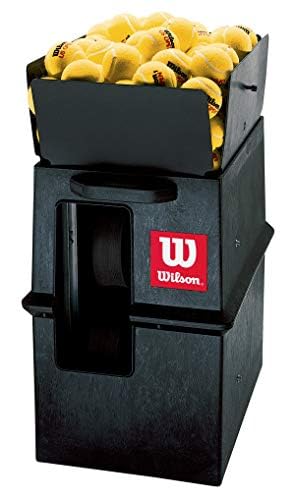
WILSON SPORTS, the #1 name in tennis, in partnership with Sports Tutor, the #1 tennis machine manufacturer in the U.S. and Worldwide, bring you the quality and performance you expect from Wilson.
Incorporate Match Play for Real-World Application
Incorporating match play into training routines is essential for shifting skills learned in practice to real-world situations. By engaging in competitive matches, players enhance their match awareness, developing the ability to recognize when to employ their backhand strategically. Practicing backhands in response to diverse shots (like topspin or slice) helps with tactical adaptability against various opponents. Simulated match scenarios can build muscle memory while maintaining focus under pressure. Players should analyze their performance, identifying opportunities to exploit opponents’ weaknesses with well-executed backhand shots. Regular participation in matches allows for the application of learned techniques, adapting strategies as needed to improve overall performance and emphasize the importance of consistency across different playing conditions. Using pressureless tennis balls during practice sessions ensures consistent bounce and performance over time, allowing players to develop reliable muscle memory that translates effectively to match situations.
Frequently Asked Questions
How Can I Determine My Ideal Grip Size for a Backhand?
To determine ideal grip size for a backhand, one should assess grip pressure and preferred grip style, measuring hand length, testing various sizes, and ensuring a snug fit that promotes control and comfort during play.
What Specific Drills Enhance Backhand Reaction Time?
What if quick, precise movements could define a match? Reaction drills like lateral court agility and box agility exercises enhance backhand skills, sharpening footwork and decision-making for players aiming to improve their performance under pressure.
Should I Favor Topspin or Slice for My Backhand?
When deciding between topspin advantages and slice techniques for a backhand, one should consider playing style. Topspin provides offensive power, while slice offers control and defensive flexibility, making a balanced approach beneficial for varied match situations.
How to Prevent Injuries While Practicing Backhands?
To prevent injuries while practicing backhands, implementing effective stretching techniques enhances flexibility, while adopting recovery strategies guarantees adequate muscle repair. Both practices minimize strain and promote longevity in sport, fostering a healthier approach to training.
How Often Should I Practice My Backhand for Improvement?
To cultivate mastery, a player should embrace a backhand frequency of 2-3 practice sessions weekly, focusing on consistency strategies. This approach nurtures gradual enhancement, emphasizing technique and quality over excessive repetition to reveal true potential.