As an Amazon Associate, we earn from qualifying purchases. Some links on this site are affiliate links at no extra cost to you. Our recommendations are based on thorough research and editorial judgment.

How Pickleball Got Its Name and Origin Story

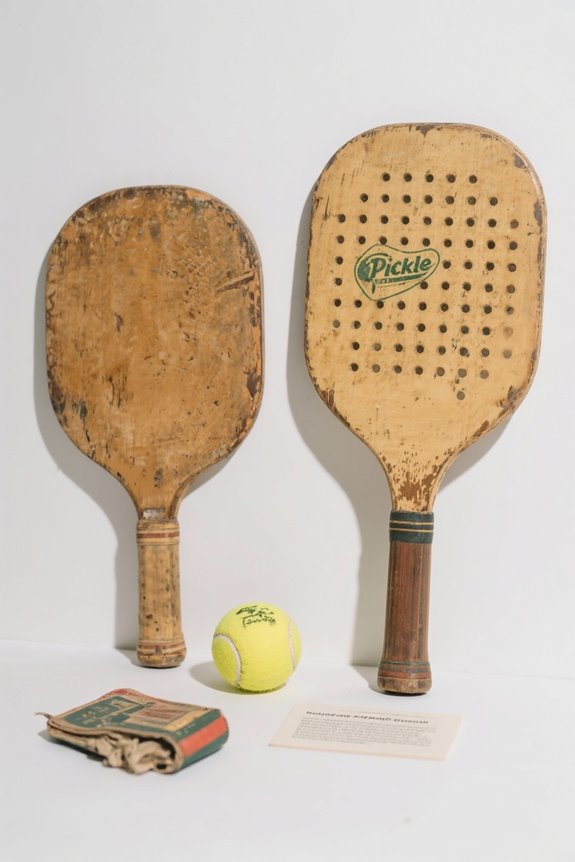
Premium studio photograph showcasing vintage pickleball equipment against pristine white backdrop. Featured are weathered wooden paddles, original yellow perforated ball, and nostalgic 1960s-era gear representing the sport’s humble beginnings. Professional lighting creates soft shadows beneath carefully arranged items, highlighting textured paddle surfaces and authentic period details. Commercial-grade composition captures the essence of pickleball’s rich heritage through museum-quality presentation. Crystal-clear 8K resolution emphasizes every detail of these iconic sporting artifacts, perfect for high-end catalog or educational display purposes celebrating this beloved American pastime’s origins.
# How Pickleball Got Its Name and Origin Story
Pickleball began in the summer of 1965 on Bainbridge Island, Washington, created by Joel Pritchard, Bill Bell, and Barney McCallum. They aimed to develop a family-friendly sport using modified tennis rules, with a lowered net and paddles. The name “pickleball” is commonly believed to stem from a family dog named Pickles, though some argue it relates to the term “pickle boat,” representing a mix of abilities. Discover more about the game’s evolution and its cultural impact.
Key Takeaways
- Pickleball originated in the summer of 1965 on Bainbridge Island, Washington, created by Joel Pritchard, Bill Bell, and Barney McCallum.
- The name “pickleball” is popularly linked to a family dog named Pickles, though the truth is disputed; Pickles was named after the game.
- An alternative explanation suggests “pickleball” derives from “pickle boat,” reflecting the game’s eclectic and inclusive nature.
- Gameplay evolved from informal backyard matches to a competitive sport, with standardized rules formed by the USAPA in 1984.
- Today, pickleball is the fastest-growing sport globally, promoting community bonding and inclusivity across various age groups.
The Inception of Pickleball
In the summer of 1965, a distinctive game was born on Bainbridge Island, Washington. It began on an old badminton court, where Joel Pritchard, Bill Bell, and Barney McCallum collaborated to create a fun, family-friendly game. They made various game modifications, such as lowering the net height to 36 inches for better accessibility. Using ping-pong paddles and a perforated plastic ball, they designed Pickleball to guarantee families could enjoy it together. From the onset, family involvement was essential, as the founders included their loved ones in the development process. Through improvisation and trial, the game evolved, establishing its rules and creating a uniquely engaging experience that appealed to players of all ages. Today’s players benefit from advanced equipment like carbon fiber paddles that offer superior spin and control compared to those original ping-pong paddles.
The Dog Theory Behind the Name
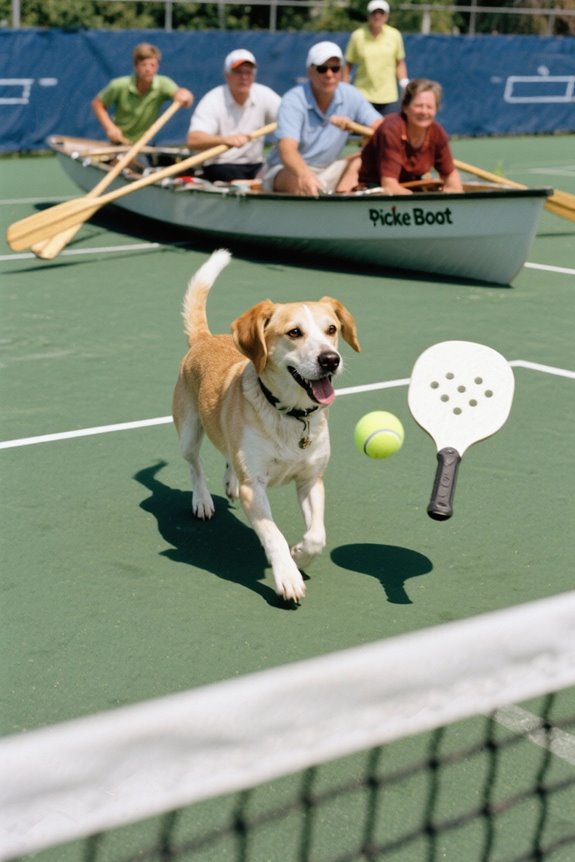
A widely circulated tale suggests that the name “pickleball” originated from a family dog named Pickles, who would chase stray balls during games. This dog legend remains popular among enthusiasts, adding a touch of charm and community engagement to the sport. However, the accuracy of this story is disputed. Historical accounts indicate that Pickles was actually named after the game, existing years after pickleball was established in 1965. Joel Pritchard initially shared this tale as a joke, which later morphed into a widely accepted narrative. While the dog did enhance gameplay by fetching stray balls, the timing of Pickles’ introduction reveals a different origin for the sport’s name. Therefore, the story, though charming, is not entirely authentic. Today, players can enjoy the sport in specialized breathable pickleball shoes designed with mesh uppers and moisture-wicking properties to keep feet cool and comfortable during dynamic court movements.
The Boat Theory Explained
While exploring the origins of the name “pickleball,” one encounters the compelling “Boat Theory.” This theory posits that the term derives from the concept of a “pickle boat,” a type of rowing crew comprised of leftover athletes, which resonates with the eclectic nature of pickleball‘s creation. Joan Pritchard, wife of co-inventor Joel Pritchard, used this boat metaphor to describe how the sport emerged from a mix of equipment and ideas. Just as pickle boats consist of diverse rowers, pickleball combines elements from badminton, ping-pong, and tennis. This highlights the competitive spirit inherent in the sport, emphasizing that everyone can participate regardless of their background, not just the elite. Much like how players today customize their equipment with options for grip thickness and material to suit their individual playing styles, the sport’s founders adapted various elements to create something uniquely accessible. Ultimately, the Boat Theory captures the inclusive essence of pickleball’s origins.
Evolution of Rules and Gameplay
Pickleball has evolved from an informal backyard pastime into a structured, competitive sport with distinct rules and gameplay. Initially, players enjoyed flexible, DIY rules, mirroring badminton and adapting them for fun. As the sport’s popularity soared, regional rule adaptations led to discrepancies that necessitated the formation of the United States Amateur Pickleball Association (USAPA) in 1984. This organization standardized court dimensions and equipment, producing the Official Pickleball Rulebook. Significant innovations, such as the non-volley zone and double-bounce rule, enhanced gameplay strategies, promoting longer rallies. These advancements, paired with scoring shifts and equipment regulations, galvanized both recreational and competitive play. The USAPA also established rigorous standards for pickleball balls, including specific requirements for size, weight, and the 40 precision-drilled holes that affect flight stability and bounce consistency. Today, annual updates reflect ongoing trends, ensuring pickleball remains engaging and accessible for all players aiming to improve their skills.
Pickleball’s Cultural Impact and Legacy
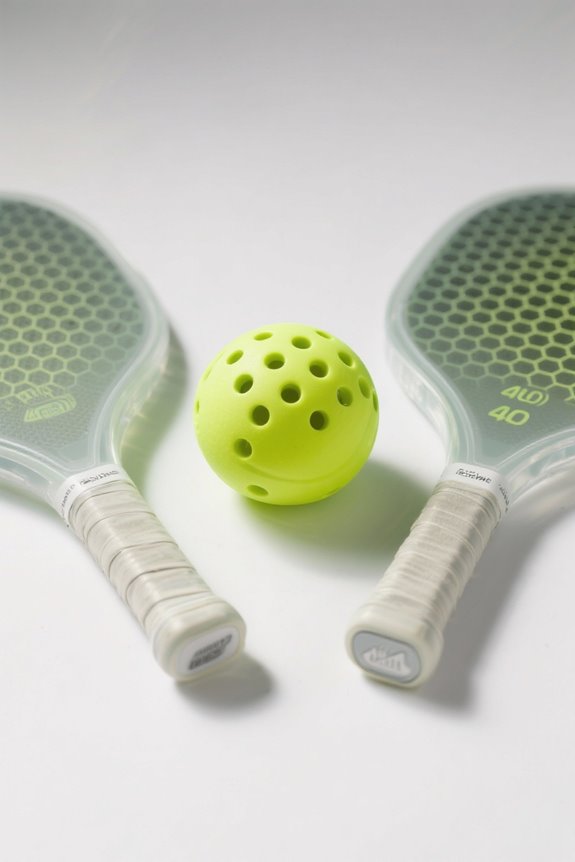
As pickleball’s structured gameplay has gained popularity, its cultural impact has become increasingly evident. Recognized as the fastest-growing sport in the world, it boasts millions of players spanning diverse age groups, fostering community bonding. The sport’s accessible nature encourages participation across various skill levels, promoting inclusivity and cultural acceptance. Social interactions thrive on the courts, creating friendships among players from different backgrounds. As facilities expand globally, pickleball emerges not just as an activity but as a cultural phenomenon enhancing mental wellness and reducing loneliness. This communal aspect strengthens ties within neighborhoods, making it a crucial part of many communities. The growing demand for the sport has led to specialized equipment innovations, including performance pickleball shoes designed with enhanced traction and cushioning to support players during extended court sessions. Ultimately, pickleball is shaping an inclusive environment where participants experience both enjoyment and connection.
Frequently Asked Questions
What Are the Official Rules of Pickleball Today?
In the domain of competitive play, the official regulations of pickleball dictate court dimensions, serve techniques, and faults. Emphasizing a structured scoring system, participants navigate the court with precision and sportsmanship to claim victory.
How Is Pickleball Played Competitively?
Pickleball is played competitively with structured strategies emphasizing player positions and teamwork. Teams execute coordinated offensive and defensive maneuvers, leveraging court dimensions and rules to outscore opponents in matches designed for strategic depth and skillful execution.
What Are the Best Materials for Paddles?
In the domain of pickleball, paddle materials like graphite and carbon fiber emerge as preferred choices, providing unparalleled control and power. Meanwhile, diverse paddle shapes cater to varied player styles and preferences, enhancing the overall game experience.
Where Can I Find Local Pickleball Clubs?
Local pickleball clubs can be found by exploring community groups and local listings. Brooklyn, Queens, and Staten Island offer various venues, such as indoor courts and dedicated facilities, catering to players of all skill levels.
Are There Any Famous Pickleball Tournaments?
Numerous famous pickleball tournaments exist, showcasing top players and diverse tournament structures. Events like the Minto US Open and Margaritaville USA National Championships attract thousands, fueling the sport’s rapid rise to thrilling prominence and competitive excitement.