As an Amazon Associate, we earn from qualifying purchases. Some links on this site are affiliate links at no extra cost to you. Our recommendations are based on thorough research and editorial judgment.

Pickleball Stacking Strategy Explained

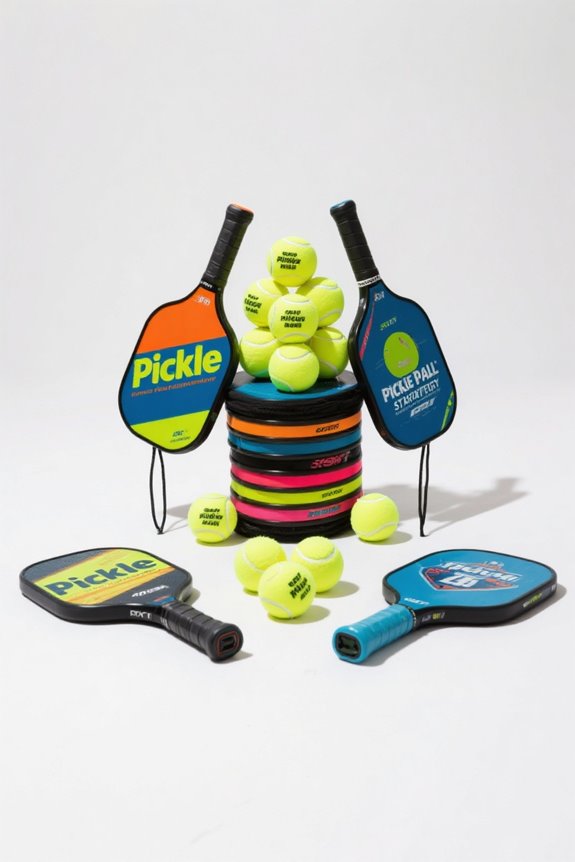
Premium pickleball equipment arranged in strategic formation on pristine white backdrop. Professional studio lighting illuminates vibrant paddles, high-quality balls, and court accessories positioned in stacking formation. Crystal-clear 8k imagery showcases the tactical arrangement used in doubles play, with equipment precisely centered and balanced. Soft shadows create depth while maintaining clean, minimalist aesthetic. Commercial-grade photography highlights vivid colors and sharp details of tournament-level gear. Perfect catalog presentation demonstrates the spatial relationship between players’ positions through equipment placement, embodying the competitive advantage of proper stacking technique in professional pickleball doubles strategy.
# Pickleball Stacking Strategy Explained
Stacking in pickleball is a tactical strategy for doubles teams that positions players on the same side for optimized performance. This technique leverages individual strengths, enhances shot accuracy, and improves court coverage. Effective communication is essential, as players must coordinate shifts and roles. Be aware of scoring situations, as they dictate your stacking approach. With practice, this strategy can create unpredictability against opponents, increasing point-winning chances. Discover more aspects of stacking to elevate your game further.
Key Takeaways
- Stacking positions players to maximize their strengths by keeping them on the same side during doubles play.
- Effective communication using hand signals is crucial for successful coordination and movement adjustments.
- The “3/4 stack” offers a balanced approach to serving and receiving to maintain competitive advantage.
- Practicing movement together enhances court coverage and ensures efficiency in position shifts during matches.
- Awareness of scoring situations helps adapt stacking strategies to maintain legality and create unpredictability for opponents.
Understanding Stacking in Pickleball
Stacking in pickleball represents a strategic innovation that enhances gameplay dynamics. The stacking basics involve players positioning themselves on the same side of the court during doubles play, rather than opposite sides. This approach allows each player to start on their preferred side, enhancing their strengths. Effective player coordination is essential, with partners using hand signals to indicate roles during serves and returns. For example, the server begins at their traditional position while the partner stays stacked, ready for swift movement. Stacking modifies typical rotation, enabling continuous advantageous positioning. This technique, adaptable for various skill levels, does not violate pickleball rules. Players can enjoy improved tactical advantages, facilitating more effective gameplay without disrupting the rhythm of serving and receiving. Pairing stacking strategies with high visibility balls helps players track the ball more effectively during complex positioning maneuvers and rapid exchanges at the net.
Recommended Products

THE STANDARD ON COURT: USAP approved, chosen as the official ball for both the US Open Pickleball Championships and USA Pickleball, and engineered for official size and weight, these pickleball balls deliver consistent performance for both pro and amateur players

Tour Performance: Achieve top-tier play with our pickle-ball balls, ensuring compliance with official size, weight, and performance standards for tournament and casual play. Dwell is the official ball of All Florida Pickleball.

Elite Indoor Consistency & True Flight Control - Mint Sport Cannonballz are engineered for precision-focused play on indoor courts. The 26-hole design promotes a stable flight path, consistent bounce, and reliable spin, allowing players to maintain control during fast rallies and soft net play. Ideal for competitive training, drills, and structured indoor pickleball matches where predictable performance matters.
Benefits of Utilizing Stacking
While many players may not initially consider stacking, its benefits can greatly enhance gameplay and overall performance. Stacking optimizes player dynamics by allowing individuals to leverage their strengths, ensuring they operate from preferred court positioning. This strategic alignment enhances shot accuracy and reduces unforced errors, as players remain in familiar zones. Furthermore, improved court coverage is achieved through synchronized movements, enabling teams to anticipate opponents’ attacks effectively. Stacking also supports clear roles, fostering coordination and communication, which are vital during fast exchanges. Defensively, it stabilizes formations while maximizing offensive opportunities. By creating optimized spatial arrangements, stacking not only increases point-winning chances but also establishes a competitive edge that can be decisive in tightly contested matches. Just as premium paddles with honeycomb cores enhance shock absorption and control, stacking creates a foundation that absorbs pressure and maintains team stability during critical points.
Recommended Products

CERTIFIED AUTHORITY FOR COMPETITIVE PLAY: Join the ranks of winners with a pickleball paddle that is USAP Pickleball PBCOR.43 Approved and UPA Pro Certified. This nox equipment serves as an experienced guide, ensuring you play with the same specifications as the pros. These pickle ball paddles eliminate the noise of subpar gear, offering a proven path to peak performance. Choose a pickleball racket that delivers unparalleled consistency and helps you reach your goals.

OFFICIAL PADDLE SPONSOR OF WORLD #1 PICKLEBALL PLAYER BEN JOHNS & THE PPA TOUR: An innovator & global leader in table tennis for 70+ years, JOOLA teams up with Ben Johns to create a new line of pickleball equipment that will forever change the game
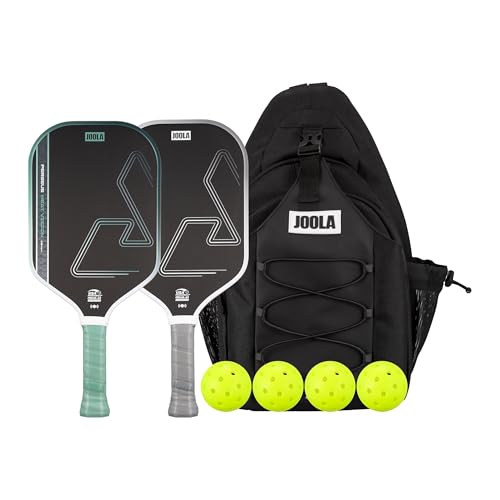
OFFICIAL PADDLE SPONSOR OF WORLD #1 PICKLEBALL PLAYER BEN JOHNS & THE PPA TOUR: An innovator & global leader in table tennis for 70+ years, JOOLA teams up with Ben Johns to create a new line of pickleball equipment that will forever change the game.
Implementing Stacking Strategies
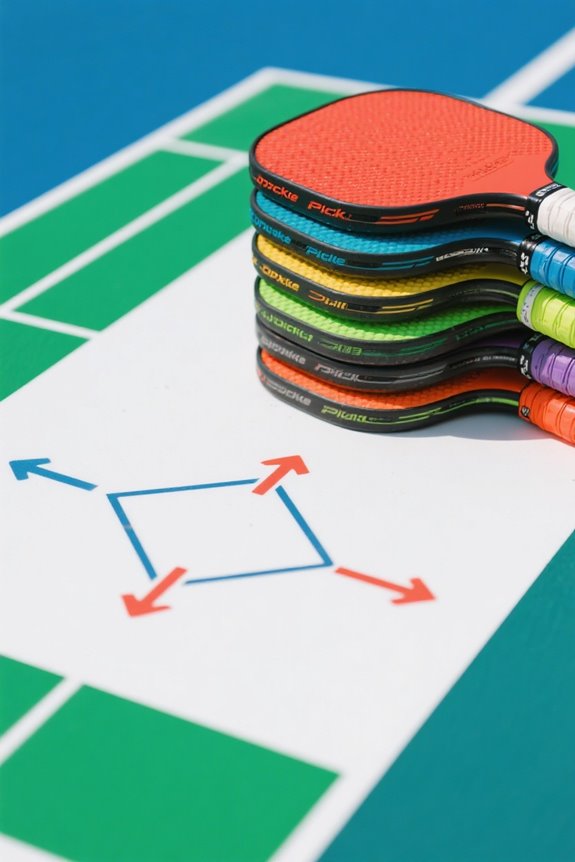
When considering effective gameplay strategies, implementing stacking can greatly improve your performance on the court. Position coordination is key, as partners should line up on one side to facilitate a swift shift into their preferred positions after the serve. This serves strategy empowers players to capitalize on their strengths while exploiting opponents’ weaknesses. Successful execution relies on communication; partners must understand their roles and adjustments. During play, players ideally move into advantageous positions to maximize court coverage, although this may expose areas if poorly timed. Practicing these movements together enhances overall effectiveness. By adapting stacking based on your opponents’ strengths, you guarantee your team remains flexible and ready, ultimately increasing your chances of success in vital game situations. Just as strategic positioning matters, wearing shoes with proper traction and stability helps prevent slips during quick lateral movements essential to stacking transitions.
Recommended Products

ADVANCED COMFORT TECHNOLOGY Hyper Burst Ice cushioning and carbon infused H plate provide exceptional stability and energy return for running shoes for men
Traditional Fit: Provides ultimate blend of support, stability, durability, and cushion with every step

FLYTEFOAM technology: A lightweight midsole foam that delivers a comfortable cushioning experience.
Adapting Stacking to Different Scoring Situations
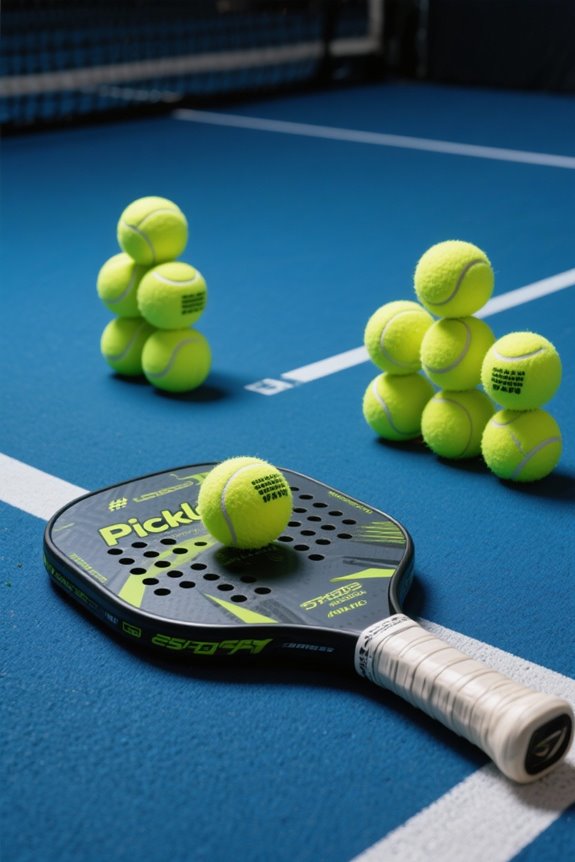
Effective gameplay hinges on adapting strategies to different scoring situations. Score awareness is essential; teams need to adjust their stacking approach based on whether the score is odd or even. When serving, players begin from specific sides to comply with stacking rules, remaining mindful of their positions. For instance, with even scores, servers start on the right to maintain the legal stacking structure. Additionally, engaging in a “3/4 stack” can balance between serving and receiving strategies, ensuring players capitalize on their strengths while managing court coverage. Teams may switch tactics dynamically throughout rallies, creating unpredictability. Such adjustments not only enhance performance but also compel opponents to continually reassess their strategies, which can lead to scoring advantages. Serious players often invest in professional pickleball bags with multiple compartments to keep their paddles and gear organized for quick access between matches.
Common Pitfalls in Stacking Execution
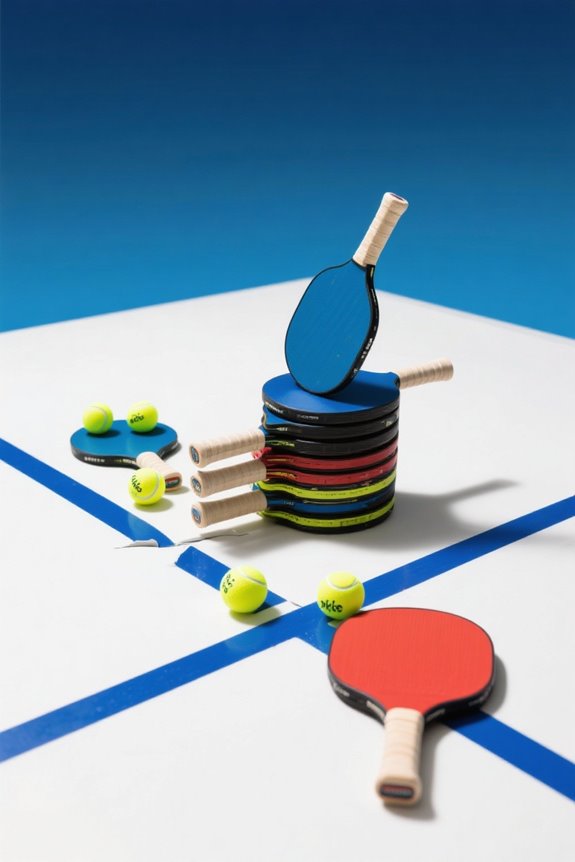
Commonly, players find themselves facing challenges in stacking execution that can derail well-laid plans. Stacking mistakes often arise from failures in positioning awareness, leading to incorrect serving or receiving placements. This misalignment can be essential during tournaments, causing lost points. Additionally, poor communication strategies between partners can create confusion about shifts, particularly during serve or return scenarios. Effective shift timing is important; hesitations can leave gaps for opponents to exploit. Moreover, over-reliance on stacking can reduce adaptability, making teams predictable. Technical errors, such as obstructing a server’s line of sight, exacerbate these issues. Just as tennis players benefit from equipment that enhances maneuverability and control, pickleball players must ensure their positioning doesn’t compromise their ability to react quickly to opponent shots. By focusing on these common pitfalls, players can refine their stacking approach and enhance overall game performance.
Frequently Asked Questions
How Does Stacking Affect Player Fatigue During a Match?
Like a well-tuned engine, stacking advantages enhance fatigue management by reducing unnecessary movement. This deliberate positioning allows players to conserve energy, maintain stamina, and minimize cardiovascular strain, ultimately improving performance throughout the course of a match.
Can Stacking Be Used in Singles Pickleball Games?
Stacking cannot be utilized in singles pickleball games due to its focus on player coordination and positioning. Instead, singles strategies emphasize individual skills and adapt to personal strengths rather than managing stacking challenges inherent in team play.
What Communication Methods Are Most Effective During Stacking?
Effective communication methods during stacking include hand signals for discreet coordination and minimizing verbal cues to avoid alerting opponents. Establishing clear signals guarantees cohesive teamwork and enhances adaptability to dynamic game situations.
How Does Stacking Impact Court Coverage and Positioning?
Research indicates that teams employing stacking improve court coverage by up to 30%. This innovative tactic alters court dynamics, enabling strategic formations that maximize player strengths and minimize defensive gaps, enhancing overall game performance.
Are There Specific Player Pairings That Benefit Most From Stacking?
Ideal pairings, such as left-handed with right-handed players and those of varying skill levels, considerably enhance stacking benefits. This strategy improves forehand control and team coordination, maximizing players’ strengths during gameplay for better overall performance.