As an Amazon Associate, we earn from qualifying purchases. Some links on this site are affiliate links at no extra cost to you. Our recommendations are based on thorough research and editorial judgment.


Tennis Bag Organization Tips

To effectively organize your tennis bag, start by selecting a size suitable for your needs—medium bags hold 3-6 racquets. Pack 2-4 racquets with varied string tensions and keep extra overgrips and hydration supplies handy. Use the main compartment wisely by layering clothes and utilizing waterproof pouches for damp items. Secure valuables in zip pockets and designate sections for accessories. These strategies guarantee easy access during play, keeping you focused and ready. More insights await as you explore further.
Key Takeaways
- Choose a bag with multiple compartments to organize racquets, clothing, and accessories efficiently, allowing for easy access during play.
- Roll clothes tightly and use waterproof bags for damp items to maximize space and keep the bag fresh and odor-free.
- Store racquets in padded compartments to protect them from damage and ensure quick access by keeping handles ready for use.
- Utilize small pouches for grips and accessories to prevent tangling, while securing valuables in zip pockets for safety.
- Adapt packing strategies based on match type, ensuring you have appropriate gear for casual matches or competitive tournaments.
Choosing the Right Bag Size
When selecting the right tennis bag size, it’s essential to contemplate personal needs and preferences, as these factors significantly impact daily use. Tennis bags vary widely, from small bags for 1-3 racquets to larger options accommodating up to 15. As a result, players must evaluate their gear requirements to avoid unnecessary bag weight. For instance, a medium bag can hold 3-6 racquets and additional accessories, providing a balanced solution. Material durability is important; high-quality fabrics like military-grade nylon enhance longevity without adding bulk. Additionally, consider dimensions to comply with airline travel restrictions. Serious players requiring maximum capacity should note that 12-racquet bags typically weigh between 2-2.5 lbs, with options featuring hard shell construction for superior protection or lightweight soft shell designs for easier portability. Overall, the selected size should align with your playing style and anticipated gear upgrades, ensuring best organization and usability for every match.
Recommended Products

Court Couture signatured Monogram material with vintage racket print.

FOR HIGH-INTENSITY PLAYERS: The Babolat Pure Drive 98 11th Gen Tennis Racquet is specifically designed for aggressive, high-intensity players in search of power and precision. Its new dimensions, smaller head, and novel 16/20 string pattern provide greater stability and precision with each shot. The result is a never-before-seen concentration of power, an exceptional feel, and an optimum sound at impact on each stroke.

NEW PRO V3 UPGRADES: This versatile tennis bag now features a mess-free toiletry pocket, dual top handles for easy carrying, a secure hidden pocket, an improved sweat compartment, and stronger metal clips on height-adjustable straps. With expanded space for tennis racket bags and added sleeves for pickleball paddles, it doubles as a pickleball bag too.
Essential Gear Packing
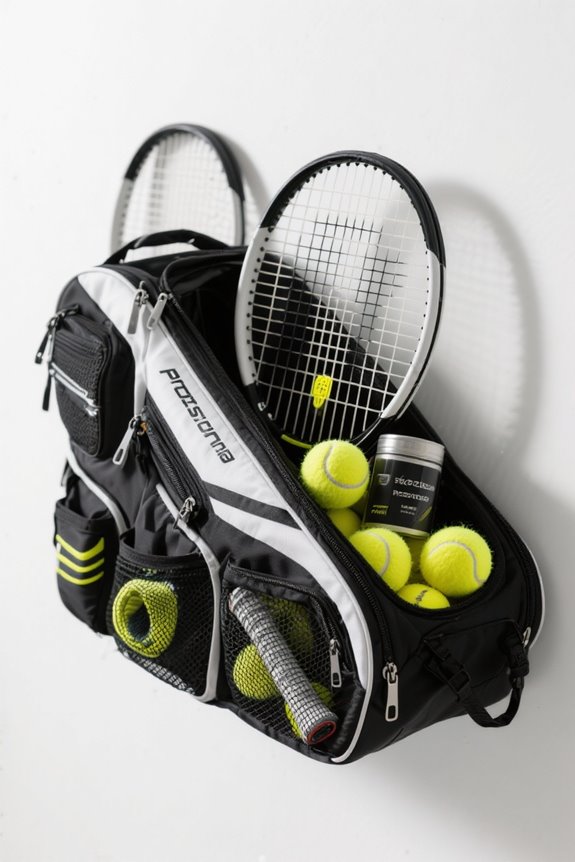
Packing essential gear for tennis is imperative for both performance and comfort during matches. Players should always bring 2–4 racquets, each with various string tensions for playing conditions adjustment. Extra strings and overgrips enable quick on-court fixes. Don’t forget to pack a fresh can of tennis balls, as using the right type for the surface matters considerably. Also, consider including zip ties in your equipment repair kits for immediate repairs. Spare apparel, like shoes, wristbands, and a towel, enhance comfort. Hydration is essential, so carry an insulated water bottle and quick-energy snacks. Look for bottles with double-wall vacuum insulation to keep your drinks at the ideal temperature for hours during long practice sessions or tournaments. Finally, sunscreen and a basic first aid kit guarantee personal care. This preparation sets the stage for more enjoyable and effective matches.
Recommended Products

Dometic Double-Wall Insulated Stainless Steel Water Bottles

Ideal Gift Choice: Our bottle will be personalized and shipped in the USA. You can customize the tumblers with photos, logos or text according to your preferences.It is sure to be a great gift to mother, father, wife, husband, son, daughter, friends or yourself.

PRINTED in USA:All SMLIXE stainless steel water bottles are personalized and sent from USA. The patterns,waterproof and heat resistant stick on cup all life span
Proper Racquet Placement
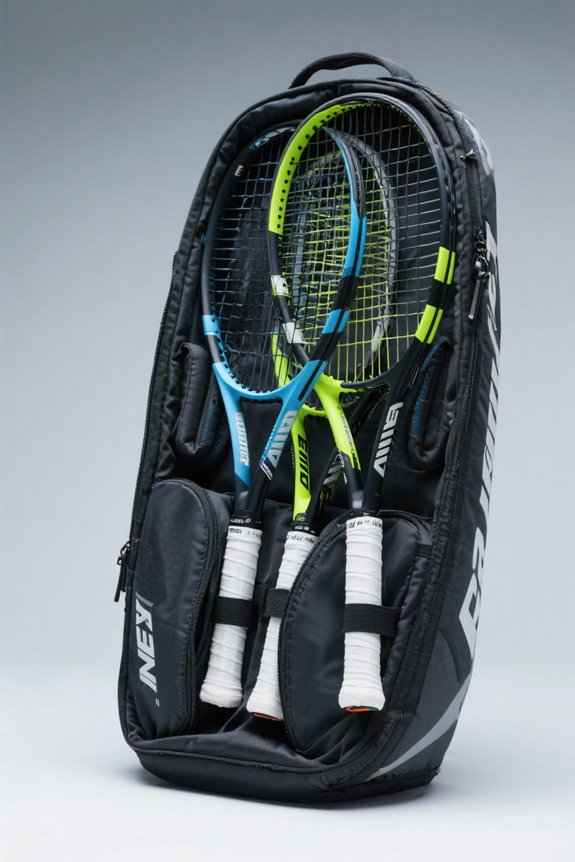
Proper racquet placement is key to guaranteeing that players have a seamless experience on the court. An effective racquet arrangement in your tennis bag helps maintain ideal positioning and accessibility. Store racquets in the main compartment, securing them to prevent damage during transport. Utilizing padded compartments is critical; this guarantees that frames remain intact, while also absorbing impacts. It’s crucial to keep the handles accessible for quick changes, especially during competitive play. Additionally, using racquet covers not only protects against dust and scratches but also aids in maintaining string tension in varying temperatures. Look for bags with reinforced stitching and strong zippers to provide additional strength during frequent use and transport. By prioritizing these practices, players can increase their equipment longevity and enhance their overall performance on the court.
Maximizing Main Compartment Usage
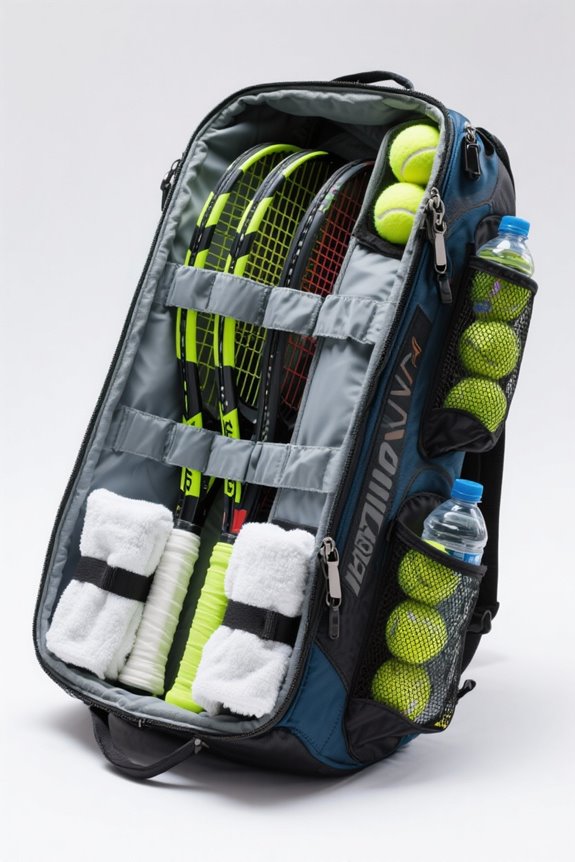
Maximizing the main compartment of a tennis bag can greatly enhance a player’s on-court experience. By incorporating dividing compartments, athletes can effectively organize clothing, shoes, and gear. Implementing layering strategies, such as placing heavier items like shoes at the bottom, stabilizes the bag and maximizes upper space for lighter articles. Using removable shelves or mesh dividers promotes airflow, keeping damp items separate from dry gear. Small internal zip pockets secure valuables, preventing loss amidst larger items. In addition, consider allocating designated sections for wet towels to avoid odor transfer and damage. Look for bags with ventilated compartments specifically designed to keep gear fresh and minimize odors during storage. This strategic organization not only improves accessibility but also keeps the bag tidy, ensuring everything is quickly retrievable during busy matches or training sessions.
Organizing Accessories Effectively
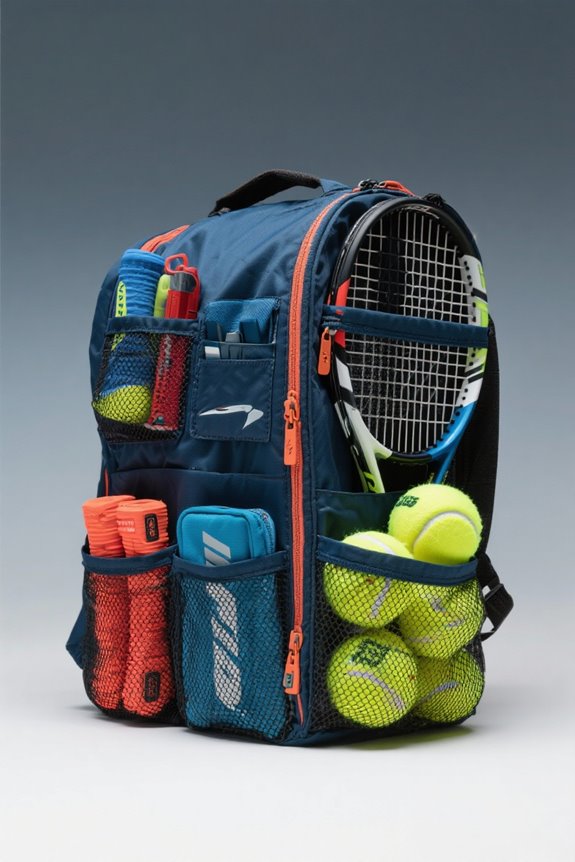
When it comes to organizing accessories in a tennis bag, effective strategies can make a significant difference in performance and convenience. Accessory organization starts with pouch selection. Utilize small pouches for replacement grips, overgrips, and vibration dampeners to prevent tangling. Zip pockets serve well for storing items like jewelry or keys, keeping them secure and accessible. Mesh dividers can help keep small accessories neatly separated, allowing for quick retrieval during matches. Designated compartments for grips maintain cleanliness, while mini containers can securely hold extra strings and tools. When storing vibration dampeners, consider grouping them by material type since silicone and elastomer rubber options vary in durability and performance characteristics. By implementing these practices, players enhance their readiness, ensuring that critical accessories are easily reachable and well-protected in their tennis bags.
Recommended Products

Authentic black obsidian crystal ball for Feng Shui, meditation, Chakra alignment, and as a protective energy cleansing sphere.

Thermal Lining Compartment +Additional Detachable Pouch : Mini Sized Pouch that can store small props such as wireless earphones and has a carabiner on the top, so you can hand it in your bag or carry it .

【Large Capacity for All Tennis Gear】:This tennis equipment organizer features multiple shelves, side hooks, and dedicated holders-perfect for storing racquets, balls, shoes, bags in one place.
Securing Valuable Items
To effectively secure valuable items during tennis outings, players should prioritize multiple safety features offered by quality tennis bags. Shock-absorbing compartments are essential; they cushion rackets and keep fragile belongings like smartphones protected. Bags with waterproof designs, featuring sealed seams and protective flaps, safeguard against moisture. For added peace of mind, look for secure closure systems with lockable zippers. Personal security measures such as clear contact information enhance the chances of recovering lost items. Digital tagging options, including QR codes, further distinguish your bag in crowded spaces. Additionally, bags with insulated compartments provide temperature protection through features like Thermoguard lining, which shields both racquets and sensitive electronics from extreme heat or cold. By employing these features, players can guarantee their valuables remain safe and secure throughout their tennis adventures, ultimately allowing them to focus on their game without worry.
Utilizing Specialized Pockets
Utilizing specialized pockets in a tennis bag can greatly enhance player organization and convenience. Bags that feature optimized racquet storage with dedicated compartments guarantee that racquets remain undamaged. These compartments often include dual purpose designs, accommodating not just racquets, but also pickleball paddles. Color coding accessory pockets allows quick identification of items like strings and grips, reducing clutter during match play. Mesh pockets provide easy access to essential items such as water bottles or tennis balls. Additionally, ventilated shoe compartments keep dirty shoes separate from clean gear, maintaining hygiene. Incorporating insulated sections for snacks or beverages guarantees players stay fueled. Small accessory pockets serve as ideal storage for essentials like keys, phones, and water-resistant materials help protect valuable items from moisture damage. Such thoughtful designs greatly improve organization, making it easier to focus on the game without the hassle of misplaced items.
Recommended Products
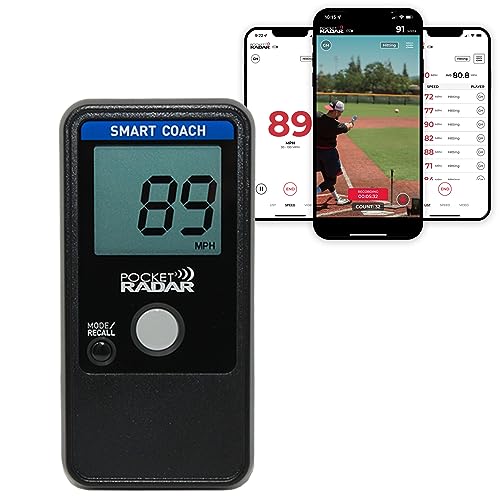
Pro-Level Accuracy, Anywhere - Used by every Major League team, the Pocket Radar Smart Coach delivers ±1 mph accuracy on a baseball thrown from 120 feet away (150 feet for a softball), offering professional-grade reliability for in-game or practice environments without bulky equipment. Its advanced technology ensures reliable data tracking over time compared to the shorter range, less professional products in the market.

Separate padded compartment accommodating two (2) tennis racquets or three (3) pickleball paddles. Complementary wristlet for a seamless ensemble. Crafted from durable Saffiano cross-grain faux leather.

Luxuriously crafted from durable, buttery-soft faux leather in slightly metallic color.
Managing Clothing and Towels
Effective management of clothing and towels in a tennis bag can greatly improve match readiness. To enhance clothing storage, separate clean items from used clothing with mesh compartments. Rolling clothes tightly saves space and minimizes wrinkles. When it comes to towel hygiene, always store damp towels in waterproof bags to prevent mildew and odors. Select microfiber towels, which are lightweight and quick-drying, to maximize space. Regularly launder towels to maintain freshness, and use breathable sections in your bag to enhance airflow. Pack spare shirts or wristbands in accessible pockets for quick retrieval. Consider using bags with multi-pocket designs to keep your tennis essentials organized and easily accessible during matches. By applying these strategies, you can streamline your tennis bag, ensuring you’re always prepared for a match while keeping your gear in prime condition.
Recommended Products

Large & Professional to Level Up Your Home Gym: 6 sizes for choice to meet your fitness needs of solo workouts, couple use, or family exercise; you can also combine exercise mats for home workout with a spacious area; your ideal workout mats for home gym for all intensities of exercise like Cardio, dance, Zumba, T25, weightlifting, yoga, stretching, dumbbell; use with or without shoes

OPTIMAL PROTECTION: Insulated compartment for 3 racquets and waterproof outer covering.

Wilson RF Tournament Tennis Racket Bag - Holds up to 15 Rackets, Black
Storing Tennis Balls Safely
Storing tennis balls safely is crucial for maintaining their performance and longevity. Utilize appropriate ball storage solutions like plastic baskets for lightweight organization or tennis ball tubes, which hold around 20 balls and are easy to carry. For extended preservation, sealed containers minimize air exposure, helping maintain bounce. Pressurized canisters, such as ball pressurizers, can restore and maintain internal pressure, supporting longer usable life.
Keep your storage environment at room temperature to prevent degradation. Avoid mixing storage with damp gear, as moisture can negatively impact the felt. Regular inspection and cleaning of your storage containers is essential for maintenance. Remember, using your balls within 2-3 weeks after opening guarantees peak performance. When selecting storage containers, look for durable materials like PVC or polypropylene that offer moisture resistance and sturdy construction. Following these maintenance tips will greatly enhance your tennis experience.
Compartmentalization for Efficiency
Maintaining an organized tennis bag can greatly enhance your game experience. Effective compartmentalization is key to ideal gear configuration. Designate compartments for specific gear types, such as small pouches for grips and internal zip pockets for valuables like keys. Mesh dividers allow easy access to clothing without disturbing your other equipment, while specialized sections protect delicate items. Weight distribution matters, too; heavier items, like shoes and ball cans, should rest at the bottom for stability. Additionally, using modular inserts can help you customize your bag based on your needs for each match or practice. Clear labeling of compartments simplifies your retrieval process, ensuring you can quickly find everything you need, keeping your focus on the game. Consider dedicating a separate compartment for your tennis shoes, particularly those with durable Adiwear outsoles that require proper storage to maintain their shape and performance between matches.
Handling Wet or Dirty Items
When faced with wet or dirty items, tennis players can take proactive steps to manage their gear effectively. Using breathable pouches or mesh bags is vital for moisture prevention, allowing air to circulate and reducing humidity buildup. It is fundamental to dry your gear thoroughly before storage to avoid mold and mildew. Incorporating ventilated compartments in your bag can enhance odor management, keeping unpleasant smells at bay. Always keep wet items separate to prevent moisture from affecting other gear. Additionally, store these items away from direct sunlight to protect fabric integrity. By adopting these strategies, players can maintain a clean and organized tennis bag, ensuring their equipment stays in top condition for every match.
Streamlining Pre-Match Preparation
Streamlining pre-match preparation is essential for tennis players aiming to perform at their best. A well-organized pre-match checklist can enhance gear readiness, making certain all essentials are packed the night before. Prioritize nutrition timing by consuming a balanced breakfast about 3.5 hours before your match, focusing on carbohydrates and proteins for sustained energy maintenance. Implement a hydration strategy starting 48 hours prior, keeping urine clear. On match day, engage in a warm-up routine that includes light jogging and dynamic stretching to improve mobility. Incorporate mental focus techniques, such as visualization and controlled breathing, to aid in stress management. This thorough approach guarantees that players are physically and mentally primed for competition.
Adjusting Gear for Different Scenarios
After ensuring all pre-match needs are in order, players can focus on adjusting their gear for various scenarios. For casual matches, it’s advisable to carry one to two racquets along with essential items like balls and a water bottle. Competitive matches demand multiple racquets, often with varying ball type adjustments and grip sizes, to enhance tactical performance. Tournament play requires maximum gear—additional clothing, nutrition, and backup balls—while practice sessions prioritize items like pressureless balls and recovery tools. Additionally, consider match condition variations: indoor courts often need lighter gear, while outdoor matches may require more durable, climate-sensitive items. Ultimately, selecting the right equipment helps streamline preparation and boosts readiness for any situation on the court.
Maintaining Gear Longevity
Maintaining the longevity of tennis gear requires careful attention and consistent practices. Regular gear maintenance guarantees that equipment remains functional and in good condition. Store tennis bags in cool, dry locations to avoid moisture, which can lead to mold growth. Regularly inspect bags for wear and tear, focusing on seams and zippers, and lubricate zippers to enhance operation. Clean your bag using a damp cloth to eliminate dirt and stains; allow it to air dry to avoid moisture buildup. Prevent overloading your bag, which could strain components. Don’t forget to store rackets in protective covers to avoid scratches. These simple steps help verify that your gear lasts, enhancing your overall tennis experience.
Tips for Faster Retrieval During Matches
When players find themselves in the heat of a match, the last thing they need is to fumble through an unorganized bag. An optimized layout is vital for quick access to essential gear. Start by storing racquets in dedicated compartments to prevent damage. Use separate pouches for balls and other accessories like overgrips to keep them organized. A lightweight bag with adjustable straps enhances portability and allows for swift retrieval. Label pockets clearly, so items can be located quickly during intense moments. Additionally, guarantee easy-access compartments are utilized for frequently needed gear. Strategic compartment design and a consistent pre-match routine can remarkably improve time efficiency and reduce distractions, therefore boosting confidence on the court.
Frequently Asked Questions
How Often Should I Clean My Tennis Bag?
A cleaning schedule recommends thoroughly cleaning a tennis bag every few months or at least once per season. Maintenance tips include regular surface wipes and spot cleaning to extend the bag’s life and functionality.
What Materials Should I Look for in a Durable Tennis Bag?
Like armor shielding a warrior, a durable tennis bag should feature canvas strength and waterproof features. High-denier nylon or polyester blends offer robust durability, protecting equipment from wear, moisture, and environmental hazards during transport and play.
Can I Use My Tennis Bag for Other Sports?
A tennis bag can be used for other sports due to its versatility. Bag modifications, like adjustable compartments and side pockets, enhance functionality, enabling secure storage for varying gear while maintaining organization across different athletic activities.
How Do I Prevent Odors in My Tennis Bag?
A fisherman airs out his gear after every catch to avoid unwanted smells. Similarly, utilizing deodorizing techniques and scent neutralizers, like baking soda or bamboo charcoal, effectively prevents odors in bags, ensuring freshness during use.
What Is the Best Way to Transport My Tennis Bag?
The best way to transport a tennis bag involves selecting appropriate carrying methods, like backpacks for balanced weight, and considering bag sizes to guarantee compliance with travel rules. Versatile options enhance convenience during transit.