As an Amazon Associate, we earn from qualifying purchases. Some links on this site are affiliate links at no extra cost to you. Our recommendations are based on thorough research and editorial judgment.


Understanding Tennis Swing Paths for Better Control

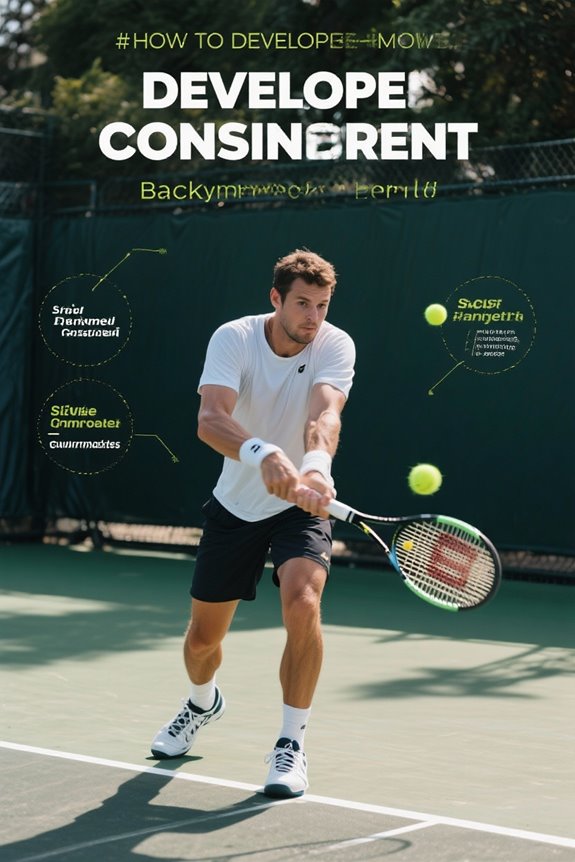
Premium tennis racket captured in dynamic motion, showcasing aerodynamic frame design and professional-grade string tension. The racket features a vibrant color palette with precision-engineered grip and head, suspended mid-swing to demonstrate optimal swing path trajectory. Studio lighting accentuates the racket’s sleek construction, metallic accents, and advanced materials. Clean white backdrop emphasizes the equipment’s superior craftsmanship and technical specifications. The composition illustrates perfect form and control mechanics essential for competitive play, highlighting the relationship between equipment quality and stroke precision.
# Understanding Tennis Swing Paths for Better Control
Understanding tennis swing paths is essential for better control and shot precision. Players can choose between vertical and horizontal swing paths. Vertical paths, typically steeper (30-40 degrees), enhance topspin and ball dip. In contrast, horizontal paths emphasize power and control, supported by body rotation. Beginners should practice basic variations, while advanced players refine their technique. Improving your swing path can greatly elevate your game. Explore further to uncover practical drills and strategies tailored to your skill level.
Key Takeaways
- Vertical swing paths with steeper angles produce more topspin, enhancing control over trajectory and ball placement.
- Utilizing horizontal swing paths allows for increased power and consistent shot placement through improved racket mechanics.
- Practicing various swing path angles helps develop tactical intent and adaptability in different match situations.
- Focusing on the coordination between swing path and racket face angle is crucial for achieving accurate shots.
- Regular drills and video analysis reinforce muscle memory and refine swing paths for greater overall control.
Types of Tennis Swing Paths
In the world of tennis, understanding various swing paths can considerably impact your game. Players can utilize swing path analysis to optimize performance. Horizontal swing paths involve racket movements parallel to the ground, aiming for fast, flat shots that minimize reaction time. In contrast, vertical swing path variations employ low-to-high motions, focusing on topspin and elevated trajectories, offering players a safety net during intense rallies. Advanced players often favor steeper vertical angles for added control, while intermediates typically adopt more gradual angles. The shift from classic to modern swing paths reflects the evolution of techniques, emphasizing spin and aggression. To enhance precision and tactical play, recognizing the characteristics of each swing type is essential for development. Just as selecting the right equipment matters in other sports—where temperature retention performance can determine hydration effectiveness during long matches—choosing the appropriate swing path based on your skill level and playing style is crucial for maximizing your on-court success.
Recommended Products
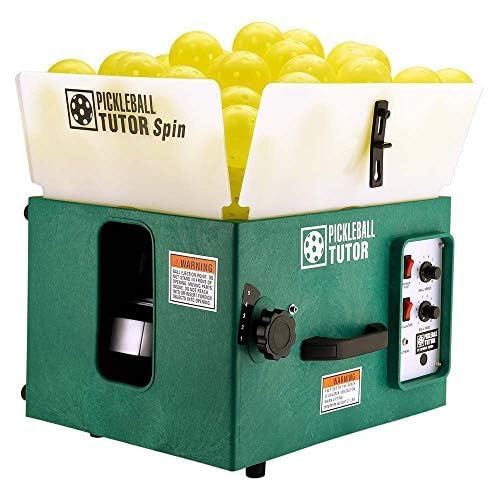
EASY-TO-USE KNOB CONTROLS - No programming or phone app required.

📱【Master the Court: 12 Modes for Every Level】 Frget manual knobs; the PT-Smart is fully App-controlled with 12 drills, including a "Primary" mode to build beginner confidence and AI Drill for custom paths.For advanced players, "Vary Speed" and "Program" modes simulate real match rhythms, allowing you to switch intensity instantly without running back and forth.

EASY-TO-USE KNOB CONTROLS - No programming or phone app required.
Vertical Swing Path Angles and Their Effects

Understanding vertical swing path angles is essential for improving overall tennis performance. The angle at which a racket moves upward during contact notably influences vertical swing effects and topspin generation. For advanced players, a steeper swing path—around 30 to 40 degrees—maximizes topspin, allowing the ball to dip quickly. Conversely, intermediate players typically opt for flatter paths near 20 degrees to reduce errors. A flatter swing generates less topspin and, consequently, a lower trajectory. This balance between swing angle and speed is key for consistency and shot accuracy. Practicing variations in vertical angles enables players to adjust tactical intent, enhancing both power and control during play. Understanding these dynamics equips you for improved tennis strategies. The weight and maneuverability of your racquet also play a crucial role, as lighter options around 10 ounces allow for better swing speed and shot accuracy when executing different vertical angles.
Understanding Horizontal Swing Path Concepts

While many players focus primarily on their vertical swing path, the horizontal swing path is equally important for achieving effective strokes. This lateral movement of the racket across the body is vital for power and control in tennis. Racket mechanics play a pivotal role here, as the horizontal swing allows players to utilize body rotation effectively. Techniques such as the figure of 8 motion help create racket lag and a slingshot effect. By incorporating hip rotation, players can generate torque for a more accelerated racket motion. Ultimately, refining the horizontal swing can enhance performance, allowing for lower trajectories that reduce opponents’ reaction times and improve overall stroke efficacy. Engaging in specific drills will reinforce this significant skill in training sessions. Just as tennis players need reliable tennis backpacks to transport their equipment efficiently, mastering horizontal swing mechanics requires the right combination of technique and consistent practice.
The Role of Swing Path in Spin Production

Swing path plays a pivotal role in generating spin, influencing the trajectory and control of the ball during play. The mechanics of spin production hinge on the angle of your swing path relative to the ball’s surface. For instance, a low-to-high swing at about 45° produces heavy topspin, enhancing both spin and elevation. This action maximizes revolutions per minute (RPM), allowing for improved trajectory control. Additionally, varying your swing path direction affects the type of spin; for example, an open racket face combined with a horizontal swing generates slice spin. Proper coordination of swing path and racket face angle is essential, making it necessary to practice and refine these elements for effective spin production on the court. The thinner profile of 17 gauge strings increases ball bite and overall spin potential, further enhancing your ability to generate spin through proper swing mechanics.
Recommended Products

Wilson NXT Power 17 Tennis String - 200m Reel, White

Wilson NXT 17 Tennis String - 200m Reel, White

ULTIMATE SPIN: The Yonex PolyTour Rev 120 Tennis String is for baseliners with medium-to-fast swing speeds looking for a shaped string (8-sided) that grabs onto the ball for the ultimate spin experience.
Swing Path Influence on Shot Control and Power

Mastering shot control and power requires attention to the path of the racquet through impact. The direction of a player’s swing path notably affects shot placement accuracy and consistency. A flatter swing, about 20 degrees above horizontal, offers less vertical margin for error, benefiting those at intermediate levels. Adjusting swing paths to align with your intended impact zone maximizes the racquet’s effective hitting area. This controlled approach reduces variability in outcomes, vital when under match pressure. Players can enhance targeting capability by optimizing swing angles according to shot type. Ultimately, balancing swing speed with control is essential to prevent mishits, ensuring more reliable performance during intense rallies and competitive play. Just as proper footwear with lightweight construction promotes agility during quick direction changes, the right swing mechanics enable players to maintain balance and stability throughout each stroke.
Practical Drills for Improving Swing Path
Improvement in swing path is key for players seeking to enhance their game. To refine racket control, players should focus on shoulder rotation during practice. Beginners can benefit from drills that emphasize finishing the follow-through with the back of the racket beside the head. This establishes a reliable swing path. Additionally, isolating the “slot position,” where the racket face is closed under the ball, trains precise racket face control. Practicing inside-out groundstrokes strengthens the ability to maintain correct racket face angles while adjusting swing paths. Implementing slow-motion swings is also effective, as it reinforces proper mechanics and corrects any muscle memory flaws. Incorporating resistance bands into your training routine can strengthen the shoulder and arm muscles essential for maintaining proper swing mechanics and power generation. Consistent practice of these drills will gradually improve overall control and performance on the court.
Recommended Products

CORE-STRENGTH TRAINING EQUIPMENT: Improve core strength like never before with this bungee workout trainer kit that includes the TRX RIP Trainer, a door anchor, a medium resistance band, a safety strap, a carrying bag, and access to the TRX Training Club App.

SUPPORTS SHOULDER HEALTH: Developed in partnership with professional physical therapists, the Crossover Symmetry System is designed to aid in enhancing shoulder mobility and strength.

Build Shoulder and Core Strength and Stability - The Deluxe 4KOR Resistance Cord Strength System is designed to be a convenient system to improve shoulder and core strength and stability. This system includes 5 different resistance levels (7lbs, 12lbs,17lbs, 22lbs, and 30lbs), with 2 cords per resistance level, for a total of 10 resistance cords. System also includes 2 handles, 2 foot straps, 2 door strap anchors, 2 power rack straps, 2 exercise charts, and a carrying bag.
Choosing the Right Swing Path for Your Skill Level
When players seek to enhance their tennis game, selecting the right swing path tailored to their skill level is vital. Beginners should focus on simple swing path variations, emphasizing consistent ball contact for improved stroke mechanics. As players advance to intermediate levels, skill level adjustments become essential; incorporating moderate racket head speed and basic spin can help control shot depth. Advanced intermediate players elevate their technique, mastering topspin and slice to manage strategic shot variation effectively. Finally, advanced players utilize sophisticated swing paths that blend power, spin, and tactical shifts, allowing them to outperform opponents. Adapting swing paths to individual skill stages guarantees better control and performance throughout every match, fostering continuous development in the sport. For beginners developing their swing mechanics, selecting equipment with oversized head sizes can provide a larger sweet spot that increases forgiveness on off-center hits during practice.
Recommended Products

Shape: Teardrop

HEAD Performance: Born out of revolutionizing how we ski and play tennis, HEAD has constantly pushed athletic equipment into the modern era. For all levels of play, HEAD offers nothing but the best tennis equipment on the market.

INNOVATIVE ULTRA HEAD-LIGHT DESIGN: Experience the most head-light racquet HEAD has ever created, delivering exceptional maneuverability and fast swing speed for better control and effortless shot execution.
Frequently Asked Questions
How Can I Identify My Current Swing Path Style?
To identify one’s swing path style, perform a swing path analysis by observing swing mechanics. Focus on racket trajectory before and after contact, noting grip and wrist positions for better understanding of individual technique and tendencies.
What Common Mistakes Should I Avoid With Swing Paths?
Imagining a painter’s brush stroking the canvas, players should avoid common errors like overly steep swing paths, mishandling the racket head, and rushed preparations, all of which undermine accuracy and power in their shots.
How Does Grip Impact My Swing Path?
Grip types greatly influence swing mechanics. For instance, Western grips promote topspin and a bent arm, while Eastern grips favor flatter shots and straighter arms, ultimately affecting swing paths, control, and overall performance on the court.
Can Swing Path Influence My Serve?
Swing path considerably influences serve mechanics, impacting both power and precision. By mastering various spin techniques, players can enhance serve effectiveness, optimizing trajectory and control while minimizing errors during match play, ultimately improving overall performance.
How Do I Adjust My Swing Path for Different Surfaces?
To adjust swing path for different surfaces, players must make swing adjustments by recognizing surface differences. For example, employ flatter swings on grass while favoring more vertical paths on clay to control ball behavior effectively.