As an Amazon Associate, we earn from qualifying purchases. Some links on this site are affiliate links at no extra cost to you. Our recommendations are based on thorough research and editorial judgment.

When to Attack in Pickleball

Master the art of aggressive play with strategic timing and precision. This comprehensive guide reveals key indicators for transitioning from defensive to offensive positioning, including identifying weak returns, recognizing opponent positioning errors, and capitalizing on short balls. Learn to read body language, anticipate shots, and execute powerful attacks at the net. Discover optimal court positions for aggressive play, when to speed up rallies, and how to force errors through calculated pressure. Perfect for intermediate to advanced players seeking to dominate matches through intelligent, decisive offensive strategies.
# When to Attack in Pickleball
Knowing when to attack in pickleball hinges on several key factors. Watch for high ball bounces and low opponent paddles, as these indicate prime opportunities. Target your opponent’s weak backhand and notice their footwork—slow players are more vulnerable. Timing is vital; disrupt their rhythm with controlled dinks and targeted shots. Patience is essential, so avoid hasty attacks. By mastering these strategies, you can elevate your game. Learn more about adapting your approach on the court.
Key Takeaways
- Attack when the opponent’s paddle is low, indicating vulnerability to angled shots and aggressive play.
- Recognize high bounces, especially those above net height, as prime opportunities for offensive shots.
- Target the opponent’s feet with low shots to create upward returns and disrupt their rhythm.
- Identify moments when the opponent appears off-balance or hesitant to initiate an aggressive play.
- Utilize well-timed dinks and resets to maintain pressure before transitioning to offense.
Recognizing Vulnerable Opponent Positioning
How can you identify when your opponent is most vulnerable during a pickleball match? Recognizing vulnerable opponent positioning is essential for strategic attacks. Monitor their paddle positioning; a low paddle often indicates a weakness to angled shots. Observe their distance from the kitchen line—if they are deep in the court, they lose net control, making them easier to target. Conducting footwork analysis is imperative; flat-footed opponents may struggle to respond to quick volleys. Additionally, a balance assessment reveals that those caught off-balance create prime attacking opportunities. Just as tennis players benefit from lightweight, breathable fabrics that allow unrestricted movement, your mobility advantage increases when opponents wear restrictive clothing that limits their court coverage. By evaluating these indicators, you can pinpoint the right moments to strike. Targeting these vulnerabilities effectively can lead to dominating play and securing points in your favor.
Assessing Ball Contact Point for Attack Opportunities
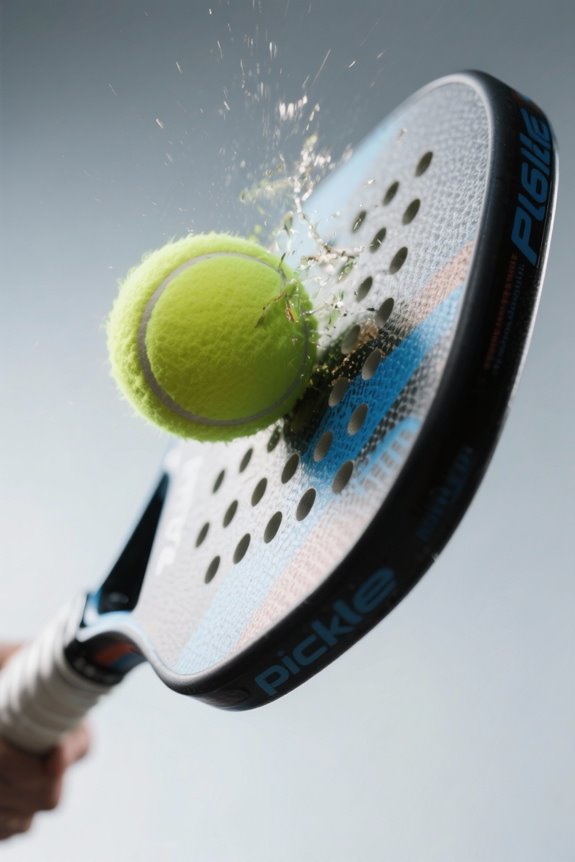
Identifying the right moment to attack in pickleball often hinges on evaluating the ball contact point. High bounces, especially those at or above net height, offer prime attack opportunities. Players should focus on the ball’s trajectory; no spin shots, also known as dead dinks, are easier to capitalize on. Anticipate the opponent’s contact timing; if their feet are planted early, they may set up for a strong shot. Conversely, forcing opponents into low contact points disrupts their rhythm. Observing these factors allows for effective decision-making when attacking. To execute powerful attacks without straining your arm, ensure your paddle offers superior shock absorption through features like a honeycomb core that dampens vibrations on impact. Ultimately, mastering the assessment of ball contact points empowers players to seize opportunities that can turn the tide of the game in their favor.
Recommended Products

Midweight Range: 7.7 – 8.1 oz. | Grip Circumference: 4 1/4" | Grip: Selkirk Geo Grip | Handle Length: 4 3/8" | Paddle Length: 15 3/4" | Paddle Width: 8"

USA PICKLEBALL APPROVED & PBCoR 43 CERTIFIED — Play in any sanctioned tournament with confidence. The CPX Ultra meets the strictest equipment standards in the sport, so you're always competition-ready.

【Tournament Standard Regulation Size】This 22ft pickleball net meets official USAPA specifications with a 36-inch side height and 34-inch center. Perfect for competitive matches, club training, or professional practice on any flat surface.
Exploiting Opponent Weaknesses
While skillful assessment of ball contact points is essential for determining when to attack, recognizing and targeting your opponent’s weaknesses can profoundly enhance your strategy. A common approach is backhand targeting. Most players have a less effective backhand, so focusing your shots here can lead to errors. Additionally, analyze serve positioning; aim serves and returns towards the weaker player or their backhand side. Pay attention to mobility issues as well. If an opponent struggles to move quickly, exploit this with well-placed shots. Observing shot preferences helps too—recognizing their go-to shots allows you to craft counter-strategies that effectively maximize your chances for a successful attack. When facing opponents with limited mobility, ensure you have proper footwear with quality traction and stability features to execute quick lateral movements and capitalize on their positioning weaknesses. Consistent execution of these tactics can greatly improve your performance on the court.
The Importance of Timing and Patience
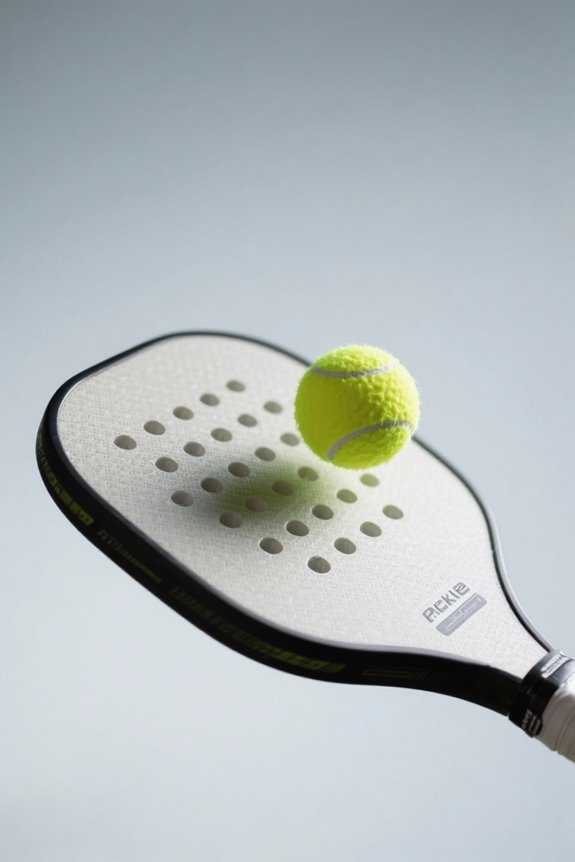
Successfully timing attacks in pickleball often hinges on quick decision-making and strategic patience. Players must recognize the ideal moments to attack, using timing techniques to identify opponents’ vulnerabilities. This includes observing player posture and shot quality, allowing for precise strikes when opponents are off-balance. Patience in patient play is essential; attacking every ball can lead to mistakes. Controlled dinks and resets enable players to force opponents into difficult positions, creating favorable opportunities. Additionally, maintaining composure to wait for higher shots improves attack potential. Balancing aggression with patience allows players to capitalize on these moments effectively. Having the right equipment, such as a paddle with a larger sweet spot, can enhance your ability to execute these precisely timed attacks when opportunities arise. Ultimately, mastering timing and patience greatly enhances a player’s offensive strategy, leading to greater success on the court.
Strategic Shot Selection and Placement
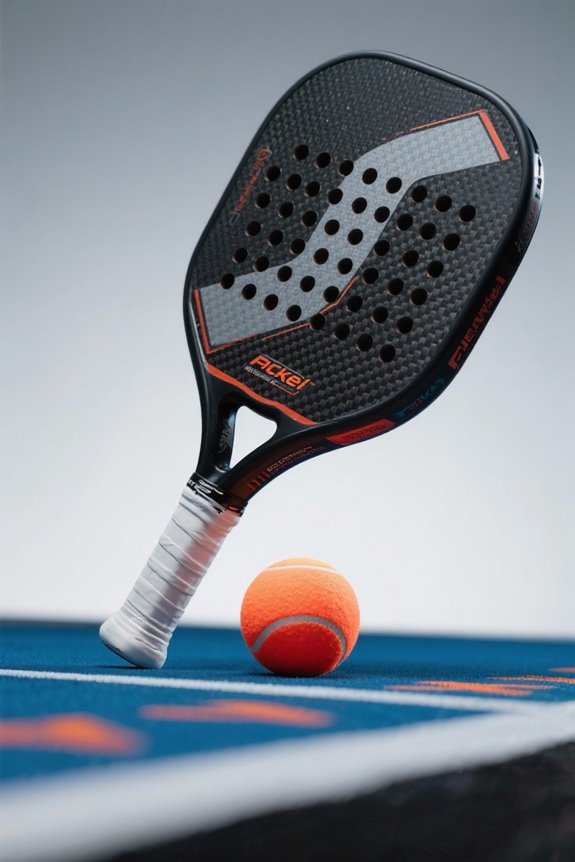
Understanding when to attack is just the beginning; choosing the right shots and placing them effectively can greatly elevate one’s game. Strategic shot placement is essential, particularly when targeting your opponent’s feet at the kitchen line. Low shots force upward returns, opening up chances for overhead smashes. Incorporating cross-court shots leverages strategic angles, pulling opponents laterally and creating gaps. In addition, mixing soft dinks with hard drives keeps opponents off-balance and disrupts their rhythm, enhancing your control over the rally. By focusing on precise shot execution, you maintain pressure and limit your opponent’s counterattacks. Paddles with textured surfaces can improve spin capabilities, which is crucial for shot placement and tactical execution during aggressive play. Ultimately, effective shot selection not only prevents aggressive returns but also accelerates scoring opportunities, making it a key component of successful pickleball play.
Recommended Products

FAMILY-OWNED: At Selkirk, we are committed to fueling the pickleball obsession found within every player. Through uncompromising quality and a never-satisfied drive for innovation, we serve players around the world from beginners to pros.

Wilson Bela V3 Padel Racket - Size 2 - 4 1/4"

EXCEPTIONAL CONTROL WITH SOFTER IMPACT: The STIGA 18K 2 Cybershape delivers ultimate control and precision with a softer ball impact for refined touch in every rally. Fine-tuned for competitive players, it offers a medium balance and 360 g weight, giving you the responsiveness to handle tough shots without losing feel or accuracy.
Advanced Attack Strategies and Creativity
Elevating your pickleball game involves mastering advanced attack strategies and infusing creativity into your play. Effective players use creative shot making to mix spins, speeds, and placements, creating confusion for opponents. Deceptive positioning is key; by mimicking dinks, you can execute sudden speed-ups that catch adversaries off guard. Employing well-timed lobs disrupts the rhythm, forcing opponents to retreat, thereby breaking their momentum. Utilize sharp angles to apply pressure and keep them off-balance, leading to more winning opportunities. Consistent exploration of these techniques will enhance your gameplay. Remember, mastering these strategies not only bolsters your offense but also fosters a dynamic court presence, allowing you to dictate the pace and serve as a formidable challenge to your opponents. Supporting your aggressive court movements with cushioned tennis shoes designed for lateral stability can help you execute quick pivots and maintain optimal positioning during intense rallies.
Recommended Products
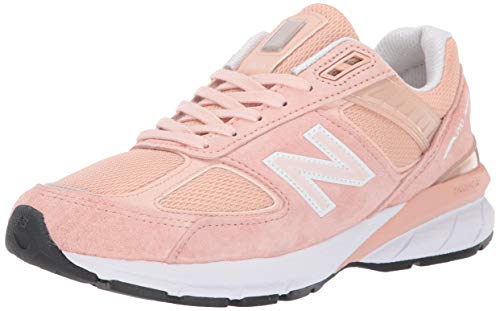
Manufactured in the US for over 75 years and representing a limited portion of our US sales. New Balance Made is a premium collection that contains a domestic value of 70% or greater.

Memory foam insole

ICONIC DESIGN: The APL TechLoom Zipline introduces a sleek silhouette with innovative construction, creating versatile men’s shoes available in multiple colors and sizes.
How to Identify High-Percentage Attacks
Identifying high-percentage attack opportunities in pickleball is essential for elevating your game. Players should focus on ball height, as high balls above the net provide a wider margin for error. Additionally, slower, more controlled balls are easier to attack, enhancing the chances of success. Observe your opponents closely; those off-balance or out of position present valuable attack opportunities. Look for court openings near the sidelines or in the middle, where targeted shots can create significant pressure. Furthermore, tactical lobs can disrupt your opponent’s rhythm, creating further high percentage shots. Just as tennis players practice with pressureless balls that maintain consistent bounce over time, pickleball players benefit from repetitive drilling to develop muscle memory for recognizing and executing these high-percentage attacks. By mastering these strategies, players can confidently identify attack opportunities, greatly increasing their effectiveness on the court.
Recommended Products

Play Like the Pros: Helium's ATMOS XL pickleball set with 2 elongated paddles are USAPA Tested and Certified and made from high grade woven carbon fiber for better spin and control. Each paddle is designed to maximize your performance so you can dominate the pickleball court.

Elevate your pickleball game with your favorite Sonix designs and prints! Sonix pickleball paddles are pretty and bold, stylish and fun. Whether you want to have a pickleball match with friends, or a spontaneous day of play in the sun; our pickleball set is ideal for both the casual and competitive pickleball player.

BEGINNER TO EXPERT THIS SET HAS IT ALL: Premium quality pickleball set of 2. Including 2 USAPA approved pickleball paddles, 3 pickleball balls, and 1 carry bag. We apply cutting-edge technology using a lightweight honeycomb core with a graphite face (at 7.25 oz) for balanced control and powerful hitting
Transitioning From Defense to Offense
When players find themselves on the defensive, a well-timed shift to offense can change the momentum of a pickleball match. Mastering changeover zone navigation is crucial. This area, between the baseline and kitchen line, dictates your next move. Effective defensive shot effectiveness, such as dinks and lobs, can neutralize aggressive opponents, setting the stage for an offensive play. Utilize resets to regroup, allowing time to plan an attack. Quick footwork is essential; you should avoid being stuck in vulnerable positions. Mental agility also plays a role—stay aware of your opponent’s movements. Drills focusing on resets and partner exchanges can enhance your skills, ultimately leading to successful changeovers and increased confidence in your gameplay. During these intense transitions, proper ankle stabilization helps reduce the risk of injury from sudden directional changes and allows you to maintain aggressive court positioning without hesitation.
Recommended Products

MULTIPLE WEIGHT OPTIONS: Cuff offers 20 color-coded ankle and wrist weights ranging from 0.25 lbs. all the way up to 25 lbs., making them versatile for all strength levels. Multiple weight options allow for a customized workout.

NDure upper technology designed for superior durability
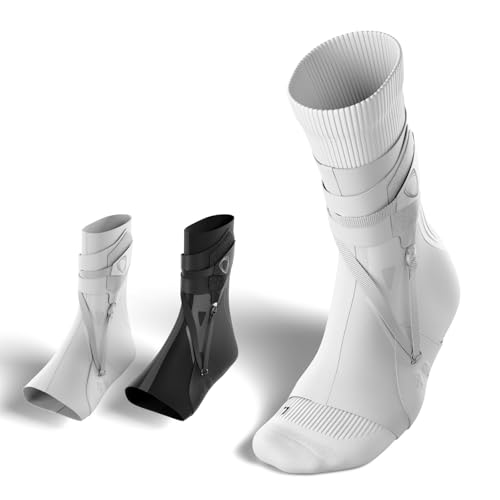
#1 Sports Ankle Brace Trusted by Pros: Worn by NFL, NBA, MLS, and NCAA athletes, The BetterGuard 3.0 is the ultimate ankle brace for injury prevention and performance. Trusted by men, women, and teens for basketball, soccer, football, volleyball, and more. Built for athletes at every level.
Reading Opponent Movement and Patterns
How can a player effectively read an opponent’s movement and shot patterns during a match? Key strategies involve observing opponent stance and body language closely. A forward lean often signals aggression, while slow, off-balance movements indicate a defensive strategy. Watch for paddle position and shot angles; an open face typically suggests a soft shot, whereas a closed face hints at a drive. Use court awareness to track these movement patterns over time, enhancing your anticipation skills. Pay attention to reaction time and how changes in paddle preparation may signal shot deception. By identifying tendencies, you can better predict responses and exploit weaknesses, setting you up for successful attacking opportunities on the pickleball court. Just as proper footwear supports lateral movements on the court, understanding your opponent’s positioning helps you respond more effectively to their directional changes.
Adjusting Attack Strategies Based on Match Dynamics
Adjusting attack strategies based on match dynamics is critical for success on the pickleball court. Athletes should continually assess match momentum and modify their dynamic strategy accordingly. For instance, when the opponents show hesitation or mispositioning, take advantage of that moment for a decisive attack. Effective court positioning and quick recovery can enhance opportunities, so guarantee you maintain a central location after shots. Recognize the ideal ball height for aggression; attacking balls near net height often leads to higher success rates. Additionally, varying targets during attacks—like exploiting an opponent’s weaker side—can create openings. Remember, situational awareness and communication with your partner during aggressive plays are essential for achieving coordinated, effective attacks. Having the right equipment, such as a paddle with a larger sweet spot, can improve shot consistency during these critical attacking moments.
Frequently Asked Questions
How Do Weather Conditions Affect Attack Decisions in Pickleball?
Weather conditions greatly influence attack decisions in pickleball. Players adjust strategies based on wind impacts and court conditions, opting for controlled shots in gusty winds and adapting techniques to account for wet or slippery surfaces.
When Should I Prioritize Defense Over Attacking Opportunities?
Like a fortress safeguarding against invasion, prioritizing defense over attacking opportunities arises when defensive tactics curb risks during aggressive exchanges. Proper risk assessment reveals moments to reset, regain control, and prepare for potential offensive shifts.
What Role Does Communication Play in Attacking Strategies During Doubles?
Communication plays a pivotal role in attacking strategies during doubles, utilizing verbal cues to enhance partner synchronization. This coordination fosters quick decision-making, reinforcing effective attacks, maintaining ideal positioning, and ultimately increasing the team’s performance and success in matches.
How Can I Improve My Footwork for Better Attack Positions?
Improving footwork for better attack positions involves consistent practice of footwork drills and mastering positioning techniques. Regularly implementing agility training and refining movement patterns enhances balance, reaction speed, and overall effectiveness during offensive play.
What Mental Strategies Enhance My Confidence to Take Risks in Attacks?
Like a painter meticulously visualizing their masterpiece, athletes utilize visualization techniques and positive affirmations to build confidence. These mental strategies transform anxiety into assurance, empowering players to embrace risk and execute decisive attacks with unwavering belief.